Last Updated on November 25, 2026
Heavy equipment helps you complete demanding jobs faster. But operating heavy equipment comes with risks.
Offering your crew heavy equipment safety training can help prevent serious accidents, such as equipment rollovers, falling loads, struck-by incidents and contact with overhead hazards. And it isn’t just a nice-to-have perk for workers. Safety training saves lives.
In fact, in 2024, a worker in the U.S. died from a work-related injury about every 104 minutes, according to the Bureau of Labor Statistics. Transportation and material moving occupations accounted for the largest share of fatalities, with 1,391 fatalities, while construction and extraction workers experienced 1,032. Unfortunately, the statistics are similar in Canada where 1,042 workers died due to work-related causes in 2024.
As you’ll see in this guide, effective safety training helps operators recognize hazards, operate equipment properly and make safer decisions on the job. While training cannot eliminate every hazard, it is an important part of a strong safety program.
While this article is not a substitute for required operator training or certification, it can help you understand what effective heavy equipment training should include and how to evaluate your options. You’ll also be able to learn more about the methods of training available to you, such as online options with computer-based training (CBT) or in-person courses.
What Is Heavy Equipment Safety Training?
Heavy equipment safety training teaches equipment operators how to safely use industrial machinery on a jobsite.
Training can take different forms, including:
- Computer-based training or other online safety training options.
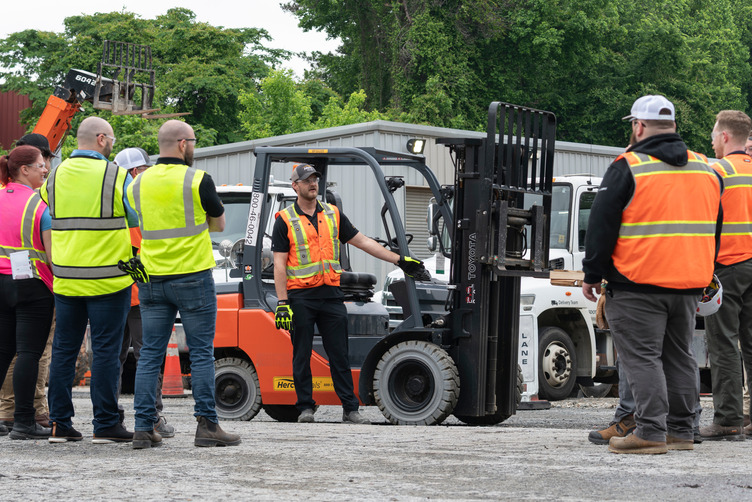
- Hands-on training led by seasoned instructors.
- On-demand online courses that fit into any schedule.
However, effective heavy equipment safety training goes beyond having an operator watch a video or pass an online quiz. It will also include in-person evaluation of the operator’s skills.
What OSHA Safety Training Entails
In the U.S., employers are responsible for ensuring operators are trained and competent before operating heavy equipment. A certificate alone does not necessarily mean that a worker can safely operate a particular machine on a particular project site. Training should be relevant to the equipment an employee will use and the conditions in which they will use it.
For some equipment, like forklifts, OSHA requires formal instruction, practical training and an evaluation of the operator’s performance. When it comes to forklift training, employers must document the operator’s training and evaluation.
And forklift operators must be evaluated at least once every three years. Refresher training may be required when an operator demonstrates unsafe performance, if workplace conditions change, or other circumstances indicate a need.
What Should Heavy Equipment Safety Training Programs Include?
A well-rounded and compliant safety program should also address the broader jobsite. Any employee who operates or works near heavy equipment will need to be taught how to:
- Recognize hazards and identify safe versus unsafe work conditions.
- Maintain safe traffic-control patterns and separation from moving equipment.
- Communicate with spotters and coworkers.
- Use required personal protective equipment (PPE).
- Respond to emergencies, including reporting hazards or safety violations.
- Handle equipment- and task-specific safety such as fall protection, pedestrian awareness, safe access and egress.
Types of OSHA Safety Training
OSHA safety training can take several forms, depending on the equipment, job and employee’s role. Practical instruction and evaluation alongside a digital OSHA safety training platform can help confirm that operators have the skills, rather than simply recall information from a course.
Common options include:
- Equipment-Specific Training: This training focuses on the safe operation of a particular machine, such as a forklift or an aerial lift. Training covers the equipment’s controls, operating procedures, hazards and safe use practices. Equipment-specific courses are an important part of safety training, including courses offered by Herc Rentals for both new and experienced operators.
- OSHA 10-hour Outreach Training Program: Designed primarily for entry-level workers, this course covers basic construction hazards, hazard recognition, workers’ rights and employer responsibilities. OSHA online safety training can provide a convenient way to complete this type of safety training. It provides broad safety awareness rather than training on a specific piece of equipment.
- OSHA 30-hour Outreach Training Program: This course provides more in-depth safety and health training for supervisors and workers with greater safety responsibilities. It covers a broader range of hazards and workplace safety practices.
How to Select Equipment Safety Training Providers
Construction equipment safety training is critically important in industries such as construction, utilities and warehousing, where workers regularly operate or work around equipment in busy indoor and outdoor environments.
With many types of safety training available, choosing the right provider starts with understanding your team’s needs, the equipment they use and the hazards they may encounter on the project site.
Use the tips below when comparing providers to find a training approach that fits your equipment, team and work environment.
1. Ask About the Trainers’ Credentials
The quality of the safety training depends on the knowledge and experience of the people providing it. Before choosing a provider, ask:
- What qualifications and experience do your trainers have?
- How do your trainers stay current with OSHA requirements and other applicable safety standards?
- Do your trainers have experience with the types of equipment and work environments our employees face?
- How long has your organization provided safety training?
- Does your training include both the equipment-specific information and practical skills our employees need?
- Can you provide references or testimonials from customers in our industry?
Keep in mind that OSHA sets workplace safety and health standards but does not provide certifications for safety trainers.
OSHA does, however, provide a definition for what makes a qualified trainer, and that definition outlines who can provide training. Employers are responsible for determining whether a trainer is qualified to provide the training required for a particular task or OSHA standard.
2. Determine Who Needs Training: Individual or Group
Jobsite safety training is not limited to full-time equipment operators nor brand new operators. It may be necessary for experienced employees or contractors, subcontractors and others who operate equipment on a project site. Additionally, workers whose jobs place them near moving machines, suspended loads or active equipment travel paths may need safety training even if they aren’t operating it themselves.
Identify each crew member’s training needs:
- Ground personnel, spotters and others working around equipment should understand site traffic plans, blind spots, communication procedures and where to stand safely.
- Seasonal workers, new hires and first-time operators may need foundational instruction and supervised practice.
- Experienced operators who have been using industrial equipment for decades may need refresher training or new training when they move to a different machine, work under different conditions or are involved in an incident.
Then, consider whether you need training for an individual or a group:
- Individual Training: Individual training is best for someone who needs training for the first time or to renew existing certificates. An individual may also seek equipment safety training to strengthen their resume, qualify for a new position or expand their skills. Look for a provider that offers convenient access to the courses the individual needs, including online or digital training options when available.
- Group Training: Managers may need to train multiple employees at once, whether for equipment-specific training or broader safety topics such as OSHA 10-hour or 30-hour construction training. Look for providers that offer group courses online or can provide instructor-led training at your workplace. Onsite training can eliminate the need for employees to travel, while online group courses may allow multiple employees to complete training from different locations. Some providers may also offer discounted rates for group purchases.
3. Determine the Specific Topics Needed
The right training depends on the equipment the employees operate, the tasks they perform and the conditions they will be working in.
Before choosing a provider, identify the equipment, tasks and hazards your employees encounter. Also review existing training records to identify gaps. Then look for training that addresses those needs rather than relying on a single course to cover every situation. Even when the immediate need is operator training, look for a provider that addresses the broader safety topics associated with operating that equipment.
Training topics may cover:
- Pre-operation inspections.
- Hazard recognition and avoidance.
- Safe operating procedures.
- Load handling and securement.
- Worksite communication.
Some equipment requires additional training based on its specific hazards. For example, aerial equipment operators may need training not only on how to operate the machine but also on recognizing electrical hazards and overhead obstructions, preventing falls, maintaining equipment stability, avoiding tip-overs and properly handling materials.
Consider the worksite, too. Employees who work around chemicals may need hazardous materials or chemical safety training. Other worksites may require training related to traffic control, PPE, emergency procedures or other site-specific hazards.
4. Create a Schedule for Safety Training
Safety training is not a one-and-done activity. Training requirements vary by equipment and job, and OSHA may specify when retraining or reevaluation is needed.
For practical planning, review training records at least annually and before beginning a new project.
When building a training schedule, be sure to account for:
- The initial training before the job assignment.
- Refresher training or reevaluation when required.
- As-needed training for new equipment, tasks or site conditions that may arise.
- Maintaining accurate, accessible training records for risk management and compliance purposes.
For individual workers, tracking training dates can help them stay current. For managers, accurate records make it easier to identify which employees have completed required courses and which still need training.
Choosing a training provider that can help you create accessible records is a plus. A digital platform can simplify the scheduling process by allowing an administrator to assign specific courses to individual employees, monitor completion and retain records in one place. Platforms such as ProControl® by Herc Rentals can provide this type of centralized training management.
5. Consider What Kind of Training You Want: Online, In-Person, or Both
Once you know what training your team needs, consider which delivery method works best. Training comes in a variety of formats, from employees traveling to a provider, a provider coming to the company or project site, or online options for groups or individuals through a safety training learning management system (LMS).
| Training Delivery Method | Best For: | Things to Keep in Mind: |
| Online Training | Crews or projects that can’t stop to travel to a central training location Basic equipment overviews General site safety Refresher training | Online, on-demand training can’t test the operator’s real-world skills. You’ll need to verify their skills on-site. |
| In-Person Training | Live, instructor-led training On-site demonstrations Practical skills evaluation Crews that are in one location or with site-specific training needs | In-person training is most effective when the group is small, and everyone is at the same skill level. If your team is large or has a mix of experience, you may need to schedule multiple training sessions. |
| Both: Blended Learning | Learning the basics and safety concept through computer-based training online, then testing or building practical skills in person. Teams with a range of experience or limited in-person availability. | In a blended training approach, individuals learn the basics by completing online training at their own pace first. Then, the whole crew gathers in-person to build and evaluate their real-world skills. This helps employers optimize the amount of downtime needed for training while offering consistent instruction. |
- Read more technology that can make work easier and more efficient:
Can I Complete Equipment Safety Training on My Phone?
Some online training platforms allow employees to complete equipment safety training from a smartphone, making it easier to access courses when and where training is needed. This can be especially helpful when you need to complete training but cannot attend a scheduled in-person class.
Computer-based training (CBT) can be another option for online safety training, allowing workers to use a desktop, laptop or tablet to complete courses on their schedule.
Both of these methods use a safety training learning management system, or LMS, that allows you to take training at your pace through an electronic device.
When comparing online platforms, consider:
- Course Availability: Does the platform offer the specific equipment and safety training your employees need?
- Accessibility: Can employees complete training when and where it is convenient?
- Training Records: Can certificates and completion records be stored and accessed digitally?
- Administration: Can managers assign courses, monitor completion and see which employees still need training?
These features can make online training easier to manage for both employees and employers. For example, ProControl isn’t just equipment rental software; it also includes online safety training along with tools for assigning courses and tracking completion. The safety LMS is integrated into the same digital platform used to manage equipment rentals and jobsite activities.
For success, look for a solution that fits both how your employees learn and how your organization manages its training program.
- Read more about safe equipment operation:
Take Safety Training Online through ProControl® by Herc Rentals
Equipment safety training can help employees build the knowledge and skills they need to work safely around heavy equipment and reduce workplace injuries. An effective training solution can also make it easier to access courses, keep track of completed training and prepare for refresher training.
Whether you are an individual brushing up on training or a manager training an entire team, ProControl offers online safety training through a digital platform, with tools for assigning courses, tracking completion and storing certificates.
To learn more about online safety training through ProControl, visit our website or call Herc Rentals at 1-800-432-6215 to speak with an expert today.