Last Updated on November 25, 2026
Boom lifts make it easier to reach elevated work areas that would otherwise be difficult or unsafe to access. For construction crews, utility workers, warehouse teams and other professionals working at height, these aerial work platforms can provide the reach, mobility and flexibility needed to get the job done efficiently.
But with that convenience comes responsibility. Knowing how to use a boom lift safely starts before you ever raise the platform.
From inspecting the equipment and checking the work area to understanding the boom lift controls and using proper fall protection, a few important safety measures can help keep your crew and jobsite protected.

Why Boom Lift Certifications and Training Are a Necessary Investment
A boom lift can be a valuable addition to a jobsite, but even experienced equipment operators need the right training for the specific equipment and working conditions. The OSHA Aerial Lift Fact Sheet emphasizes that only trained and authorized workers should operate aerial lifts.
Aerial lift training should cover hazards, safe operating procedures, load capacity, inspections, manufacturer requirements and demonstrations of the skills needed to operate the equipment safely.
A strong training program can help operators recognize hazards before they become problems. It can also help crews develop consistent procedures for inspections, setup, operation and shutdown. That consistency is especially valuable when multiple operators or different types of aerial lifts are used across a project.
Retraining may also be necessary when an accident occurs, new workplace hazards are identified, a different type of aerial lift is introduced or an operator has not been following safety rules.
The Basics of Boom Lift Safety for Operators
Before operating a boom lift, take time to prepare yourself, the equipment and the work area. Operators should be thoroughly trained in advance and follow each of the following steps before the start of each work shift.
1. Inspect the Boom Lift Before Use
Start every shift with a thorough inspection. Follow the manufacturer’s inspection requirements and look over the boom lift’s major components, including the tires, brakes, steering, hydraulic systems, controls, guardrails, locking pins, outriggers and emergency controls.
Pay particular attention to the boom and platform. Look for damage, loose or missing parts, fluid leaks, worn cables or wiring, and anything else that could affect safe operation.
Test the controls and safety devices to make sure they are working properly before you begin. OSHA specifically requires lift controls on extensible and articulating boom platforms to be tested daily before use.
If you find a defect that could make the equipment unsafe, don’t operate the lift. Remove it from service until properly repaired by a qualified person.
2. Make Sure the Work Area Is Clear
A safe boom lift setup starts with understanding what is around you. Inspect the work zone for holes, drop-offs, uneven or unstable surfaces, debris, slopes, and other obstacles.
Don’t forget to look UP! Overhead beams, ceilings, structures and power lines can create serious hazards when you’re operating at height. OSHA recommends treating overhead power lines and communication cables as energized and maintaining at least 10 feet of clearance from power lines. Always follow applicable regulations, your employer’s procedures and the equipment manufacturer’s requirements.
Once you’re confident that the work area is clear, set the boom lift’s brakes, and — when applicable — position outriggers on pads or a solid surface.
Use wheel chocks on inclines when they can be safely installed. Establish a controlled work zone with cones, signs or other warnings when needed to keep people away from the equipment.
3. Use the Proper Fall Protection and Stay within Guardrails
Personal protective equipment, such as a fall protection system, is an essential part of boom lift safety. Use the fall protection system specified by the lift manufacturer and your applicable safety requirements, such as an appropriate body harness and lanyard or restraint system. The lanyard should be attached only to the designated anchor point. Never tie off to a nearby pole, structure or other equipment while working from the platform.
Keep access gates or openings closed and remain standing firmly on the platform floor. Never climb on guardrails, lean over the rails or use ladders, planks or other devices to gain additional height.
4. Know the Weight Capacity
Like all construction equipment, every boom lift has a maximum platform and boom load capacity. Before you begin, check the manufacturer’s specifications and make sure the combined weight of workers, tools, materials and other items stay within the allowable limit.
It’s also important to understand that reaching farther or positioning the boom differently can affect the machine’s operating envelope. Never exceed the lift’s rated vertical or horizontal reach limits, and never use the boom lift as a crane unless the equipment is specifically designed and approved for that purpose.
Pro Safety Tips and Tricks for Operating Boom Lifts
Once your inspection and setup are complete, take a moment to familiarize yourself with the machine. Boom lift controls can vary between models, so don’t assume one machine operates exactly like another. Follow these pro tips and tricks to help keep the work flowing and keep team members safe.
Learn the Upper and Lower Controls
Read the operator’s manual and make sure you understand the functions of both the upper and lower controls before operating the equipment.
Typical boom lift controls allow the operator to control functions such as driving, steering, raising and lowering the boom, extending or retracting the boom, rotating the platform, and operating the platform itself.
Controls should be clearly identified but take time to verify what each one does on the specific machine you’re using.
Practice Each Motion
When learning how to operate a boom lift, practice on level, stable ground in a clear area before moving into an active work zone.
Make smooth, controlled movements and avoid sudden starts, stops or changes in direction. Keep an eye on the platform, boom and surrounding area as you move.
Before raising the boom, confirm that you have adequate clearance above and around the equipment. Keep an appropriate distance from power lines and other overhead hazards, and make sure no people or obstacles are in the equipment’s path.
Be Careful About Traveling with a Raised Platform
Follow the manufacturer’s instructions for traveling with the platform raised. OSHA generally recommends moving a boom lift only when the platform is lowered and workers are not in the basket.
- Learn More:
Monitor the Weather
Never operate beyond the wind limits specified by the manufacturer. Failing to keep an eye on the weather can result in costly and dangerous accidents. High winds, ice and other severe conditions can affect stability and safe operation of your boom lift. Check the forecast before using a boom lift, and don’t hesitate to stop work if weather conditions deteriorate.
Get Reliable Boom Lifts and Safety Training from Herc Rentals
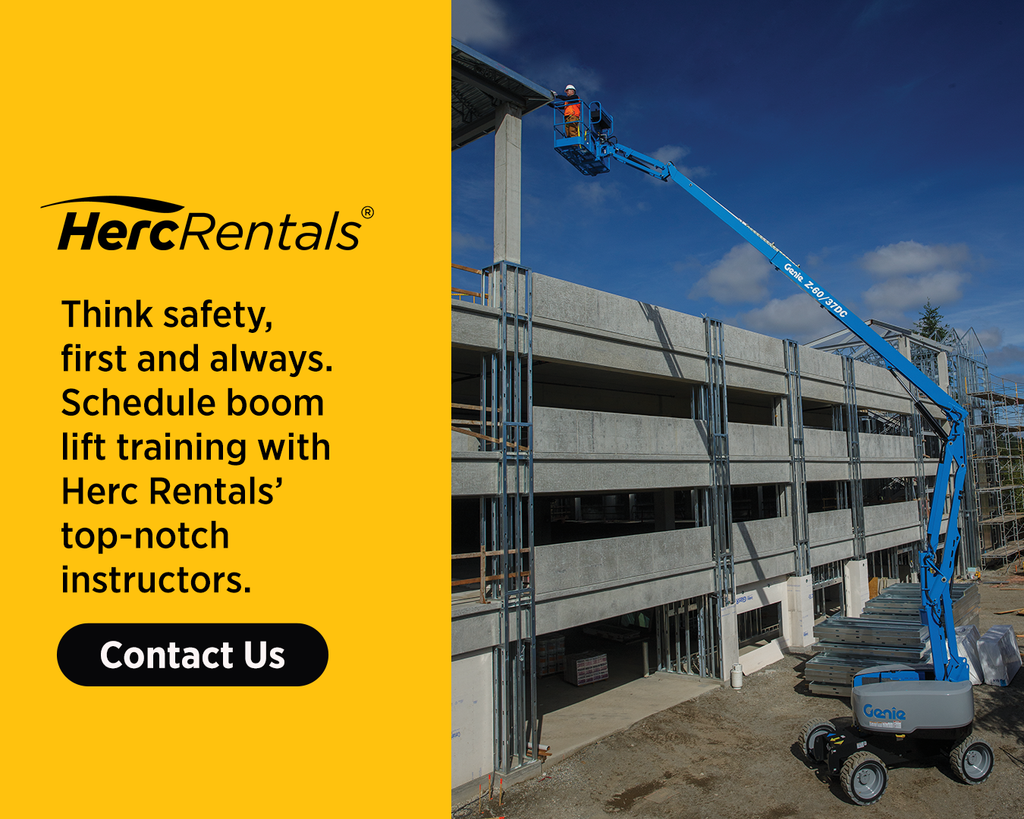
Boom lifts give crews the reach and flexibility to tackle elevated work more efficiently, but safe operation should always come first. At Herc Rentals, we think safety, first and always. We’re ready to help your team make the most out of your next boom lift rental.
We offer top quality equipment safety training and certification courses and a large fleet of safe, reliable boom lifts that are sure to accommodate your unique needs.
Ready to find the right boom lift for your next project? Browse Herc Rentals’ aerial mobile elevated work platforms or call 1-800-432-6215 to get started with boom lift safety training today.