Last Updated on October 8, 2025
Without reliable power, work and equipment grinds to a halt, and the consequences quickly add up. Making sure you have generators on site can save you from costly delays, spoiled food and supplies. In the case of medical facilities, generators can even save lives.
In some cases, such as construction in remote areas, you can plan way ahead to have your equipment rental provider safely deliver the generator to your site for you.
But, if you suddenly need a generator and equipment transportation services are unavailable, you may need to transport it yourself. Or, you might simply choose to transport the generator on your own for any number of other reasons.
Portable generators and towable generators offer a lot of convenience and are designed to make transportation as easy as possible. However, there are still several things you need to do to make sure your generator arrives safely. In this article, you’ll learn the top five tips for towing a generator safely.
- Read more:
Handle With Care: The Importance of Safety When Towing a Generator
Portable and towable generators are designed to be moved from site to site. However, they need to be secured and transported carefully to avoid damage.
A damaged generator is a dangerous one. Damage during transport could result in electrical shocks, fires, unreliable power that damages equipment or even fatal injuries to those using the generator.
- Read the OSHA Fact Sheet: Learn more about the hazards associated with generators.
Safety must be your top priority. Whether you’re renting a portable generator that fits on the back of a pickup truck or a towing a large diesel generator, use the tips below to keep everything and everyone safe.

Top 5 Tips for How to Tow a Generator Safely
From planning to preparation to driving on the road, here are the top five tips to help transport your generator safely.
1. Start with the Right Vehicle and Hitch
Each generator model is different. Start by checking the manual and talking with your equipment rental provider for instructions on how to safely transport your generator. This will help you determine the total weight of the generator, accessories and fuel so you can make sure you have the right type of vehicle and transportation equipment.
- Portable Generators: Portable generators are small and can fit on the back of a pickup truck. Use a hitch carrier (a lockable equipment box) to keep the generator dry and secure.
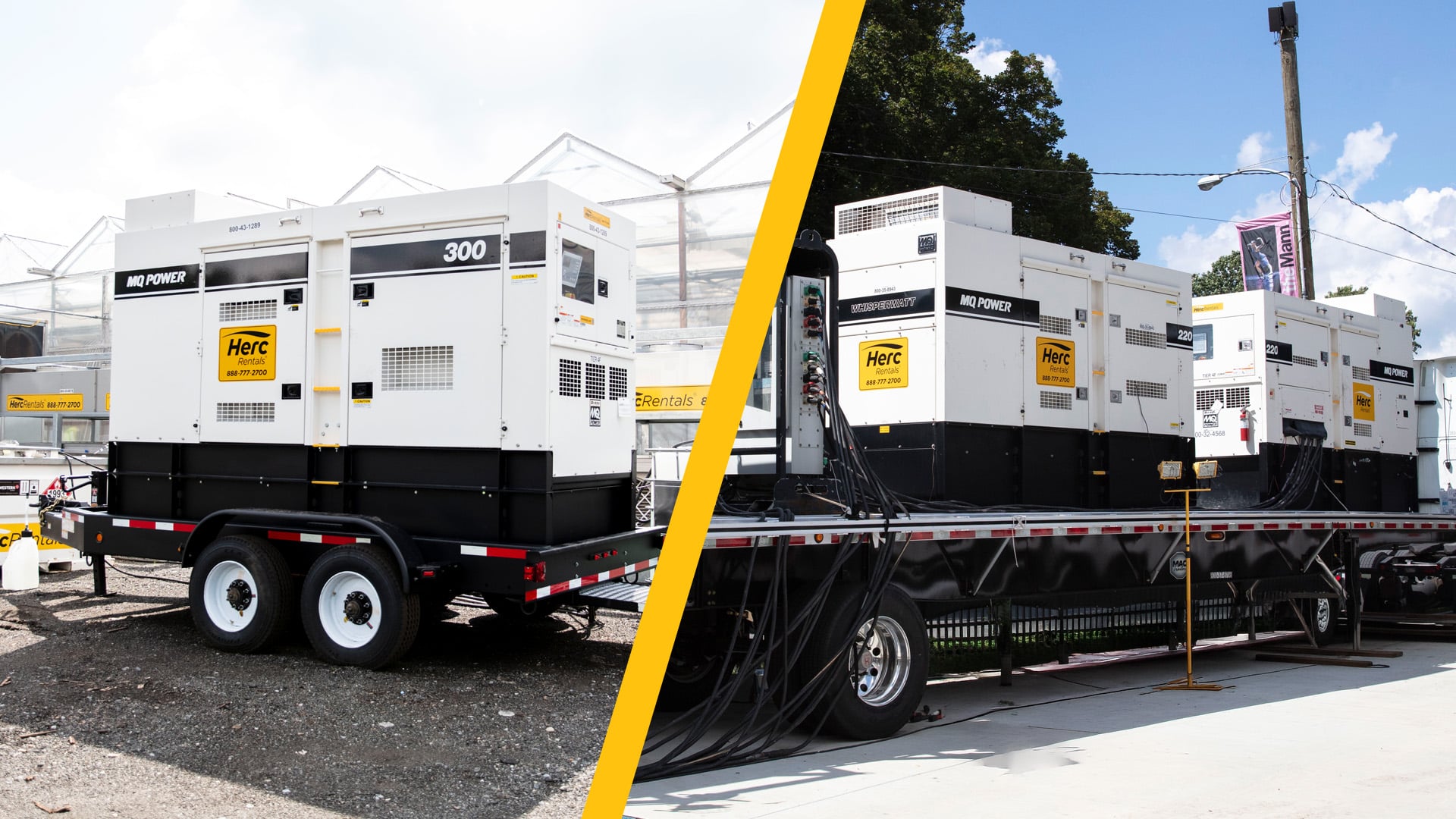
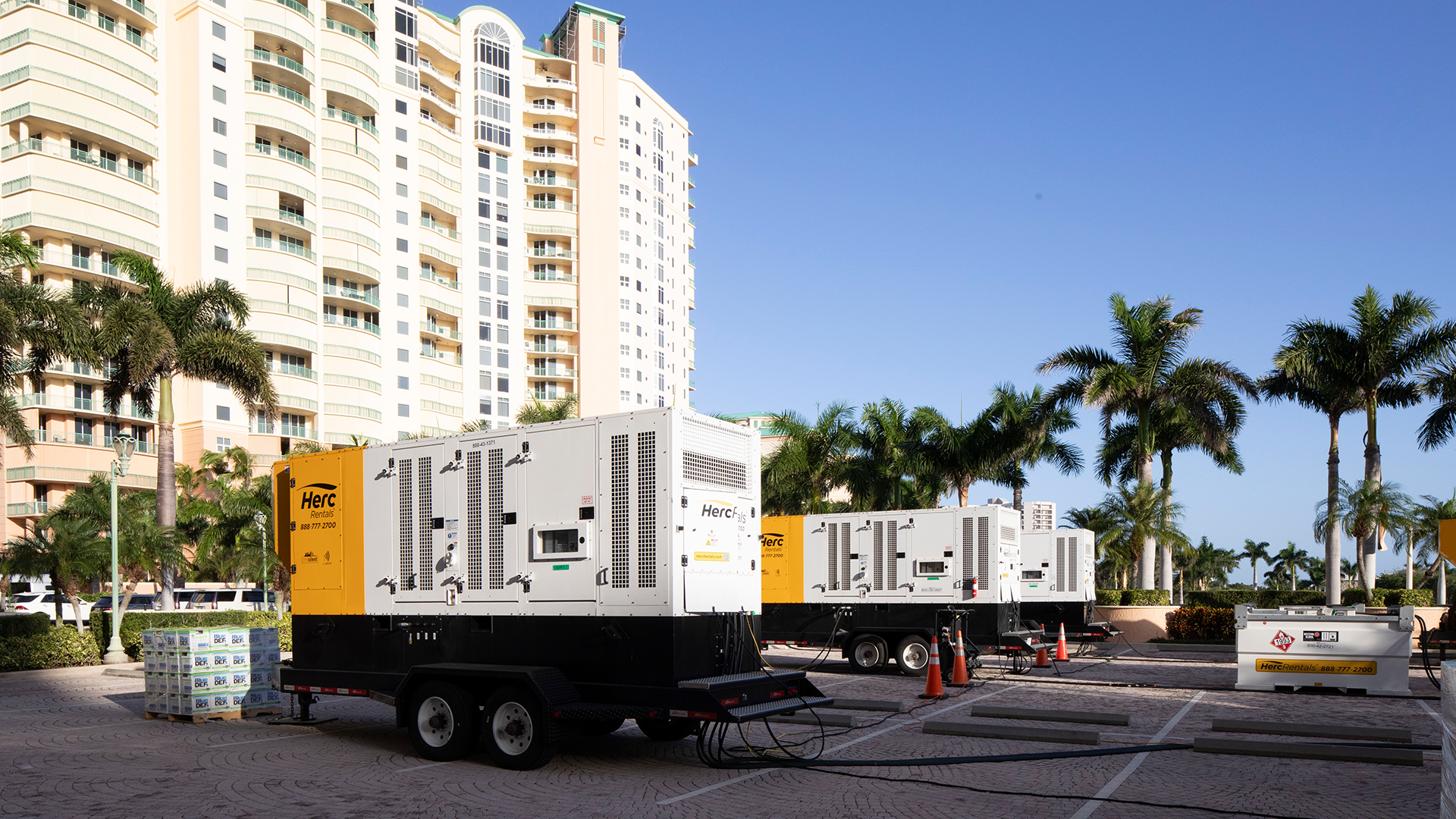
- Towable Generators: Larger towable generators come with wheels or attached to their own trailer. Depending on their size, you may need a larger truck or semi-truck.
- Skid-Mounted Generators: You will need a truck and flatbed trailer with ample towing capacity. You’ll also need equipment, such as a forklift, to load and unload the generator.
Make sure that your vehicle has the towing capacity necessary to pull the generator and the trailer if using one. Keep in mind that even when the vehicle has plenty of towing capacity, moving a generator will increase your vehicle’s fuel consumption due to the increased weight.
2. Plan Ahead to Secure Permits and Stay Compliant
Towable generators can be heavy and large, which means you may need special permits or licensing to transport the load.
Additionally, you may also need to transport a lot of fuel, which may fall under hazardous materials regulations.
Be sure to check your local and national transportation and safety regulations early. Secure the necessary permits and complete safety training before transporting any generator.
3. Drain the Fuel and Secure the Generator Before Driving
When it’s time to load up, focus on stabilizing the generator to reduce the risks of fuel spills and damage.
- Drain and Cool the Generator: Before loading your generator, drain the fuel and let it cool down, if it was in use. If you’re unable to drain the generator, make sure all caps are on tight so that it doesn’t leak in transport. Spilled fuel and a hot generator can cause a fire or other damage.
- Keep the Generator Upright: Then when you lift and load the generator make sure to keep it upright so that you do not damage it. Picking up portable generators the wrong way or allowing any generator to lay on its side could damage the generator.
- Secure the Generator: Once the generator is in place on the trailer or the bed of the vehicle, use tie-downs or bungee cords to secure it in place. If it has wheels, lock the wheels in place to keep it from rolling while driving.
4. Slow Down and Adjust Your Driving
Towing a generator on or behind your vehicle will greatly change the way your vehicle handles. At the very least, acceleration and deceleration will be reduced due to the added weight.
- Be sure to slow down and give yourself plenty of stopping distance.
- Avoid pulling out in front of moving vehicles or making quick turns and stops.
- If you are pulling a trailer, your turn radius will be larger, especially on right hand turns. Make sure you have enough time and space to make the turns safely.
- Bring backup equipment, such as tires and extra tie-downs, in case of a malfunction.
5. Use Caution if Running the Generator While Towing
It is generally not advised to run a portable generator while a vehicle is in motion.
But, there are circumstances when it may be warranted if you need to run an air conditioning unit in a food truck or animal trailer while driving long distances on a hot day, for example.
If you absolutely must run a generator while in motion, make sure you do the following.
- Check Local Laws and Regulations: Many areas may not allow generators to run while a vehicle is in motion or may have restrictions on the kinds of generators that are allowed to do so. If this is the case, change your plans.
- Prevent Carbon Monoxide Poisoning: Make sure you have plenty of ventilation. Portable generators need ventilation to stay cool and keep carbon monoxide away from people and animals. If you can’t ventilate properly, do not run the generator!
- Go Slow and Smooth: Drive as smoothly as possible to avoid sloshing the fuel. Accelerate slowly and give yourself lots of time to slow down and stop. Take turns as smoothly as possible.

Herc Rentals Makes Getting a Generator Easy
Towing a generator safely means making sure you have the right equipment and know-how. When it’s time to get reliable power to your site, let Herc Rentals help.
Our highly capable service team will help you find the generator that fits your transportation capabilities and meets your project needs.
Our high-quality fleet of generators and power-generation accessories will keep your teams productive, even during a power outage. Plus, you’ll eliminate the hassle and costs that come with equipment ownership while having flexible access to the latest technology.
Don’t have time or the equipment to transport the generator yourself? Eliminate the hassle of transportation entirely with our equipment delivery services. We’ll transport the generator to and from your project site, saving your team time and energy.
Get the right generator to your site today by exploring Herc Rentals’ backup power generation solutions, or giving us a call at 888-777-2700.