Last Updated on October 8, 2025
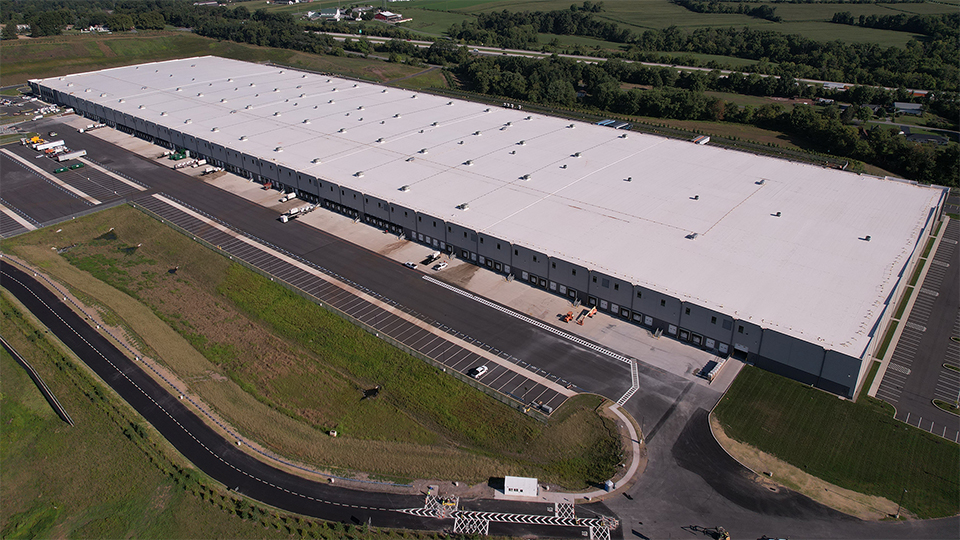
Construction projects are complex, as you know. If there’s a delay or error in one step, every step that follows will be affected. The delays and costs can add up quickly. One cause of these delays is a lack of power.
Maybe your project site is remote or off-grid. Or maybe your project site is fully connected to city power but is located in an area prone to outages or severe weather. Whatever the situation, you need continuous, reliable power. You likely also need to have a firm backup plan in place.
A construction generator rental can be the perfect solution. But how do you know which generator to rent? After all, choosing the wrong generator could result in delays at best or fatal injuries at worst.
By the end of this article, you’ll understand exactly what you need to consider so you can make the best decisions about which kind of generator to rent for your construction jobsite.
What Are the Best Generators to Rent for Construction?
The best temporary construction generator to rent: the one you have to worry about the least. Whether you rent a smaller portable generator, a sizable towable generator or a large skid-mounted industrial generator, your rental should:
- Be the right size, providing enough power to run your equipment and handle power surges safely.
- Be easy and cost efficient to fuel, even during severe weather or extended outages when fuel is hard to get.
- Be ready to go right when you need it, with little to no delivery or setup delays.
Why Rent a Temporary Construction Generator?
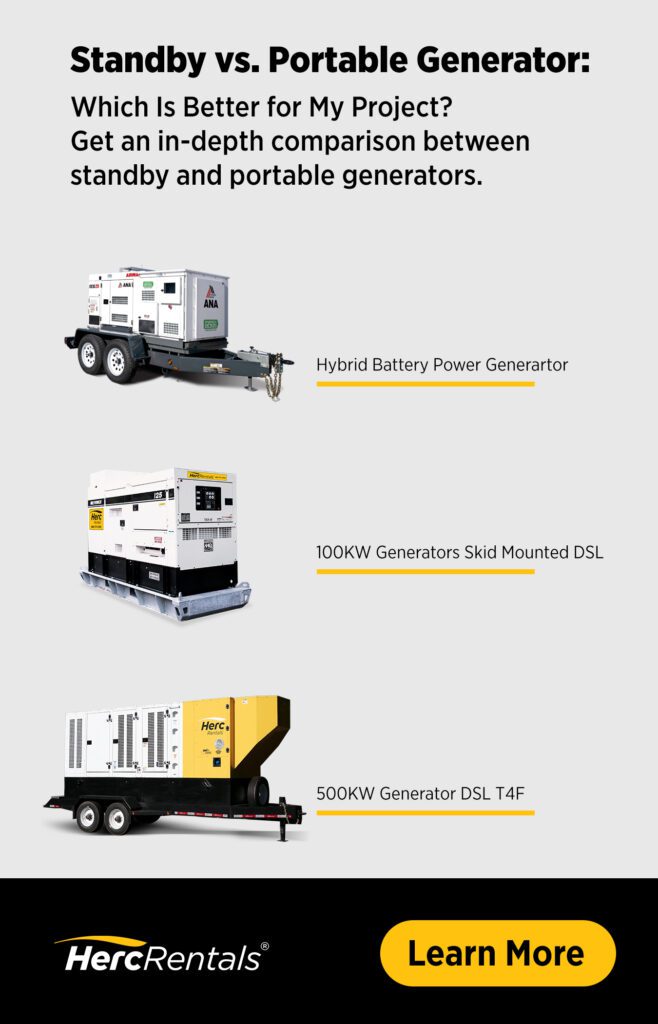
Since each jobsite can vary, you’ll likely need different types of generators for each project. A smaller project in a city might only need a portable battery-powered generator while a long-term project in a remote area may need a trailer-mounted diesel generator.
Renting a temporary construction generator offers many advantages over buying. First, you only have to pay for what you need. If the generator is too big and powerful for the specific use, it will take up too much space, waste fuel and come with unnecessarily high cost. But if it’s too small, it won’t power your equipment and will require lots of refueling.
Renting gives you the flexibility to have correctly sized generators when and where you need them without the large down payments or ongoing storage and upkeep costs of ownership.
Plus, partnering with a reliable equipment rental provider can streamline your operations. A high-quality provider will have all the equipment, training and information you need. The rental organization can even handle transportation and setup.

The 3 Best Temporary Construction Generators
In the next section, you’ll learn how to narrow down your options to select the best model. Of course, an equipment rental provider should have expert advice to match you with the exact equipment that will fit your needs. For construction projects, here are the three best types of generators to consider.
Portable Generators: Best for Small Projects and Tools
Portable generators are designed to power one or more pieces of equipment for several hours. They are there when you need them and gone when you don’t.
- Pros:
- Easily transported in the back of or towed behind a regular vehicle and moved throughout a site.
- Easy to set up and refuel.
- Lower costs to rent and fuel than larger generators.
- Cons:
- Lower power than other generators.
- May need to be refueled more often.
- Requires more care to keep carbon monoxide (CO) emissions away from people while protecting the generator from bad weather.
Industrial Generators: Best for Large Projects
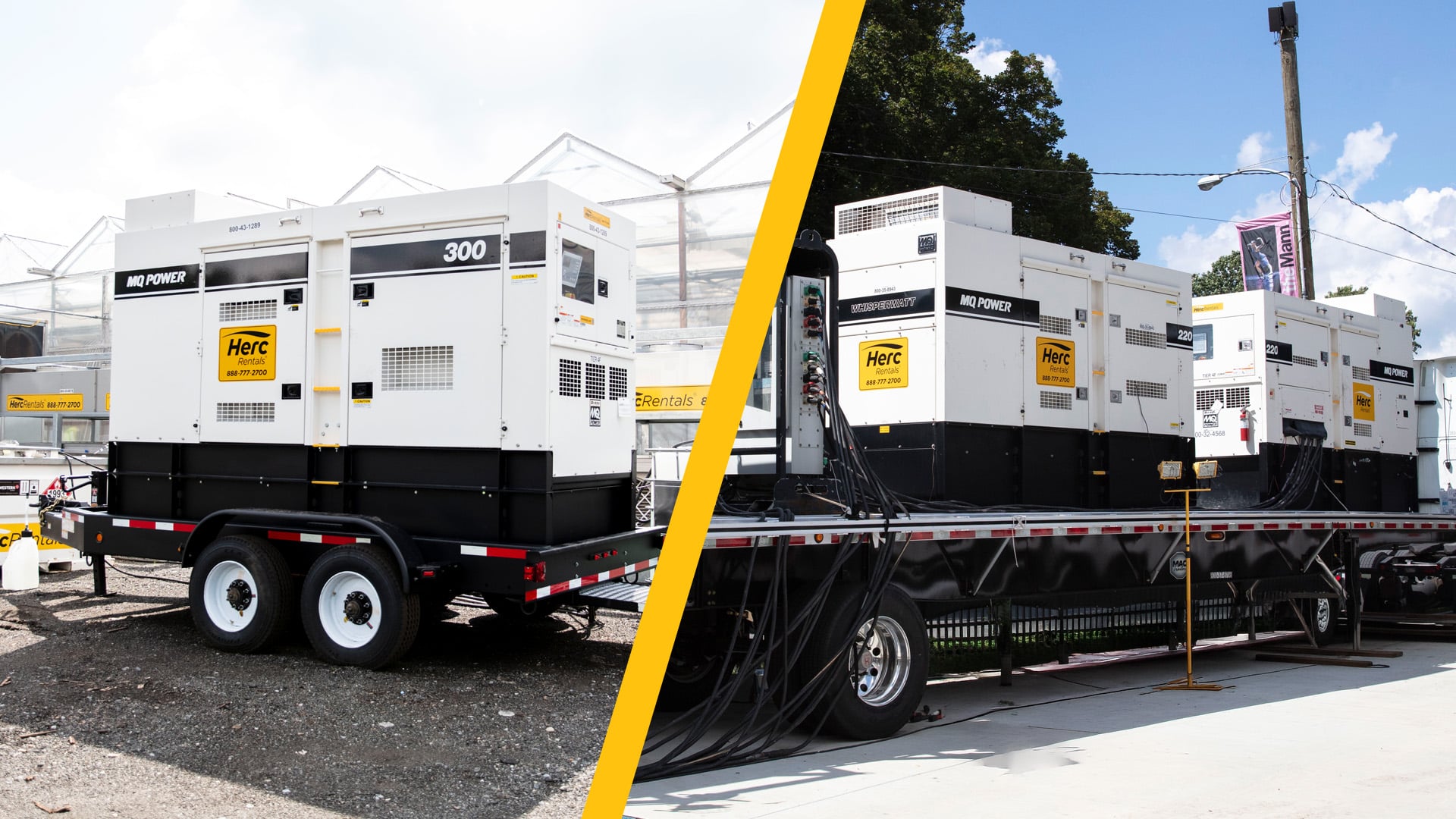
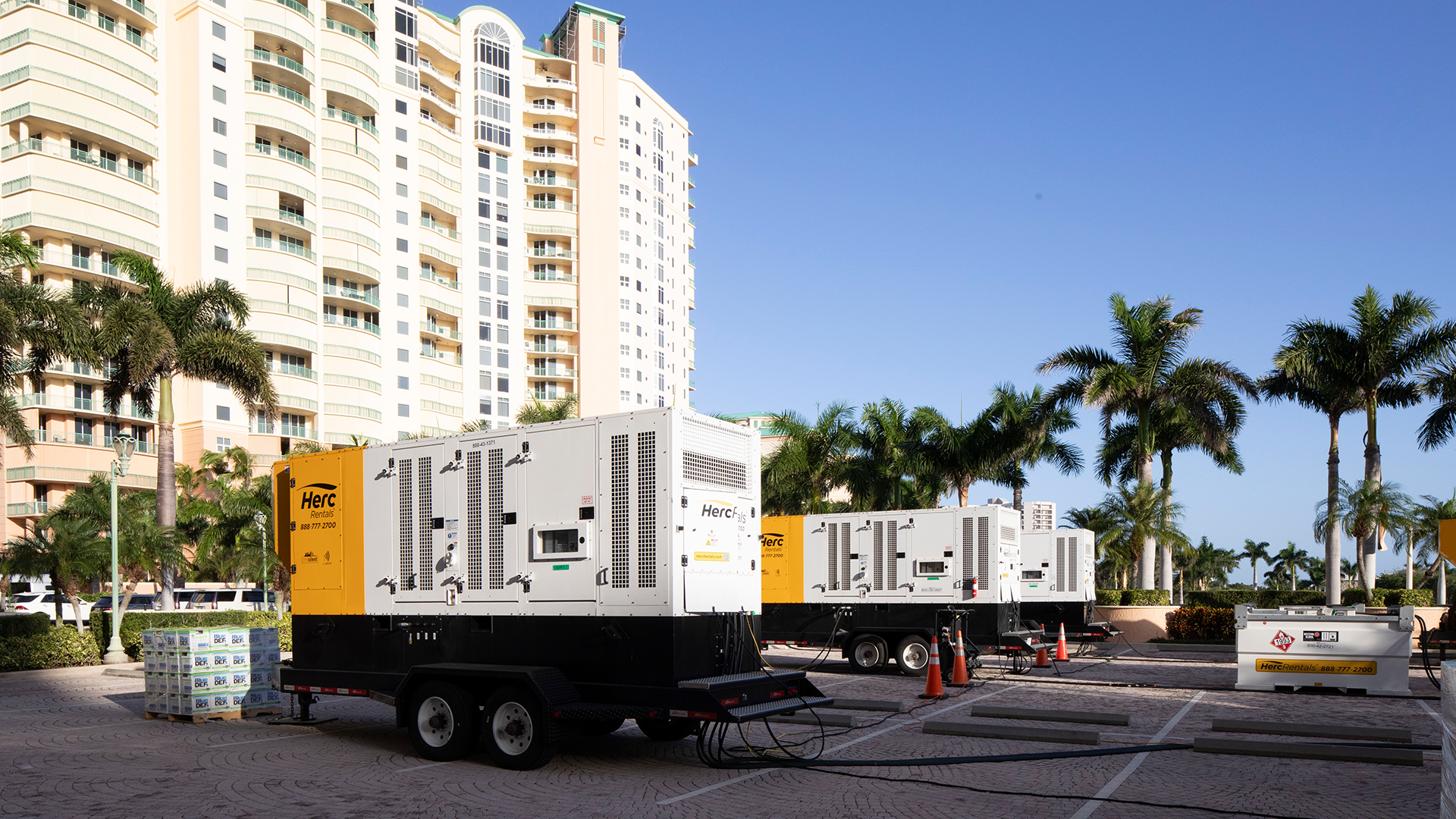
Industrial generators are portable, but they are much larger and more powerful than the models typically classified as “portable generators.” Industrial generators are towable or skid-mounted generators that can be moved from site to site.
- Pros:
- Can power an entire site or building, such as a temporary management office, for days and weeks.
- Handles large power demands and power surges.
- Provides power for extended periods and in inclement weather.
- Cons:
- Harder to mobilize than smaller portable generators.
- Requires more fuel than portable generators.
- May encounter maintenance issues if the generator is under-utilized.
Backup / Standby Generators: Best for Facilities and Long-Term Projects
Backup generators, also known as standby generators, are permanent (or very long-term) fixtures that offer long-running power without refueling. They are best for buildings or multi-year projects with systems that need to run without interruption, such as for facilities with refrigeration needs.
- Pros:
- No need to install or set up the generator each time the power goes out.
- No refueling since the generator is connected to a permanent gas line.
- More power output than most portable generators and can run for days or weeks.
- Cons:
- Additional costs for initial installation of fuel lines and concrete pads.
- May require regular maintenance and inspections.
- Can’t be moved to another site. Additional generators may be necessary for a very large site.
5 Factors to Consider When Renting a Temporary Generator
As you just learned, there are several types of temporary generators to choose from for construction. To determine which model is the best one to rent for your project, you will need to consider the following five questions.
1. Does the Generator Meet My Power Requirements?
“Generator size” doesn’t just mean its length and width. It also refers to how much power it needs to generate. The generator you choose needs to fit on site and power all your equipment fully.
To determine how much power you need, there are two figures you need to look at:
- Starting Watts: Many tools and appliances need a large burst of power to get started and then can continue running with much less power sustaining them. When you have a lot of these kinds of devices, you need a lot of starting watts.
- Running Watts: Running watts, on the other hand, are the amount of power you need to keep everything up and running. A generator that powers lights or equipment over long periods will need more running watts.
- How to Determine How Much Power Output You Need: Look at the manufacturer guides for all the equipment that the generator will power. Add up how many watts (W) or kilowatts (KW) are needed to start and run each item. Make sure your generator has a power output about 20% higher than the total watts you’ll need.
- Learn more: Load banks are another great way to test and monitor your power generation needs.
2. What Fuel Type Does the Generator Use?
Once you know what size of generator you need, you need to narrow down your options by fuel type. The type of fuel a generator uses can affect cost, fuel consumption, efficiency, noise and emissions.
- Diesel: Diesel generators are a common choice for construction projects. Diesel is less flammable than gasoline, and a lot of construction equipment uses diesel as well, which means that it is often readily available at the site.
- Gas-Powered: Gasoline burns more cleanly than diesel, which can make gas generators a better choice if emissions are a concern. Additionally, gasoline is generally cheaper than diesel, making it a cost-efficient alternative. However, it may be hard to get more fuel during severe weather, when gas stations are busy or closed.
- Electric: Solar- or battery-powered generators are an excellent choice for projects that need to minimize noise and emissions, such as indoor projects. However, they might not be powerful enough for large or long-term projects.
- Hybrid: Hybrid generators only use fuel to recharge their batteries, making them a good option for projects that need a lot of power without the continuous noise and emissions of other generators.
3. What Is the Total Rental Cost?
When it comes to rentals, longer rental periods are better, at least when it comes to per-day costs. Renting for a week will cost more per day than combining projects and renting for a month.
To make sure the total rental cost fits your budget, make sure to factor in the following items.
- Equipment transportation
- Installation and setup, including accessories
- Fuel and fuel storage
- Equipment operation and safety training
4. Is the Rental Company Reliable?
Partnering with a reliable rental company helps you avoid problems and delays. Make sure the company you use has a range of well-maintained generators with lots of availability so that you can get the best generator for your project. High quality rental providers don’t skimp on maintenance and repairs and will support you by providing any training and safety information you need to use the equipment correctly.
5. Will the Generator Be Available When I Need It?
Don’t wait for a power outage or a project to start to find a generator. Finding the best construction generator rental can be hard during peak construction seasons. During severe weather, it can be impossible. Rental providers may have less inventory, longer waiting period and higher fees. Work with a rental provider early to lock in the best rental terms. This will ensure your project gets reliable power right on time.
Additional Power Generation Equipment You May Need
Power generators are inherently dangerous pieces of equipment, and it is important to understand the safety requirements of your area and the equipment manufacturer.
You may need additional equipment to meet these safety standards. Luckily, a reliable rental provider should proactively help you meet the needs of your project and these standards.
Some of the additional equipment you may need include:
- Auxiliary Fuel Tanks: Having an auxiliary fuel tank on-site can help avoid refueling delays.
- Distribution Panels and Boxes: These help you route power to different devices. This is particularly helpful on construction sites where there is no electrical infrastructure to take advantage of.
- Load Banks: Load banks are used to balance power needs and can help track how much power you are using and at any given time.
- Transformers: Transformers are used to change the voltage of an electrical current and may be needed depending on the kind of equipment you are using.
- Cabling: The right cabling lets you safely connect all equipment and transmit power.
- Transportation Equipment: Trailers, trucks and hitches will allow you to place your generators for maximum performance.

Power Your Construction Site with Herc Rentals
Whether you need to rent a portable construction generator or an entire temporary power solution, turn to the power experts at Herc Rentals.
We’ll help you find the total solution and the best temporary construction generator that address all your power needs. Our wide selection of high-quality, reliable generators and electric accessories are ready to go when you need them most.
Plus, we can help you streamline operations and keep your teams safe with equipment transportation and safety training programs.
Explore Herc Rentals backup power generation solutions, or give us a call at 888-777-2700 to talk with an expert today.