Last Updated on October 8, 2025
Wet soil is a danger to any construction or building project. Foundations become unstable, while trenches and excavations turn into a muddy mess. This can lead to equipment failures, injuries and expensive delays. And if the water is contaminated with hazardous materials, it can also cause environmental damage or affect your team’s health. Dewatering construction sites is a must.
To make sure your construction site remains dry, safe and stable, you need to dewater it. This means understanding some basic principles and knowing which methods and pumps will work best.
In this article, you’ll learn about different dewatering methods, construction pumps and other steps to consider before dewatering construction sites. By the end, you’ll be ready to start evaluating your construction site and creating a dewatering plan.
What Is Dewatering Construction Sites? Why Is It Important?
Dewatering is the process of removing water from a construction site to maintain safety and productivity. Surface water and groundwater are pumped or redirected away from the work site and into a discharge location, such as a retention pond or box.
By dewatering your site, you can eliminate slippery and unstable conditions. For example, if you’re working in a wet climate, rain and snow can cause ponding and run-off on the surface, while high water tables below ground can cause holes and trenches to flood. Dewatering keeps the soil strong and stable while helping to minimize the risk of slips and falls.
Different Dewatering Methods and When to Use Them
There are four primary methods for construction dewatering. Each method redirects or pumps water away from the site by using gravity, pumps or both. The method that’s best for your project will depend on factors such as soil type, budget, regulations and how deep you need to excavate.
- Well Points: A series of well points around the excavation site are connected to central pipe that vacuums out the groundwater.
- Sump Pumping: Pits, known as “sumps,” are added to the drainage area so water can be collected and pumped to a discharge point. This method is often simple and cost-effective, especially for shallow excavations with impermeable soil and minimal surface water.
- Eductor Wells: Eductor wells are a series of small wells with eductor bodies that create suction and lowers groundwater. It’s best for deep excavations in low-permeability soils that don’t have a large volume of water to remove.
- Deep Wells: Deep wells use submersible dewatering pumps and gravity to remove a large volume of groundwater. Unlike other methods, it works well in highly permeable soil and extremely large sites.

How to Remove Water from Your Construction Site
Now that you understand the basics of dewatering construction sites and the methods available, it’s time to create a dewatering plan and start drying the site out.
1. Create a Construction Site Dewatering Plan
Safe and effective dewatering begins by creating a detailed dewatering plan. Make sure your plan considers the following:
- Type of Water to Remove: Is it mostly groundwater or surface water? How much water is there? Is it filled with contaminants or debris? (If so, you may need a trash pump as well.) Visually inspect the site and conduct additional tests to determine pH levels and the types of contaminants the water contains.
- Type of Soil and Depth of Excavation: Are there different soils at different depths? Is the soil highly permeable? Meaning, can liquids pass through it easily? If so, certain dewatering methods may not work because the soil is too unstable.
- Safety and Environmental Considerations: Are there local, state or national laws that regulate where discharged water can go or what method to use? What safety training and equipment will your team need? Is there hazardous waste involved? If so, you may need to follow decontamination protocols.
2. Get the Appropriate Permits
Construction dewatering is often highly regulated, so make sure you secure all the necessary permits in place. For example, the Environmental Protection Agency (EPA) requires dewatering efforts to be carefully inspected and monitored. These regulations may dictate the methods a site can use so hazardous run-off doesn’t contaminate drinking water or damage the surrounding environment.
3. Use the Right Pump for Dewatering Construction Sites
Once you’ve created a plan and secured the necessary permits to dewater a construction site, make sure you select the most appropriate dewatering pump. Renting a dewatering pump is often the most cost-effective solution for getting equipment that meets the unique needs of your site. An experienced equipment rental provider can guide you to the pump that will work best and take care of any maintenance for you.
There are several types of pumps that can help you boost efficiency and manage a variety of dewatering challenges:
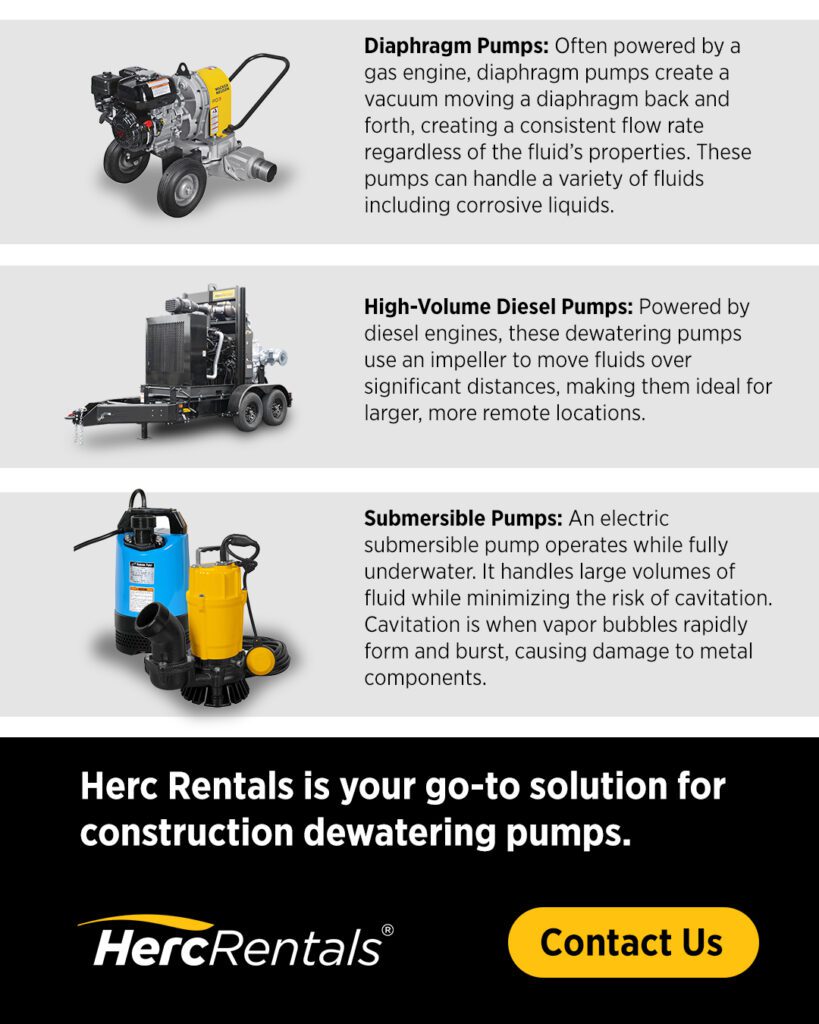
- Diaphragm Pumps: Often powered by a gas engine, diaphragm pumps create a vacuum moving a diaphragm back and forth, creating a consistent flow rate regardless of the fluid’s properties. These pumps can handle a variety of fluids including corrosive liquids.
- High-Volume Diesel Pumps: Powered by diesel engines, these dewatering pumps use an impeller to move fluids over significant distances, making them ideal for larger, more remote locations.
- Submersible Pumps: An electric submersible pump operates while fully underwater. It handles large volumes of fluid while minimizing the risk of cavitation. Cavitation is when vapor bubbles rapidly form and burst, causing damage to metal components.
4. Treat the Water for Redistribution
If there are pollutants in the water, you may need to treat the water on-site or remove sediment before discharging the water. This is why it’s important to understand the laws and to test the water before you move it. You may need to use dewatering boxes, desilting basins, or dewatering bags and tanks to ensure you’re only discharging clean water.
5. Remain Flexible
Lastly, be prepared to be flexible. Weather and other factors can cause conditions to change quickly, impacting your dewatering efforts and site safety. For example, if you see any soil erosion at the excavation site, immediately stop dewatering and ensure the area is stable before continuing. Additionally, if you encounter a section of soil that is highly permeable, take measures to isolate it so that the water you’re removing doesn’t get absorbed into the soil.
Dewatering is a must-have for any excavation effort. By planning ahead, using the right equipment and staying vigilant, you can make sure everyone and everything stays safe.
Dewatering Construction Sites Is Possible with Pumps from Herc Rentals
Don’t allow high groundwater or ponding surface water to slow your project down. Unlock peak performance with high quality dewatering pumps from Herc Rentals. Backed by exceptional service and expertise, our reliable and durable pumps are in peak condition, ready to meet the unique demands of your site.
Whether you need an electric submersible pump for deep water areas or a high volume diesel pump for moving fluids long distances, our equipment experts will help you find the right pump for your project.
Browse our wide selection of construction dewatering pumps or call 888-777-2700 to discuss options with an expert today.