
Last Updated on August 26, 2026
There is no time to wait when water seeps into your building. The longer moisture remains, the greater the risk of mold growth, material deterioration and costly repairs.
Whether the source is flooding or a leak that’s gone undetected for years, water damage in commercial facilities can disrupt operations and create indoor air quality concerns if not addressed properly.
Water damage restoration is the process of returning a property to its original condition, and professional water damage restoration services play a critical role in minimizing long-term impacts.
Hospitals, data centers and retail stores may need specialized equipment for water damage restoration to protect sensitive machines and populations.
Understanding the different types of water damage restoration equipment — and knowing where to source it before an emergency — can significantly improve recovery time and overall damage mitigation.
Read on to learn how each type of equipment supports a faster, more effective recovery process.
Understanding Water Damage Restoration
Effective water damage restoration requires a strategic approach and specialized equipment. It goes beyond surface-level cleanup, as water can seep beneath flooring, behind walls and into insulation.
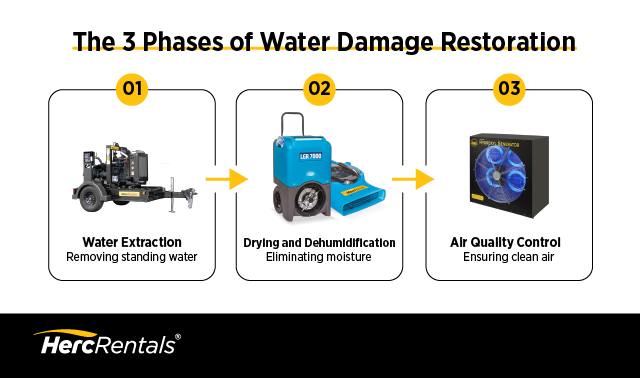
There are three phases of water damage restoration. Each phase uses different types of equipment to properly remove water, dry materials and restore air quality.
The 3 Phases of Water Damage Restoration
- Water Extraction: In the first stage, pumps, vacuums and extraction equipment are used to remove standing water and excess moisture from floors, carpets and affected materials. Fast extraction helps minimize damage and speed up the drying process.
- Drying and Dehumidification: Once visible water is removed, specialized air movers and dehumidifiers are used to dry structural materials and remove moisture trapped in the air and hard-to-reach areas. This step helps prevent warping, swelling and mold growth.
- Air Quality Control: In the final phase, air scrubbers, filtration systems and other air quality equipment are used to remove odors, airborne contaminants and mold spores from indoor spaces. This step helps clean and circulate air throughout the restoration process.
When to Use Professional Water Damage Restoration Services
Since water can come from a range of sources, including natural disasters, broken water lines, sewer backups, appliance failures and poorly draining roofs, damage is not always obvious. It may show up as warped materials, soft or spongy spots, peeling paint, or musty odors. In some cases, like a sewage backup, the area may also involve contaminants that require special handling to prevent the spread of disease.
If you are a facility manager or property owner, you know why professional restoration is crucial for water damage. While small spills may be handled in-house, larger events require specialized equipment, trained technicians and a coordinated response to deal with visible water and hidden moisture and manage operational risk. A do-it-yourself approach may seem cost-effective, but trapped moisture in structural cavities can lead to long-term deterioration, microbial growth, loss of energy efficiency and compromised indoor air quality.
Professional restoration and equipment specialists are trained to evaluate the full extent of water intrusion, including hidden moisture detection and material assessment. They use industrial-grade equipment to extract water, control drying conditions and stabilize indoor environments. They can also help document damage and coordinate with insurance providers to streamline claims and reduce downtime.
Because emergencies happen without warning, it is important to establish relationships with trusted restoration professionals and equipment rental providers before a problem occurs so equipment can be secured quickly when needed.
Factors That Affect How Long Water Damage Restoration Takes
When disaster strikes, you may wonder, “How long does water damage restoration take?” The answer is: it depends.
Several factors will influence your timeline.
- Severity and Type of Water Damage: A small leak involving clean water may be addressed quickly, while contaminated water, flooding with debris, and water damage with hazardous materials require more intensive cleanup, safety precautions and longer drying times.
- Overlap with Other Restoration Efforts: Sometimes water damage is caused by, or overlaps with, other restoration efforts. For example, if there was a fire, efforts to put it out may have left behind significant amounts of water that must be removed before repairs can begin, requiring both fire and water damage restoration equipment.
- Equipment Availability and Access: If you have immediate access to the appropriate equipment — like pumps, dehumidifiers and air movers — you can significantly reduce restoration time. Delays in sourcing equipment, especially during widespread emergencies, can slow progress across all phases of the job.
- Size and Type of the Affected Materials: Larger areas full of porous materials like wood and carpeting demand more labor, equipment and time to dry than smaller spaces made of tile or concrete. Complex spaces also increase the likelihood of hidden moisture that must be located and removed before completion.
- Environmental Conditions (Humidity, Temperature): Ambient conditions play a major role in drying efficiency. High humidity slows evaporation and cool temperatures slow drying times. You may need to create a controlled environment with proper airflow and extra dehumidification to improve results.
3 Essential Types of Water Damage Restoration Equipment
Having the right equipment on hand greatly improves the speed and effectiveness of water damage restoration.
Equipment that is properly sized and designed for the task at hand helps crews work better and faster, reduce downtime, and limit the risk of secondary damage from lingering moisture. For example, equipment needed to clean up after a hurricane is very different from tools used to remove wet drywall after a localized leak.
Most restoration projects require multiple types of equipment working together. For example, all of the equipment below will need a generator in the event there is no power on-site.
1. Water Extraction Equipment: Pumps and Vacuums
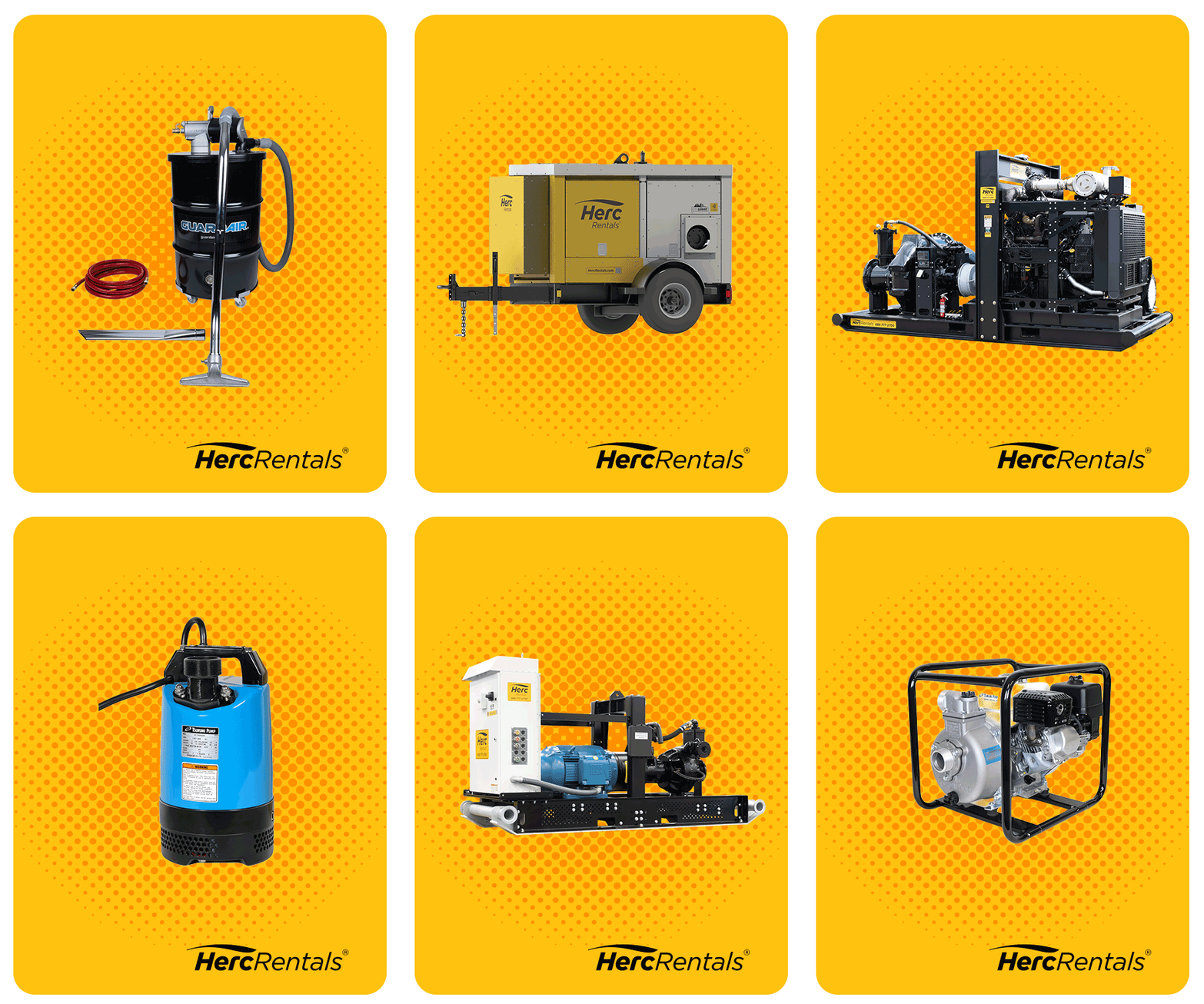
Water extraction is often the first and most urgent phase of restoration. A variety of pumps and vacuums are available to remove water; each is designed for a specific purpose depending on the amount of water, debris and accessibility of the area.
- Water pumps are used to remove large volumes of water.
- Flood extractors are ideal for removing relatively clean standing water. They have an integrated pump that allows for continuous use with no stopping to empty the tank.
- Trash pumps are designed to handle water containing mud, debris, sludge or other solids that could clog conventional pumps. There are several different types of pumps available, each with a different mechanism for moving water. Traditional centrifugal trash pumps use a spinning impeller to move water. Diaphragm trash pumps use a membrane, or diaphragm, that moves up and down to remove water. Vac-assisted trash pumps use an impeller plus an integrated system that enhances fluid movement and maintains consistent flow rates.
- Learn more: How to Use a Trash Pump
- Portable wet/dry vacuums are often used after the bulk of the water has been removed to collect residual moisture from floors, carpets and confined areas.
In addition to extraction equipment, restoration crews may use moisture meters and infrared thermal cameras to detect hidden moisture behind walls, under flooring or inside structural materials.
2. Drying and Dehumidification Equipment
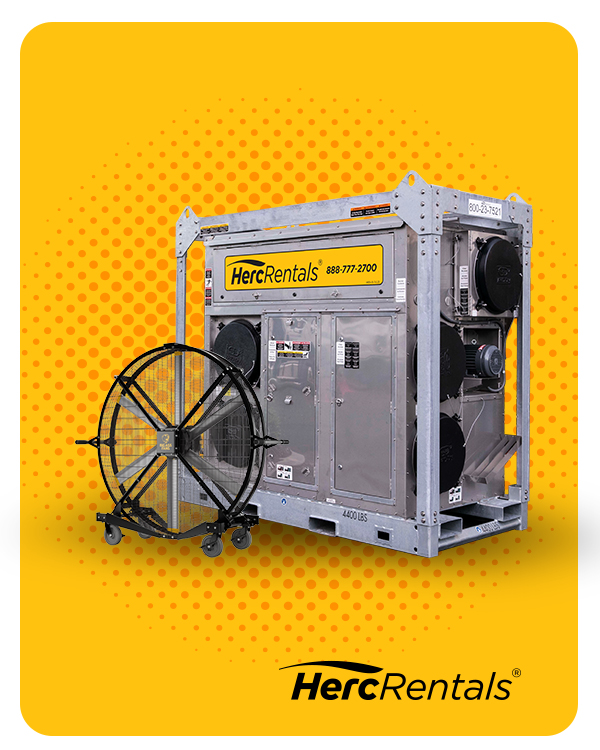
Once standing water is removed, drying and dehumidification equipment is used to eliminate residual moisture from structural materials and the surrounding air. At this stage, removing moisture — not simply applying heat — is critical for preventing mold growth, swelling, warping and long-term structural deterioration.
- Air movers, high velocity axial fans and carpet fans help accelerate evaporation by circulating air across wet surfaces like flooring, drywall and framing materials. Compact low-profile air movers are commonly used in confined areas and for drying underneath cabinets or inside smaller rooms.
- Larger axial fans are designed to move high volumes of air across open spaces and long distances.
- Carpet dryers direct airflow underneath carpeting and padding to help speed up floor drying after leaks or flooding.
- Dehumidifiers remove moisture from the air as water evaporates from materials. Refrigerant, or low-grain refrigerant, dehumidifiers are commonly used in warmer and more humid conditions and are effective for many standard restoration projects. Desiccant dehumidifiers use chemical drying materials instead of refrigeration coils and are often preferred in cooler temperatures, industrial facilities and larger commercial settings where very low humidity levels are required.
In larger restoration projects, drying equipment may also be paired with temporary climate control and air handling systems to improve airflow and stabilize indoor conditions.
3. Air Quality and Climate Control Equipment
Many restoration projects require equipment that addresses indoor air quality, as well as moisture removal. Moisture, contaminants and disturbed materials can negatively affect air quality during restoration, especially in enclosed environments or after flooding events involving contaminated water.
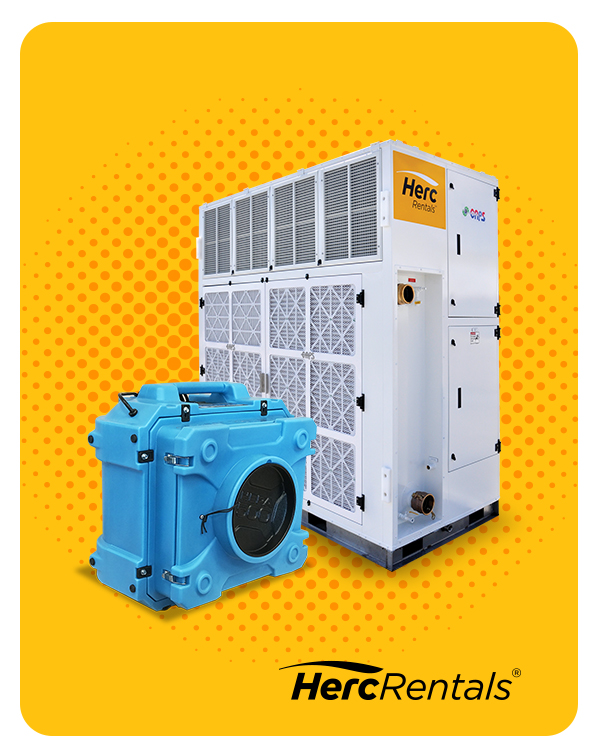
- Air scrubbers use high-efficiency filtration systems to remove airborne particles, dust, mold spores and other contaminants from the air.
- Negative air machines use ducting to eliminate contaminated air from a confined space to prevent contaminants from spreading to other rooms or spaces. Air scrubbers are typically used in smaller spaces, while negative air machines are useful for larger spaces.
- Air handlers and climate control equipment improve ventilation, regulate temperatures and support drying conditions throughout the project.
Maintaining proper airflow and environmental control is especially important in data centers, healthcare settings, commercial buildings and other sensitive spaces where indoor air quality and operational continuity are essential.
Get Ready to Spring into Action with Herc Rentals’ Water Damage Restoration Equipment
A quick response to a water emergency is paramount for limiting downtime and protecting people, property and facilities. With the right equipment and expertise, restoration projects can move forward faster and more efficiently.
Herc Rentals supports professional water damage restoration services and climate control needs with a wide range of solutions, from extraction and drying equipment to air scrubbers and dehumidification systems, helping facility managers, contractors and property owners respond at a moment’s notice.
To learn more, visit the Herc Rentals Remediation and Restoration Equipment Rentals page, or call 1-800-432-6215 to speak with an industry professional today.


