
Last Updated on June 26, 2026
When temperatures climb, air conditioning (AC) systems work overtime to keep you, your teams and your property cool.
At some point, your central air conditioning system will break down or need to go offline for maintenance. But what happens if you can’t wait and you need a temporary unit to hold you over? Or if you’re working at an older facility with no central AC to start with?
The following are some tips to help you get the most out of your temporary portable air conditioner rental.
Why Climate Control Matters
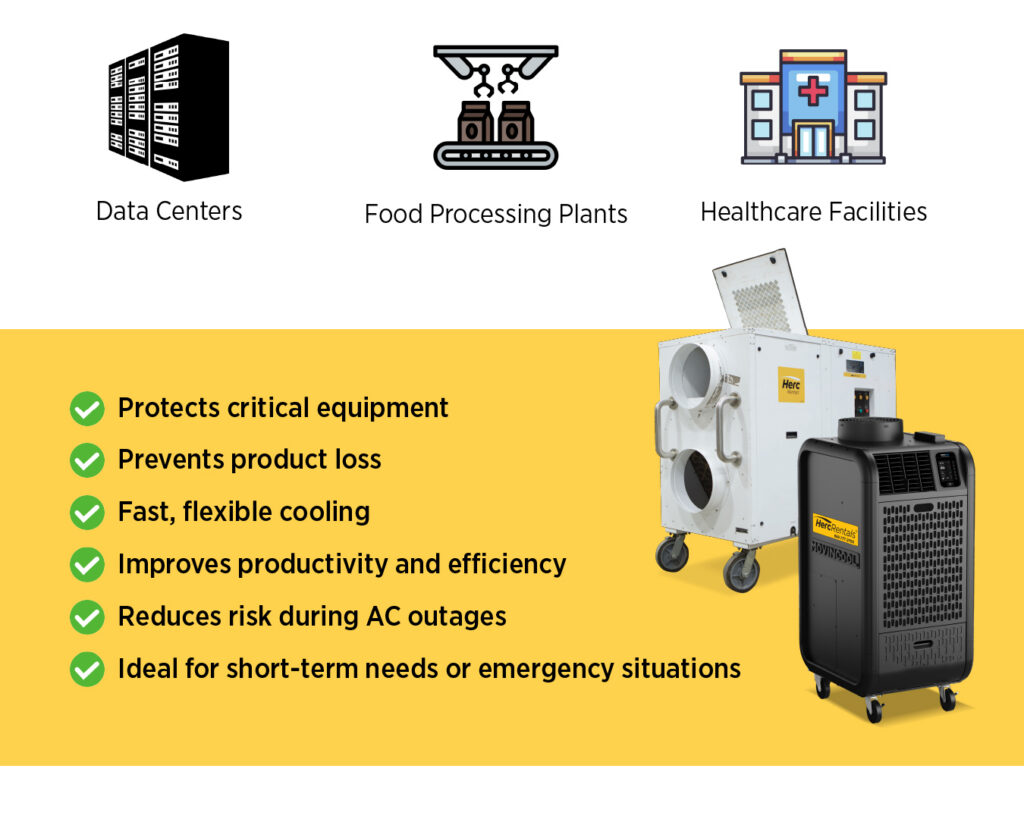
Portable air conditioning units are essential across many industries because temperature control can be more important than simply maintaining comfort. In data centers, healthcare facilities, and food processing plants, even a short AC outage can cause equipment damage, health problems or product loss. Portable units provide a fast and flexible solution to maintain safe conditions.
Renting AC units can be a gamechanger for other industries as well. People and equipment are less productive and efficient if they’re overheated. While OSHA doesn’t require air conditioning per se, it does mandate that you provide a safe and healthy workplace with indoor temperatures between 68°F and 76°F.
Renting a Portable AC Unit: 10 Things to Consider
Whether you’re planning for downtime due to maintenance or responding to an emergency, the list below will help you choose the best portable AC unit and rental provider for your needs.
1. Understand Your Cooling Needs
Before selecting a portable AC unit, think about why you need it and for how long. Are you dealing with a sudden HVAC failure, planning for seasonal weather or maintaining temperature-sensitive equipment?
Knowing the square footage, the number of occupants and the presence of heat-generating equipment will help determine the right unit size and type. Also, consider if you need the unit for only a few weeks or if you’ll need to use it regularly for months, even years.
These factors can impact the rental duration, pricing, and whether additional equipment like ducting or power distribution is required.
2. Measure Your Space: Length × Width × Height
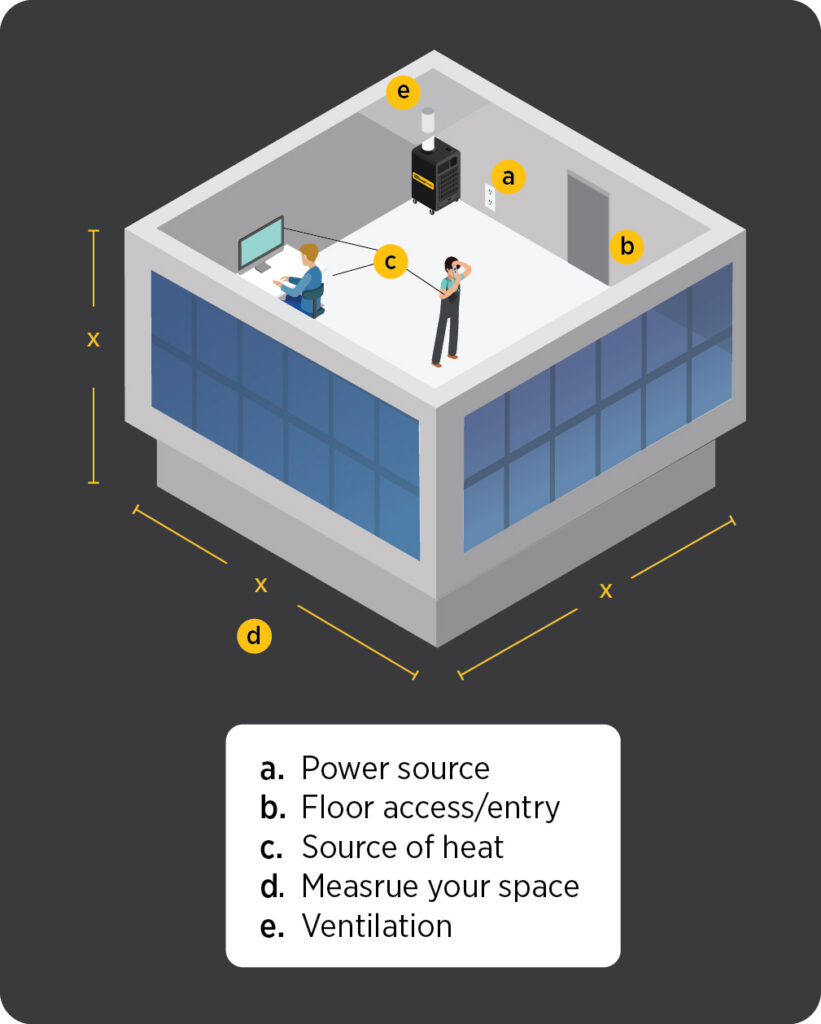
Next, find out how much space you need to cool. The best measurement is the total cubic feet (or volume). While the area of a room is helpful, multiplying by the room’s height gives you a better idea of what capacity the portable AC unit must provide.
- Example: A room that is 100 feet wide, 100 feet long, and has an 8-foot ceiling has a volume of 80,000 cubic feet (100’ x 100’ x 8’).
Also consider if the space is one big area or separated into many rooms. If there are multiple rooms, add up the volume of all the spaces and check if you will be able to tie into pre-existing venting. If not, you may need multiple smaller AC units rather than one larger one.
3. Know Your Power Source
Understanding your electrical outlets is an important step. If the available power and the AC unit don’t match, the plug will not fit into any of the available outlets. Or you could trip the circuit and cause unnecessary damage.
While many portable AC units can use standard residential/commercial outlets, larger units may require more power.
For example:
- A 1-ton unit can be plugged into a standard 115V 15-amp outlet.
- A 1.2-ton unit requires a 115V 20-amp accommodating socket.
- Larger units, like 2- to 5-ton portable AC units, will require 208/230/460 single- or three-phase power.
Before renting a commercial AC unit, try to verify the voltage and phase of the available power. If you are unable to verify the type of power available, a reliable equipment provider will have their representative check for you.
4. Identify Other Unique Features and Uses of Your Space
Don’t forget to identify and share the unique features about your space that could affect how hard the air conditioner will need to work.
Features to Consider:
- Are there windows in the room? If so, how many? Windows are helpful as places for venting hot air, but large windows facing the sun may cause the room to heat up more than normal.
- How many people are working in the space, and for how long? The body heat of a few people won’t matter much, but if the space is packed with people, like at a convention, you will need additional power to keep it cool.
- Do you have a lot of electronic equipment (or other heat generating equipment) in the space? Areas with a lot of electronic equipment (like a server room) will generate a lot more heat than empty space or a room without powered equipment.
5. Plan for Ventilation
Portable air conditioning units exhaust warm air as part of the cooling process. This hot air is typically ducted out of the space through a window, into a drop ceiling or through a wall.
Knowing your ventilation options in advance will help your equipment provider determine the best air conditioner for your space.
If it is not possible to duct the hot air out of the space, then water-cooled air conditioners may be your best option. These units don’t require exhausting warm air.
6. Consider the Size of the AC Units
Portable AC units can take up a lot of space. They also need a clear area around them to run efficiently and not overheat. Plus, temporary ductwork can add to the amount of space dedicated to the unit.
If you’re cooling an office building with little floor space available, you may need multiple small units. However, if you’re cooling a warehouse with ample free space, you can use one large unit.
Also consider how the unit will get to the right location. Will it fit through the doors? Are there stairs or elevators it needs to fit in? These measurements may also affect what model you choose.
7. Ask About the Noise
Cooling units can be noisy pieces of machinery. This sound can impact some environments more than others. If your work environment does not usually have loud machinery, you may need to select a quieter unit, find ways to insulate the machine noise from your workforce or provide hearing protection.
A rental expert can help you select a portable AC unit that fits the noise requirements of your space.
- OSHA Requirements: “OSHA requires employers to implement a hearing conservation program when noise exposure is at or above 85 decibels averaged over 8 working hours, or an 8-hour time-weighted average (TWA).”
8. Minimize Disruptions with Reliable Maintenance
The last thing you need in an HVAC emergency is to wonder if your back-up systems are in tip-top shape. A portable AC unit can often be left in storage for months and still work, but the middle of an emergency is a very bad time to find out it isn’t working right.
If you rent your unit from a reliable equipment provider, you have the comfort of knowing that the machinery has been well maintained and tested. And if something does go wrong with your back-up system, the rental provider is responsible for repairs.
However, if you own the unit, you will be paying for maintenance and repairs on a piece of equipment you may only use a few times per year.
9. Decide If It’s Better to Rent or Buy
It is generally more cost efficient to rent your back-up cooling solutions. Equipment ownership is often only cost effective if you use it consistently over a long period of time. This is because the costs of purchasing, transporting, maintaining and storing equipment that rarely gets used can add up quickly.
If you only need the unit for a short time, it’s better to rent. A high-quality rental provider can also take care of equipment transportation, setup, repairs and maintenance for you.
10. Research the Quality of the Equipment Provider
When renting a portable AC unit, you need to be confident that it works and that the rental company is reliable and responsive. Look for providers that properly maintain their equipment and have the models you need in stock.
Read company reviews and testimonials before you’re in an emergency situation. This way, you’ll have time to do the proper research and have your choice of providers.
When researching, consider the following factors:
- Industry Experience and Innovation: Does the company have the latest technology in stock? Are they prepared for the seasonal needs of your industry?
- Flexible Terms: Do they offer terms that make sense for you?
- Safety Training: Do they offer equipment training or other consulting to help keep your project running safely and efficiently?
- Other Helpful Services: Do they offer onsite setup, repairs or equipment transportation?
Stay Cool by Renting an AC Unit from Herc Rentals
When the weather heats up, Herc Rentals is here to help. Our team will help assess your needs, match you with climate control solutions, and keep your teams comfortable and productive.
From 1-ton portable units to 80-ton industrial air conditioning units, we have the equipment you need to beat the heat. But that’s not all that’s available: we can also provide you with chillers, fans, heaters, dehumidifiers and anything else you might need.
Explore Herc Rentals temporary air conditioning solutions, or call 1-800-432-6215 to discuss options with an expert today.


