Last Updated on May 28, 2026
Portable and powerful, chainsaws are must-have tools for large projects and cutting projects in remote locations. Their superior cutting force and versatility allows you to complete projects quickly, from clearing land for construction or wildfire management to trimming trees.
However, serious injury can occur if these tools are poorly maintained or used incorrectly.
Before you pull the starter on a chainsaw for your next project, review these chainsaw safety tips to help keep everyone safe on your site.
Chainsaw Safety Standards: What You Need to Know
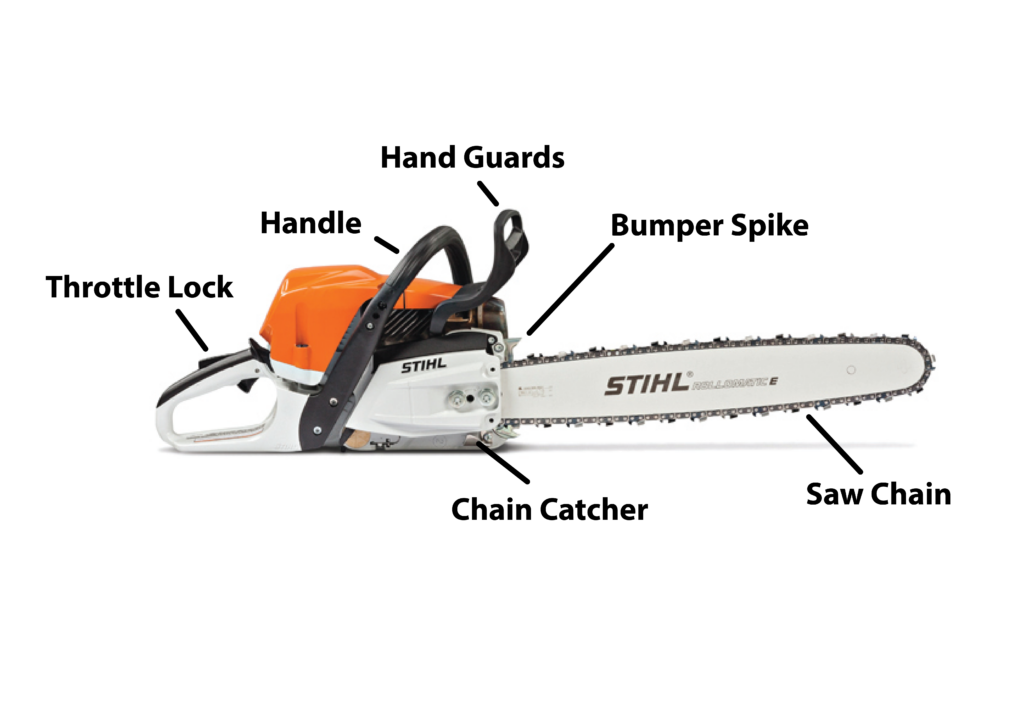
Chainsaws are powerful cutting tools with a bladed chain that loops around a guide bar at high speed. They can easily cut through thick tree trunks and other difficult materials. Luckily, most modern chainsaws come with safety features to help minimize the risk of injury, such as hand guards, a chain brake, chain catcher and throttle locks.
Before choosing and using a chainsaw, make sure you understand all the safety regulations in your area. These regulations may require certain safety features or dictate when and how to use them.
In the U.S., OSHA requires employers to ensure their chainsaw operators are fully trained in how to properly use a chainsaw and identify potential hazards. Actually, OSHA requires that the chainsaws themselves have certain safety features. For example, chainsaw guards are required when it’s feasible to guard the blade.
- Learn the Chainsaw Safety Standards:
- OSHA Fact Sheet: Working Safely with Chainsaws
- OSHA Quick Card: Chainsaw Safety
- National Wildfire Coordinating Group: 6 Minutes for Safety – Chainsaw Safety
7 Chainsaw Safety Tips
To begin, understand that chainsaw safety is all about minimizing the risk of cutting yourself or someone else if the saw breaks or you lose control of the machine. These powerful tools can also get very hot, so these safety tips will also help you minimize the risk of burns or accidental fires.
1. Wear the Right Clothes and Gear
Besides having the right chainsaw for the job, you also need the right personal protective equipment (PPE) and chainsaw safety apparel.
All chainsaw operators should wear:
- Head and eye protection to protect against flying or falling debris.
- Hearing protection, especially for older, gas-powered chainsaws that are louder than electric chainsaws.
- Close-fitting clothes and gloves that cover all skin and won’t get snagged in the chainsaw.
- Chainsaw chaps and steel-toed boots to protect against serious injury if you drop or lose control of the chainsaw.
- Fall protection, such as harnesses, if working at height.
2. Inspect the Chainsaw Before Each Use
If you rent a chainsaw from a reliable equipment provider, rest assured that the machine will be well maintained and repaired between rentals.
However, operators still need to inspect the chainsaw before each use to make sure it’s safe to use that day.
Before each use:
- Look for signs of wear and damage, like missing or cracked parts. If you see damage, do not use the chainsaw until it is repaired.
- Make sure the chainsaw is properly lubricated and has adequate fuel and oil.
- Inspect the chain to make sure it’s sharpened and correctly fitted. If the chain is too loose or tight, it could break or slip, causing injury.
- Check all controls, bolts, handles and safety features to ensure they’re working properly and tightened correctly. If not, do not use the chainsaw until it’s repaired.
3. Follow Operator Guidelines
Each chainsaw is different. It’s important to know how your specific model works to ensure a safe and efficient project. Before using any chainsaw, read the operator manual to learn how to use all the safety features and how much tension the chain requires.
If you’re renting a chainsaw, ask your equipment provider if they offer safe operation training. They may have courses or resources to help ensure safe chainsaw operation.
4. Stay Alert: Ensuring a Safe Project Site
Safe chainsaw operation requires everyone on site to follow safety standards and stay alert.
First and foremost, never operate a chainsaw alone. If the chainsaw slips and someone gets injured, every second will count. Make sure those working near the chainsaw know how to spot potential hazards and what to do in an emergency.
Before work begins, clear the area. Look around, above and below the material that will be cut and remove any people, animals, utility lines or objects that could get damaged by flying or falling debris. If you’re working with trees, remove any hanging branches that could dislodge and fall on you, the operator.
Always stay alert. If you are tired or not feeling well, do not use a chainsaw. Chainsaws require you to use both hands and your full attention for the entire time they’re running. If you’re distracted or unwell, accidents could happen.
5. Learn How to Properly Use a Chainsaw
Handling a chainsaw is a little different than other kinds of landscaping or cutting tools. While it’s important to learn the unique features of your model, there are some general tips for handling a chainsaw safely.
Tips for Handling a Chainsaw:
- Carry the chainsaw by the front handle, with the guide bar pointing behind you.
- Never reach too high or too far. For maximum control and stability, hold the chainsaw close to your body, with the guide bar pointing away from you. Never reach above your shoulders. If you have to cut something higher up, use a stable work platform or harness system (not a ladder).
- Never “drop start” the chainsaw. Drop starts too often lead to serious injury. Set the chainsaw on the ground and secure the back handle with your foot before starting the engine.
- Always cut with the chain at full speed to help avoid pinching the chain or losing control.
6. Avoid Kickback, Pushback, Pull-In and Spring Poles
Even if you follow all the safety guidelines, you might still run into a situation that causes you to lose control of the saw. Here are four common hazards and how to handle them.
| Hazard | What Happens | How to Prevent or Handle It |
| Kickback | Sawing with the tip of the guide bar can cause kickback when the saw suddenly jerks up and back toward the operator. | Avoid inserting the tip of the saw into the material. Make sure the chain brake is functional before use. Keep both hands securely on the handles, with thumbs wrapped underneath the handles. Do not stand directly behind the saw. |
| Pushback | The chain on the top of the guide bar is pinched, causing the entire saw to move backward toward the operator. | Cut only 1 tree limb or item at a time. Watch for situations that could pinch the chain. Don’t twist the saw when removing it from a cut. |
| Pull-In | The opposite of pushbacks. The chain at the bottom is pinched, pulling the entire saw forward and away from the operator. | Always cut at full speed. Make sure the bumper spike contacts the material to be cut. |
| Spring Poles | The tree limb (or material to be cut) is under tension. Cutting the limb releases the tension suddenly, throwing the operator off balance. | Identify which items are under tension before starting. Make multiple small cuts to release tension slowly or cut the side with the least tension. |
7. Clean and Maintain the Chainsaw Between Uses
A clean and well-maintained chainsaw is a safe chainsaw. If you own the chainsaw, or are renting it for 10 hours or more, you will need to do some maintenance to keep it operating efficiently.
Always allow the saw to cool before refueling, cleaning, transportation or storage. Once the saw is cool, wipe away dust and debris. You can also replace filters as needed. Lastly, drain any remaining fuel before storage or transport to reduce the risk of fuel spills.
Between uses, inspect the chainsaw for wear or damage and fix any issues before the next use. If you’re renting the chainsaw, notify your provider of any parts that need replacement or damage that needs to be fixed.

Find Safe and Efficient Chainsaws at Herc Rentals
If you need to clear trees and brush fast, consider renting a high-quality gas or electric chainsaw from Herc Rentals.
Our gas-fueled saws deliver extra power for challenging cutting tasks and long run times for big projects. Meanwhile, our electric chainsaws are lightweight and energy efficient, perfect for lighter cutting tasks.
All our chainsaw rentals give you the speed, versatility and cost-effectiveness you need to keep your project on track.
Browse our selection of chainsaws or contact the pros at 1-800-432-6215 to find the right model for you today.