Last Updated on May 29, 2026
A roof is just as important as the foundation of a building. Your facility’s roof works overtime to shield the structure from the elements. At some point, roofing damage will occur.
Learning the steps to assessing roof damage helps you decide how to handle the damage repairs and insurance claims.
Doing a roof assessment yourself makes you a wiser, more informed consumer, one who is ready to ask the right questions and to work effectively with insurance providers or repair teams.
The Dangers of Prolonged Roof Damage
Severe weather isn’t going away. According to the National Oceanic and Atmospheric Administration, the number of annual billion-dollar weather and climate disasters in the U.S. has nearly tripled — climbing from an average of nine events per year (1980 to 2024) to 23 each year over the past four years alone.
As Mother Nature dishes out more, vigilant inspections for roof damage are essential. Catching issues early gives you the chance to act before they escalate. A timely roof damage repair done right today is far less costly than waiting until the entire roof needs to be replaced or structural integrity is compromised.
Leaving roof damage unrepaired can lead to a host of serious problems.
- Mold and Mildew: Water leaks create ideal conditions for mold and mildew. Once mold takes hold, it can spread rapidly through the structure via the heating, ventilation and air conditioning system.
- Fire Hazards: A compromised roof is also a fire hazard if water leaks into electrical wiring, causing short circuits and electrical fires.
- Pest Damage: Damaged roofs are also easy entry points for pests like rodents, birds, bees, hornets and wasps. Damp environments created by leaky roofs are especially attractive to termites and ants. Feces and urine from pests can be dangerous to humans as they transmit diseases. Once infested, insects and rodents are hard and costly to remove, often requiring a specialist.
- Structural Integrity: Severe roof damage and leaks can weaken the building’s structure, especially if the underlying wood starts to rot.
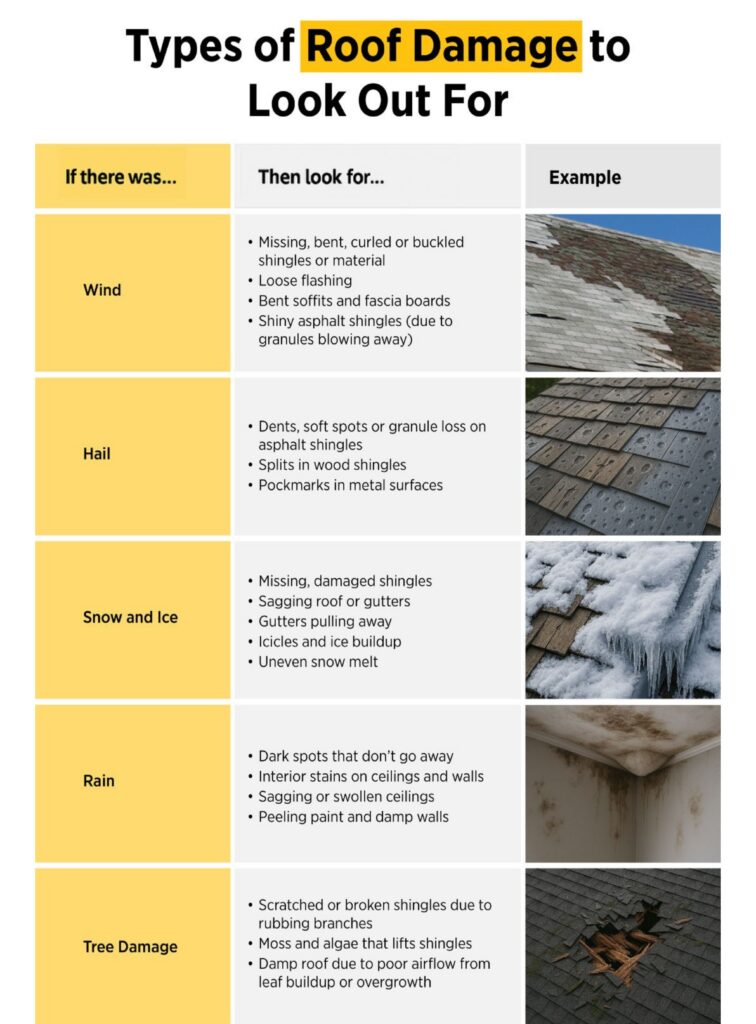
Types of Roof Damage to Look Out For
Putting off a roof damage repair while the roof is repeatedly pummeled by severe weather can lead to serious—and expensive—problems down the line. Watch for the following types of roof damage.
Assessing Roof Damage: A Step-By-Step Guide
Follow these roof assessment steps to help decide if it’s time to call in a professional inspector, repair specialist or even file an insurance claim.
1. Know Your Roof: Age and Material
The first step in assessing roof damage is knowing the age of your roof and what it’s made of.
The age and condition of your roof play a major role in how well it stands up to harsh weather. Older, poorly maintained roofs are more likely to suffer damage than newer ones built to handle today’s climate. Even well-maintained roofs have varying lifespans that are impacted by their materials.
Knowing what your roof is made of helps you understand what to expect over time and what signs of damage to watch for.
- Asphalt Shingles: Typically last 15–30 years, depending on climate and upkeep. Damage may appear as cracks, curling, bruising, lifting or shiny spots due to granule loss.
- Wood Shingles and Shakes: Usually last 20–30 years, depending on wood type, climate and maintenance. Look for splits, cracks, curling, discoloration, punctures, or moss and algae growth.
- Metal: Can last more than 40 years, depending on the material and weather. Watch for rust, corrosion, peeling finishes, dents and panel gaps.
- Tile: Extremely durable, often lasts over 50 years, though the underlayment may need replacing every 10–20 years. Damaged tiles may be cracked, stained, loose or moss-covered.
2. Do an Interior Inspection
Severe roof damage often reveals itself inside the structure. In the attic, check for leaks, water damage, soft spots, wood rot, mold and signs of pests. In living spaces, watch for brown or yellow stains on ceilings and walls, sagging or swollen surfaces, peeling paint or wallpaper, condensation on walls or ceilings and the presence of mold.
3. Look at the Roof from the Ground
Roof damage can also be seen safely from the ground outside. Look around for shingles or tiles that may have blown from the roof. Check for sagging or uneven roof lines and gutters that have pulled away. Watch for leaves, moss and other debris collecting in gutters and corners and around edges—these can trap water and, in cold weather, lead to ice dams. Aging tiles may also leave granule loss in gutters.
4. Safely Inspect the Roof at Height
Some roof damage cannot be seen from the ground, so a close-up inspection is often necessary. By getting on the roof, you can examine the condition of shingles and tiles, flashing, fascia, soffits and seals. You can also clear debris that has collected in gutters or on the roof surface to spot potential issues hidden underneath.
However, roof work can be dangerous. In the construction industry, falls are a leading cause of death, so be sure to follow safety protocols by using secure ladders, harnesses and other protective gear.
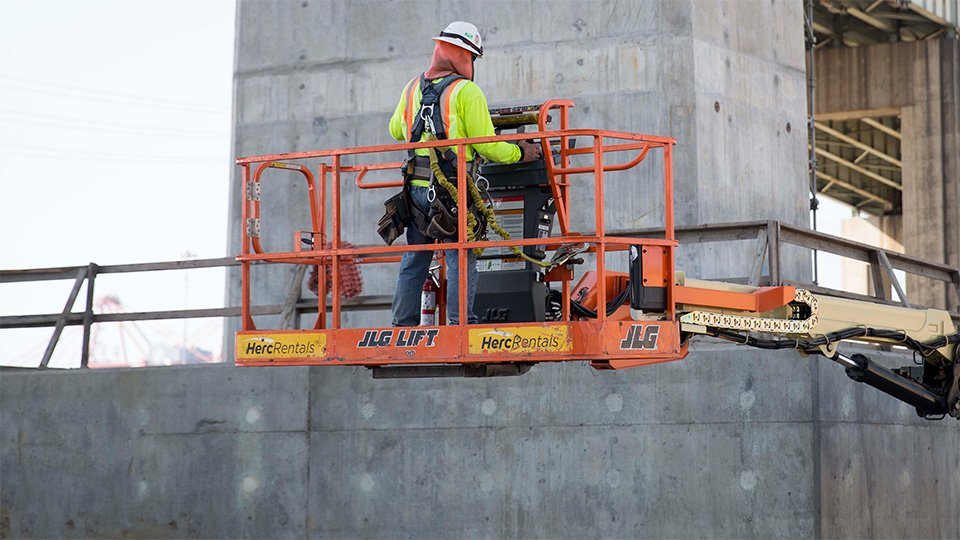
If the roof is steep, high or slippery, or if you have concerns about the structural integrity of the building, play it safe. Rent a bucket truck or scissor lift to safely perform the roof assessment at height.
5. Get a Professional Roof Assessment
In some cases, hiring a professional roof inspector is your smartest option, especially if safety is a concern, you are unsure what to look for, or you are filing an insurance claim.
Getting a professional assessment is also a wise move when buying or selling a property, as it provides credible, third-party documentation.
Professional roof inspectors identify hidden damage and offer recommendations for what to do next.
- Need more how-to guides when completing construction or renovations of a structure? Read more.
Repairing Roof Damage: Equipment You’ll Need
When you’re done assessing roof damage and decide to handle the roof damage repair yourself, make sure you are properly equipped. As with any task, the right tools are key to doing it safely, efficiently and effectively.
Along with the basics like a hammer, utility knife, tape measure and chalk line, consider having the following on hand:
- Tin snips for cutting flashing and metal.
- Pry bar for removing old materials.
- Staple gun or hammer tack for securing underlayment.
- Roofing shovel that’s designed to lift and remove shingles quickly.
- Roofing hammer or hatchet.
- Galvanized roofing nails that resist rust and hold securely.
- Roofing and extension ladders for safe, stable access to the roof.
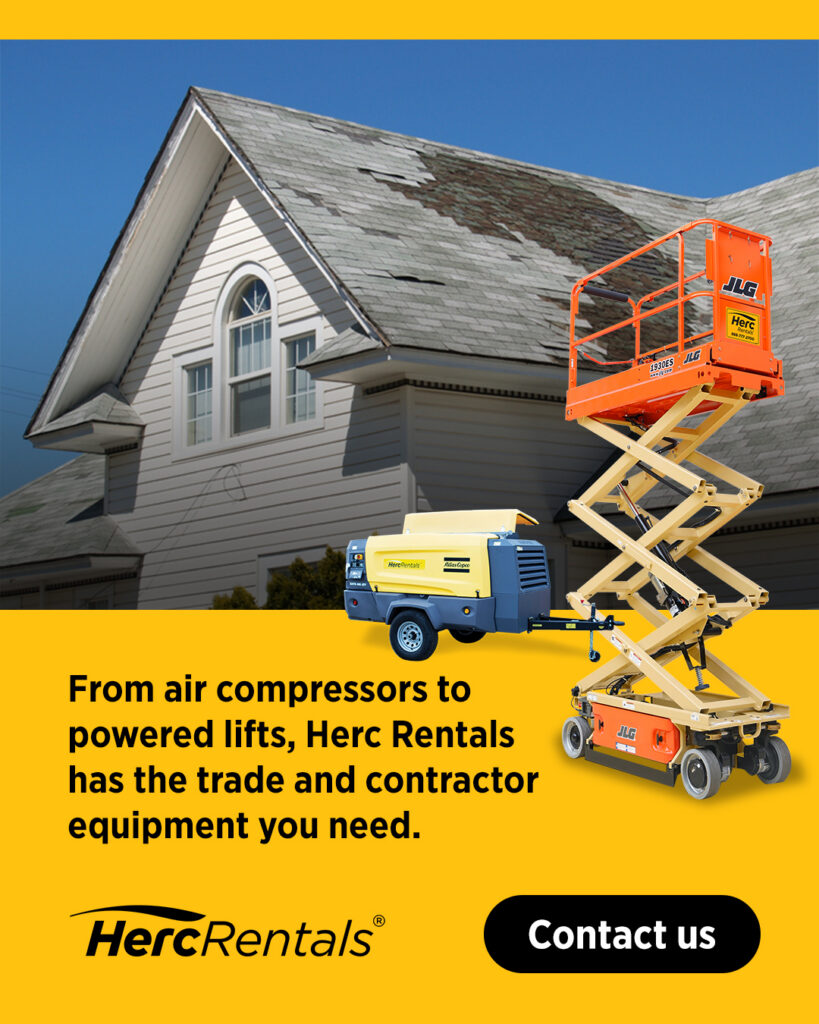
- Pneumatic nail gun and air compressor to speed up installation and reduce fatigue.
- Circular saws for cutting structural elements.
And don’t forget equipment to help clear debris, like a magnetic sweeper to collect stray nails and metal scraps.
Roof Damage Repairs Are Easier with Equipment from Herc Rentals
Understanding how to assess roof damage and identify the different types of roof damage helps you decide whether you and your team can manage the repairs.
If you choose to take on the work yourself, renting high quality, reliable equipment is a practical way to increase efficiency and safety, especially for tasks you don’t do every day, like roof repair or working at height.
Herc Rentals has the equipment and tools you need to keep your roof secure and stable. If you need to react quickly, we have you covered. Our extensive selection of restoration and remediation equipment comes with flexible rental options for emergency situations.
Explore our trade and contractor equipment lineup, including air compressors, or call a specialist today at 888-777-2700 to learn more.