Last Updated on June 3, 2026
Skid steers are powerful and versatile machines, making them ideal for construction, landscaping and other earthmoving projects. They are especially helpful for projects where you need to change the contour of the land through leveling or grading. To get the most out of grading with your skid steer, you need to know the best practices for doing so, as well as the important safety techniques and site preparation.
In this article, you’ll learn five key things to know about grading with a skid steer efficiently and safely.
What Is Grading? What Is a Skid Steer?
Grading is when you move soil to create a slope. Whether you are preparing a site for a residential home or a large industrial complex, proper grading is an essential component. It helps water drain properly and helps make the site more functional and attractive.
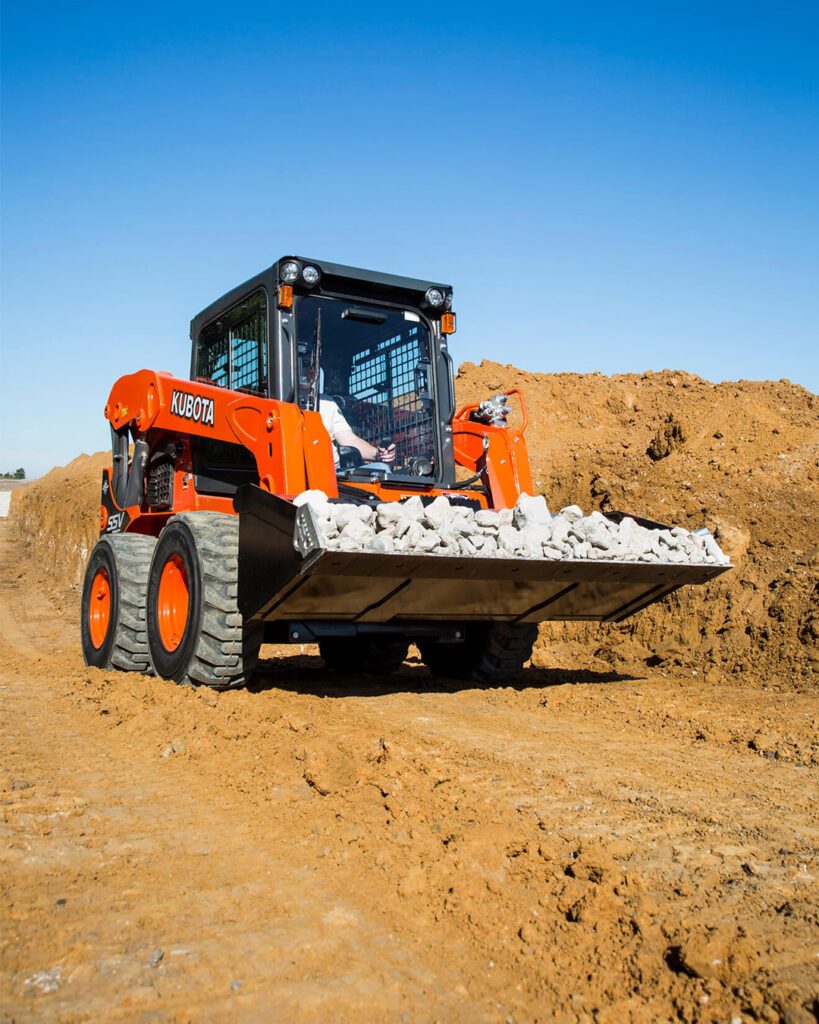
Grading is often done with a skid steer. A skid steer grader, sometimes called a bobcat, is a smaller construction vehicle with a bucket attachment in the front and either tracks or oversized wheels. Grading with a bobcat is usually done by using the bucket (or other specialized attachments) to backfill, level and create slopes at project sites.
Skid steers are great for grading and leveling ground because they’re so maneuverable. Skid steers get their name from their steering system which allows the wheels or tracks on each side to operate independently. This style of steering allows the machine to turn within its own footprint by “skidding.”
5 Things to Know About Skid Steer Grading
Grading with a skid steer can help improve your project’s efficiency, safety and productivity, as long as you follow these five important tips.
1. Get the Right Grading Attachments
While the standard skid steer bucket can handle many grading activities, using specialized attachments can make your overall project work easier and more precise. Learn how to choose the right skid steer attachment for the job and make sure you have all the attachments you need before you begin. Realizing you don’t have the right attachments in the middle of a project can cause costly delays and rework.
Common Grader Attachments for Skid Steers:
- Bucket: The basic skid steer bucket can dig, scrape, scoop, and move heavy materials like dirt and gravel. Use the bucket attachment to handle the bulkiest tasks, like rough grading (or contouring). Create general contours of your site by removing dirt from areas you want to lower and dumping it onto areas you want to raise. You can then drag the bucket backward across the ground for basic leveling and grading.
- Landscape Rake: The landscape rake is used to clear materials on top of the dirt like vegetation, rock and other debris.
- Leveler: A leveler is a flat attachment that can provide more even downward pressure than a bucket, which is used for a more final product of leveling and grading a site.
- Brush Cutter: A brush cutter attachment is used during the site preparation process, prior to grading. With it, you can quickly remove dense brush and vegetation.
2. Good Site Preparation Is Crucial
It’s important to properly prepare the work site before you start grading. If a site is not properly prepared, you could run into obstacles and situations that put workers’ safety and the project’s success at risk.
How to Prepare a Site for Grading:
- Remove Debris: First, remove any debris. Whether it is vegetation, rocks or anything else, having a clear area to work in will make the job easier and help prevent any damage to the machine or injury to people. Use the brush cutter attachment to quickly remove overgrowth.
- Make Sure Everyone Knows the Site Plan: Second, have a clear, easy-to-follow site plan and communicate it to all crew members. This helps operators and other team members stay on the same page about elevations and slope angles.
- Add Support to Control Erosion: Finally, install any fencing you might need for erosion control in areas with steeper slopes. This is especially necessary in areas with loose soil that could easily slip away as the skid steer is working.
3. Rough Grading Establishes Contours and Elevation
Once the site is prepared, you can start grading. It’s best to create the general shape first and worry about refining it later. Creating a general contour is called rough grading.
To create a rough grade, you will need to remove dirt from areas you want to lower and add dirt to areas that need raised. Sometimes this means either bringing in more material to the site or removing it.
Use the skid steer’s bucket attachment to move and push the soil to create the shapes and elevations you need. Drive over the areas to make sure soil is compact before adding more.
4. Final Grading with a Skid Steer Creates Aesthetic Appeal
Once rough grading is complete, you can use the skid steer to refine the landscape and create the final grade. Final grading is when you add the finishing touches to the contours. This ensures proper drainage and enhances the site’s visual appeal. A proper final grade sets the stage for long-term functionality and future landscaping elements.
To complete the final grading, you can use grading attachments like a leveler, or you can use the bucket attachment with a special technique called back blading.
Back blading allows you to create a more even surface using the bucket. To back blade, lower the bucket so that it is a few inches off the ground. Then angle the blade of the bucket so that it’s even with the ground without applying pressure. Finally, by driving backward and pulling the blade over the soil, you will even out any high and low spots.
5. Avoid Common Grading Errors
Skid steer grading is an efficient way to get a lot of tasks done with one machine. But, like any project, it’s important to focus on skid steer safety. Grading errors usually happen as a result of either poor planning or rushing.
Common Errors and How to Avoid Them
- Poor Drainage Planning: A flooded site can cause costly damages and accidents during construction and in the long term. Make sure that the plans account for sufficient drainage for the site at all stages of the project. Call in surveyors or other experts to make sure water will drain away from foundations and other sensitive areas.
- Soil Is Too Wet or Dry: Overly dry or wet soil may not stay in place or compact correctly. When grading, the soil should be wet enough that it can be pushed around without going airborne but not so muddy that the skid steer sinks or gets stuck.
- Creating Ruts: Driving the skid steer forward during final grading will dig the blade into the ground and create ruts. Ruts can affect drainage and aesthetics while also causing more work to fix them.
- Forgetting to Compact the Soil: If you do not properly compact the soil with the skid steer or roller throughout the site, the final product will be unstable and uneven. Without compacting, the soil is more likely to shift over time.
- Not Stopping to Check Progress: When you grade with a skid steer, it’s important to stop and check the slope and elevation of different areas as you go. Do not rush. Regularly stopping to check your progress helps ensure that the slopes stay within project parameters.
Need more information about skid steers? Read the following:
- Everything You Need to Know About How to Operate a Skid Steer Loader
- Renting a Skid Steer: A Complete Guide
- How to Choose the Right Skid Steer Attachment for the Job

Make the Grade with Skid Steers from Herc Rentals
Skid steers are a versatile must-have tool for any grading or leveling project. These dynamic, powerful machines can streamline your project and boost profitability by completing multiple tasks with a single piece of equipment.
So the next time you need to change the shape of a project site, turn to the equipment experts at Herc Rentals. We will help you find the best skid steer and grading attachments for your unique project.
Explore our fleet of skid steers and earthmoving attachments. Or, you can call 1-800-432-6215 to get started today.