Last Updated on August 12, 2026
While it’s easy for the general public to overlook, professionals in construction, utilities, municipal planning, engineering and related industries know that water and sewage systems age and need regular maintenance. Across the U.S. and Canada, pipes, treatment plants and drainage systems are wearing out. Many of them need major repairs. This has created a huge need for water infrastructure construction projects.
At the same time, new industries are putting even more pressure on water systems. Data centers that power artificial intelligence (AI) and cloud computing need millions of gallons of water per day to keep their servers from overheating. At the same time, manufacturing plants and towns across North America are expanding. They all need reliable, safe water access.
Aging systems need repairs, and new developments need more capacity. Together they are driving a major wave of water infrastructure construction work.
For contractors and builders, the need for expanded, more reliable water infrastructure means more opportunities to expand your business. In this article, you’ll learn more about the types of projects to expect and the equipment you’ll need to be successful.
What Is Water Infrastructure?
Water infrastructure refers to the network of systems that collect, treat, store and move water. This includes pipes, reservoirs, treatment plants and drainage systems. These systems make sure communities have clean drinking water and proper sanitation. The infrastructure also helps control flooding, and it supports farming and irrigation.
Water infrastructure is essential for everyday life. Homes, businesses, hospitals and schools all depend on reliable water systems. Without proper infrastructure, communities could face water shortages, contamination or flooding. Because of this, maintaining and upgrading water systems is a critical part of public safety and economic growth.
Types of Water Infrastructure
When you hear the term water infrastructure, what comes to mind? Many think about the drinking water and sewage systems they use in their homes and offices. But for municipalities and water-intensive industries like agriculture, manufacturing and data centers, water infrastructure goes beyond that.
There are several types of water infrastructure contractors need to be aware of. Each one plays a different role in managing water for communities and industries, and each type may affect how you approach a water infrastructure construction project.
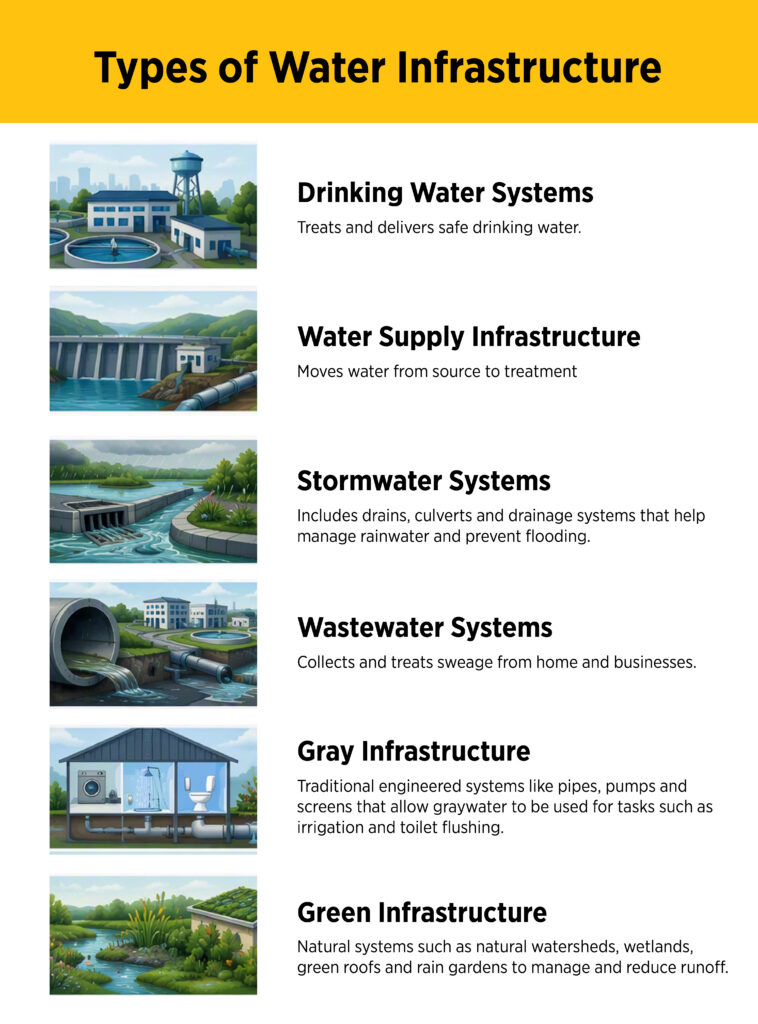
- Drinking Water Systems: Drinking water systems treat and deliver safe drinking water to homes and businesses. They include water treatment plants, wells and water supply lines. New building construction will need to follow all local water infrastructure codes to safely tie into existing municipality drinking water systems.
- Water Supply Infrastructure: Water supply infrastructure includes reservoirs, dams, pumping stations, canals and pipelines that move water from natural sources to treatment facilities. These are large-scale projects that are commissioned and regulated by the state and/or federal government.
- Stormwater Systems: Stormwater systems include the drains, culverts and drainage systems that help manage rainwater and prevent flooding. These waterways often drain directly into natural bodies of water which supply our drinking water. So a key goal with stormwater projects is to make sure that sewage and other hazardous materials stay out of stormwater systems.
- Wastewater Systems: Wastewater systems collect sewage and wastewater from homes and businesses. The pipes then send it to treatment plants so it can be cleaned before returning to the environment. Spilled sewage from leaking pipes or improper sewer bypass construction is a serious public health hazard.
- Learn More: How to Plan a Successful Sewer Bypass
- Gray Infrastructure: Gray infrastructure refers to traditional engineered systems like pipes, pumps and screens that allow graywater to be used for tasks such as irrigation and toilet flushing.
- What Is Graywater? Graywater is water that has been lightly used but does not contain hazardous waste like fecal matter. Washing machines, showers, and dishwashers create graywater, for example. Graywater can sometimes be used for certain non-potable tasks without being fully treated.
- Green Infrastructure: Green infrastructure solutions use natural systems such as natural watersheds, wetlands, green roofs and rain gardens to manage water and reduce runoff. Green infrastructure projects may include ecosystem restoration to protect healthy watersheds or floodplain restoration to reduce damaging floods.
Why the Water Infrastructure Market Is Set to Boom
To make the most of opportunities available, it helps to have a deeper understanding of the forces driving the water infrastructure market.
The State of Water Infrastructure Today
Over time, pipes corrode, equipment wears out, and systems become less reliable. This outdated water infrastructure can lead to water leaks, service interruptions and contamination risks.
Report cards from infrastructure groups have repeatedly warned about the condition of these systems. Some national reports have even given U.S. water systems a “D” grade. This shows just how serious the problem has become. Cities across the country are dealing with broken water mains, leaking pipes and treatment facilities that need upgrades.
Fixing these problems will require major investment. Governments, utilities, and private companies are all putting their resources toward large scale upgrades. These investments will create many new water infrastructure solutions, from replacing pipelines to building new treatment plants.
As funding increases, contractors will see more projects focused on improving water infrastructure nationwide. However, since these projects may be initiated and regulated by a variety of government agencies and private businesses, contractors will need to be ready to handle a high level of complexity.
New Demands Fueling Unprecedented Growth
While aging systems are one reason for the construction boom, new industries are also increasing demand for water. One of the biggest drivers is the rapid growth of data centers. These facilities support cloud computing, artificial intelligence and other digital services. But they also require large amounts of water for cooling systems.
As more data centers are built, communities must expand their water supply and treatment capacity. This often means new pipelines, storage systems and treatment plants. In many regions, water systems were not designed to support this level of demand.
Other industries are adding pressure, as well. Manufacturing plants, semiconductor facilities, and agricultural operations all rely on steady water access. As these industries grow, cities must upgrade their infrastructure to keep up.
All of these factors are coming together at the same time. Aging systems need repairs, and new industries need expanded capacity. That combination is why the market for water infrastructure construction is expected to grow rapidly in the coming years.
Essential Equipment for Water Infrastructure Construction
If you’re going to take on water infrastructure projects, you’ll need to be prepared. Water infrastructure projects require specialized heavy equipment to safely and efficiently complete the work.
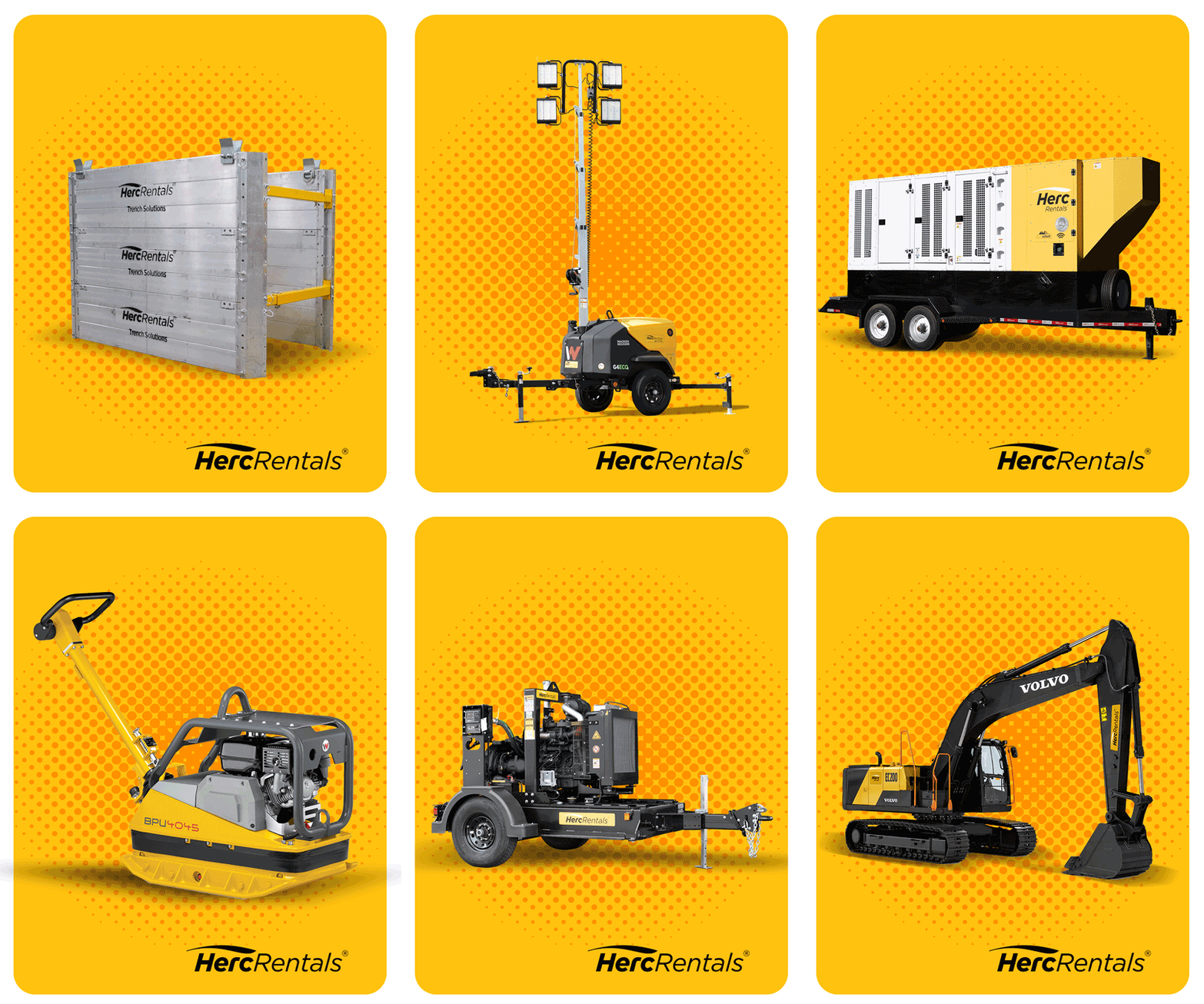
Some of the most common types of equipment needed for water infrastructure projects include:
Excavators: Earthmoving equipment like excavators are used for digging trenches, moving soil, and preparing sites for pipelines and drainage systems.
Trenching Equipment: Most water infrastructure projects will require work on underground pipes. The right trenching equipment helps you create safe and accurate trenches where water pipes and utilities can be installed.
Pumps, Pipes and Hoses: Groundwater and leaking pipes can easily flood a trench or project site. Use pumps, pipes and hoses for dewatering job sites and creating temporary bypass systems during repairs or upgrades.
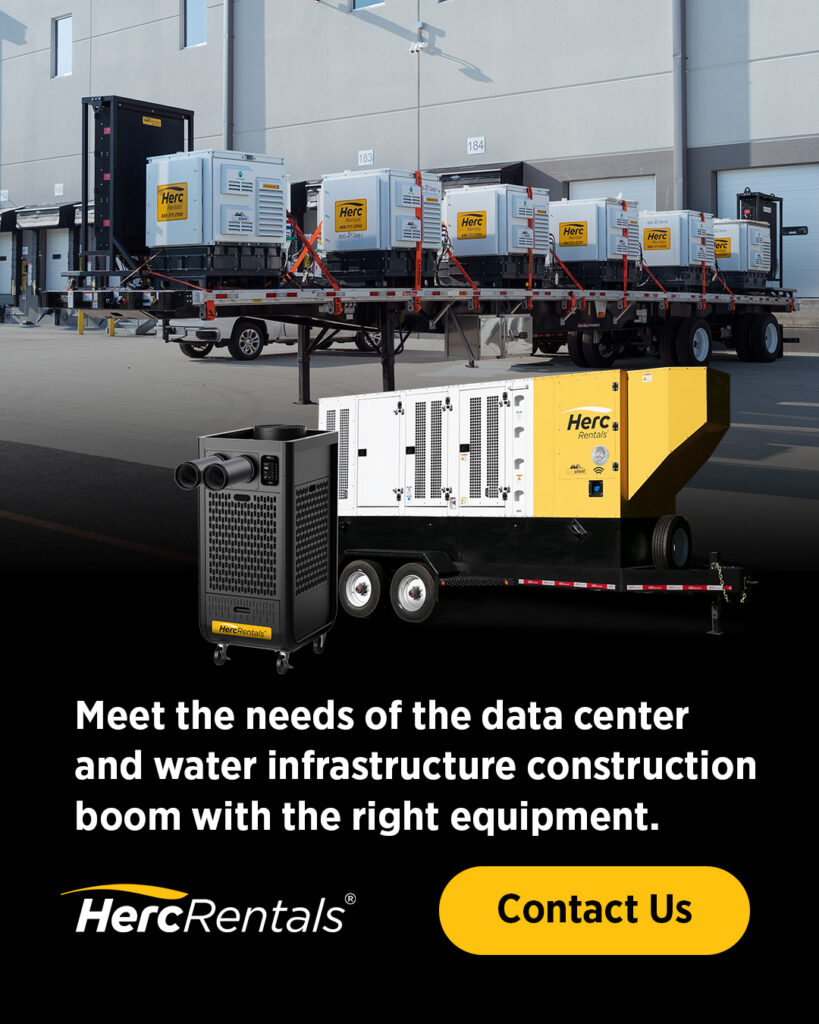
Generators and Light Towers: Provide reliable power and lighting so crews can work safely, even during overnight operations.
Compactors: Compactors help stabilize the soil after trenches are filled, which prevents settling and protects the underground pipes.
Renting reliable equipment from a trusted equipment partner is a smart way to increase the capabilities of your fleet without the long-term maintenance and large down payments that come with buying equipment. The right equipment partner will help your crews stay productive, safe and efficient.
Trust Herc Rentals as Your Partner for Improving Water Infrastructure
Don’t let equipment be a bottleneck. As investment in water systems continues to grow, contractors need equipment partners they can rely on. Herc Rentals supports contractors working on complex infrastructure jobs across the country. From excavation equipment to pumps and power generation, Herc Rentals provides the tools needed to complete demanding projects.
With a large fleet and experienced support team, Herc Rentals can help you stay productive on even the most challenging jobsites. Browse available equipment, find a nearby location, or request a quote by calling 1-800-432-6215 to get started on your next water infrastructure project today.