Last Updated on October 27, 2026
When a crew can’t avoid working at height, you need a strong engineered solution. Unsteady scaffolding and ladders can introduce an avoidable fall hazard to a jobsite. Using a powered lift can make it easier for teams to reach tough spots without the risk. They provide a strong, steady platform that can help workers avoid accidents. This article covers all the boom lift basics and what you should know, including the different uses, boom lift types and tips on choosing the right equipment to carry out the task safely.
What Is a Boom Lift?
Known by many names, such as man lift, basket crane or cherry picker, a boom lift is a type of aerial lift that features an extendable arm with a work platform.
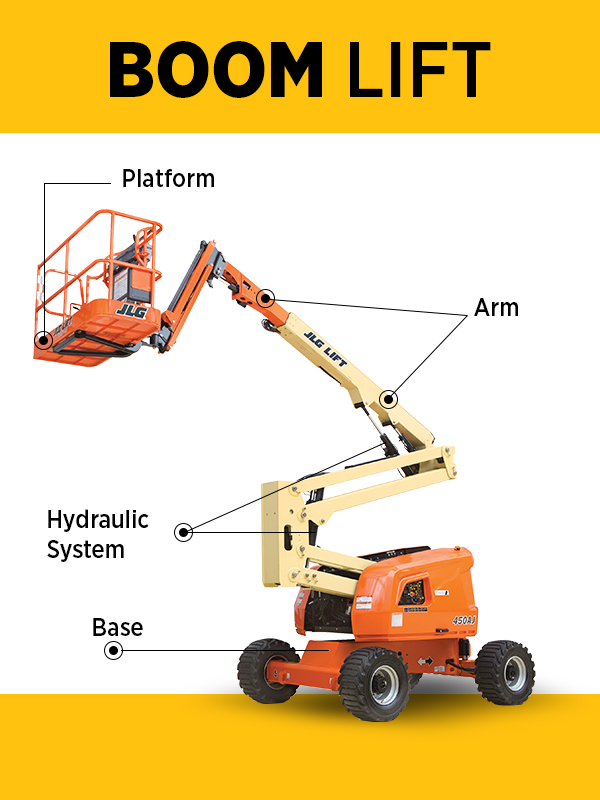
The arm, or “boom,” allows operators to access elevated jobsites like utility lines, roofs and treetops. Boom lifts are designed with a work platform mounted to the end of a jointed arm and a grounded base on wheels or tracks. The internal hydraulic system lifts the load and operator to whatever height is needed to complete the task.
What Are They Used For?
Boom lifts are ideal for industries and projects that deal with difficult angles and elevated work sites because they are a safer solution than ladders and more flexible than scaffolding.
- Painting: Helps painters reach tall interior walls or high building exteriors on a steady platform.
- Utility Work: Gives workers access to poles, lines and overhead systems safely.
- Maintenance: Makes it easier to reach interior and exterior lighting, roofs, and tall machinery.
- HVAC and Electrical Installation: Provides safe access to ceiling units, wiring and overhead ductwork.
- Agriculture: Supports tasks like tree trimming, outbuilding repairs and accessing equipment.
- Piping: Helps crews reach overhead pipes or systems in large facilities.
- Interior and Exterior Cleaning: Supports window cleaning, pressure washing and high-surface cleaning.
- Film Production: Gives crews elevated angles for lighting, cameras and rigging.
Why Choose a Boom Lift Over Other Aerial Lifts
Reaching difficult areas with ladders, scaffolding, or other aerial lifts like scissor lifts may be unsafe or simply not feasible.
A boom lift is the best choice if you need:
- Extended Reach Capabilities: A hydraulic arm raises workers farther than other lifts, reaching heights ranging from 30 to 185 feet, depending on the model. This helps crews get to tough spots without resorting to unstable options or stretching into unsafe positions.
- More Maneuverability: Extending vertically, horizontally and at angles, boom lifts make access to difficult workspaces easier. For example, articulating boom lifts have a jointed arm that lets you access hard-to-reach places. Some models also rotate 360 degrees, making it easier to move heavy loads up, over or around obstacles.
- Options for Indoor and Outdoor Use: Depending on the model and fuel source, boom lifts can be a benefit to indoor or outdoor projects. Gas and diesel-powered lifts may produce exhaust fumes and noise, but they are often more powerful and have wheels or tracks to help the lift move smoothly over dirt, gravel, grass, or uneven ground. Hybrid and electric versions reduce emissions and noise in the workspace, making them ideal for indoor use.
- More Size and Platform Capacity Options: Boom lifts have a variety of platform sizes and capacities. Some are narrow, making them ideal for one-person jobs in tight spaces, while other platforms are larger and can carry several people plus their tools. This helps crews match the right platform size to the job at hand.
Types of Boom Lifts
Not every piece of equipment is built for the same job. One type of boom lift is built to reach the highest points while another is made to move around obstacles. Some are meant to be towed, and others work best in environmentally sensitive spaces.
Articulating Lift
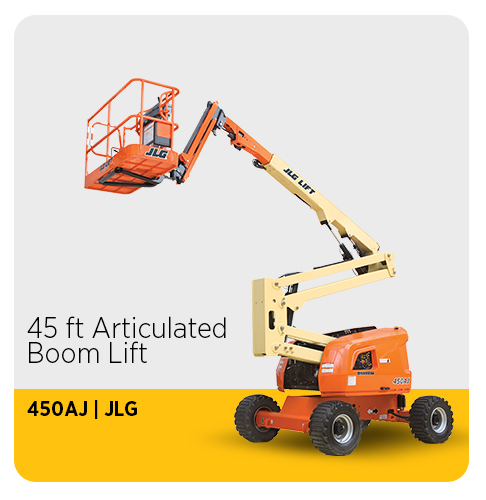
An articulating boom lift is designed with a jointed arm that can move around or over objects, even in confined spaces. They help keep workers from stretching into unsafe positions over the edge of a platform or crashing into obstacles. Due to their unique shape, they are sometimes known as knuckle booms.
Telescopic Lift
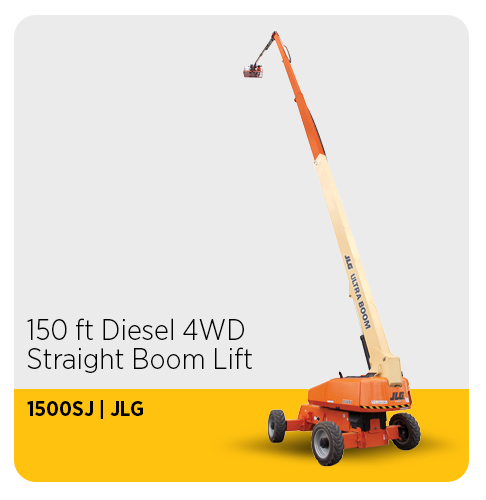
Some jobs may require a crew to lift heavy loads several stories high, but they don’t need to move around obstacles. For these tasks, a telescopic boom lift is a great choice because its boom has multiple sections that extend like a telescope. Telescopic lifts (or “straight booms”) can move vertically, horizontally or diagonally.
Towable Lift
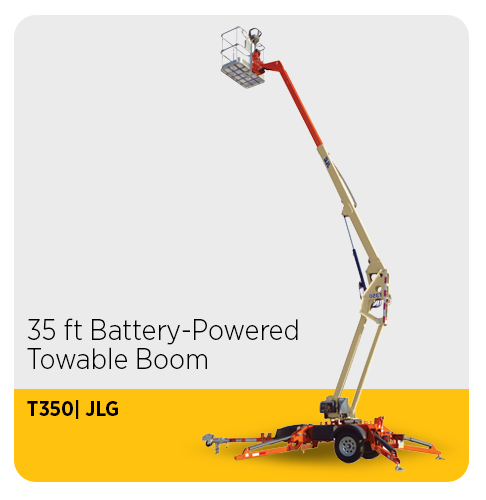
On farms and construction sites, it’s ideal to have a boom lift built for potentially rough terrain but can be moved from site to site easily. Towable boom lifts give operators access to places that would be hard to reach with other equipment. Plus they can easily be connected to a truck for convenient transport to and around jobsites.
Hybrid Lift
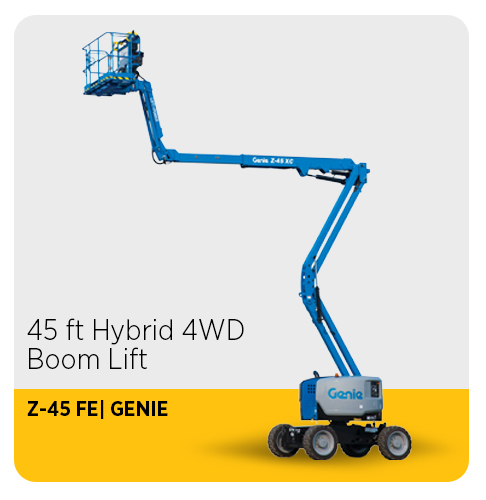
When a lift that can be used both indoors and outdoors is needed, a hybrid model can be a great choice. Hybrid boom lifts combine electric and diesel operation, which gives you the option to reduce fumes without giving up power.
How to Choose the Best Lift
With so many options, how do you know which type of boom lift is right for your project? Making the right equipment choice is crucial to worker safety and productivity. If you choose a lift that doesn’t reach the work area, then the project comes to a halt or workers may take unnecessary risks. Choosing a lift that is too large or powerful may waste budget, fuel and space.
Use these steps to consider the task and terrain, measure the maximum height, and estimate the weight capacity so you can choose the best boom lift rental for your project.
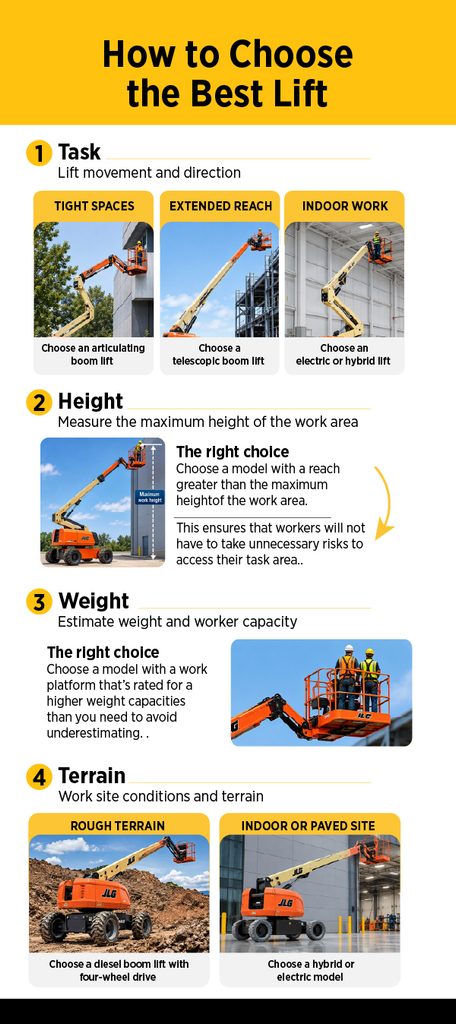
1. Consider the Task: Lift Movement and Direction
First, analyze your project and project site. Take into account all of the tasks that need to be done at height, including obstacles, distance and load. Will you need to move the work platform around power lines or trees? Will you need to reach across a sidewalk or street because you can’t park the base right next to the work area?
How This Narrows It Down:
- If you need to maneuver through tight spaces, then you’ll need articulating boom lifts.
- If you need extended reach, then you’ll need a telescopic boom lift.
- If you need to work indoors, then you’ll need an electric or hybrid lift.
2. Measure the Maximum Height of the Work Area
Next, determine the maximum height that will get an operator to their destination safely. Using equipment rated below the height you need could lead to a worker reaching beyond the railing and potentially falling or dropping items.
How This Narrows It Down:
- Choose a model with a reach greater than the maximum height of the work area. This ensures that workers will not have to take unnecessary risks to access their task area.
3. Estimate Weight and Worker Capacity
Overloaded lifts could become unstable, increasing the risk of falls and tip over accidents. When choosing a boom lift, it’s important to consider more than the weight of the materials. Estimate the total weight of the tools, workers, and materials that will be lifted. Add a few pounds to make sure you’re not underestimating.
How This Narrows It Down:
- Choose a model with a work platform that’s rated for a higher weight capacities than you need to avoid underestimating.
4. Consider Work Site Conditions and Terrain
Not every lift can handle every environment. Mining and industrial sites may require equipment with four-wheel drive or a diesel- or gas-powered engine built for tough terrain. Indoor work or environmentally sensitive sites may require a hybrid model to reduce air contaminants and noise.
How This Narrows It Down:
- If you’ll be working on rough terrain and lifting heavy materials, you’ll likely need a diesel boom lift with four-wheel drive.
- If you’ll be working indoors or on paved sites with noise/emissions restrictions, choose a hybrid or electric model.
Tips for Safe Operation
Safety on a jobsite isn’t only about avoiding the cost of accidents, delays or complying with regulations. It’s about keeping your teams free from harm. The right boom lift rental can help increase efficiency and help workers finish the day without injuries. For more information on U.S. safety standards, review OSHA’s Aerial Lifts eTool.
Complete Training Before Operation
OSHA requires that only trained operators use aerial lifts. A high-quality equipment rental provider should offer equipment safety training. These are courses–online and in-person–and hands-on evaluations that build your operators’ skills in using the lift and fall protection measures.
Assess Work Sites and Perform a Lift Inspection Before Use
Finding hazards before work begins means the job starts safely. Before using the boom lift, make sure your crew does pre-work checks. They should check for any damage, leaks or malfunctions. They should also confirm that harnesses and guardrails are working properly. It’s a good idea to also walk the work site and identify any potential hazards or obstacles, placing safety barriers as needed.
Wear a Safety Harness During Use
All boom lift operators must wear a safety harness that’s correctly secured to the lift. A properly anchored harness keeps a slip or loss of balance from turning into a dangerous fall. Wearing a fall protection harness consistently during use can reduce injury from accidents.
Maintain a Clear Lift Base
If an object falls in a crowded workspace, bystanders can get hurt. Unstable ground or obstacles can also make the lift more likely to tip over. Keep the workspace around the boom lift clear, stable and free of bystanders to ensure everyone stays safe.
Avoid Exceeding Weight Limits
Exceeding equipment capacity increases the chance of a tip-over accident. Don’t forget to include the estimated weight of operators and their tools when calculating the maximum load.
Keep a Safe Distance from Potential Hazards
Overhead power lines, branches or structures can create potential hazards to boom lift operators. Creating adequate distance can prevent tip overs, electrocution and injury.
Renting vs. Buying a Boom Lift
Renting is often the most cost-effective choice unless you will use the same lift for a recurring job and have budgeted for the ongoing costs of ownership. Renting supports crews whose projects change or those who need to stay within a budget.
For short-term work at height, renting a lift can also save time and money by avoiding the need to build scaffolding. With a wide variety of boom lifts available and customer support from experienced teams, renting gives you the flexibility to choose the right equipment for each project without the long-term expense of owning it.
Rent a High–Quality Boom Lift from Herc Rentals
Whether you need a boom lift that can raise a thousand pounds in the air or one that gets you up, over, and around tight spaces safely, the experts at Herc Rentals are ready to help find the right fit.
We offer lifts from leading manufacturers, ensuring superior quality and reliable performance. Our extensive fleet of aerial lifts includes a variety of weight capacities and reach heights of articulating, telescopic, hybrid and towable boom lifts. You’re sure to find the boom lift that’s right for any project.
Browse our wide selection of boom lifts, or call 1-800-432-6215 to speak with one of our team members and get your job off the ground today.