Last Updated on November 13, 2025
Mold can be a problem in any building, including schools, hospitals, office buildings, warehouses and homes. Left unchecked, it can create health risks, damage equipment and disrupt operations.
Because of the health concerns and costs associated with removing and remediating mold, the best defense against a mold problem is prevention. But how do you prevent mold from forming? What if your facility has water damage or existing mold? How do you clean up and keep new mold from growing?
By the end of this article, you’ll know what to watch for, how to prevent mold and what mold remediation equipment rentals you may need to stop mold for good.
What Kinds of Problems Can Mold Cause?
Mold doesn’t just look bad, it can cause health problems and property damage, as well. It’s a hazard that can wreak havoc on your day-to-day life and bottom line. It’s also a liability, especially for landlords and housing facilities, who may be sued if mold and fungi negatively impact tenants.
Health issues like allergic reactions, asthma and other respiratory conditions can be exacerbated or caused by inhaling mold spores. According to OSHA and the CDC, even short-term exposure can lead to discomfort or illness, particularly in sensitive individuals.
Beyond health, mold can damage drywall, insulation, carpeting, wood and other building materials. It may also corrode electrical systems or HVAC components and create persistent odors. Over time, unchecked mold growth can compromise structural integrity and force expensive rebuilds or closures.
What Places Are Most Susceptible to Mold Growth?
Mold thrives in damp, poorly ventilated environments with organic material. Organic material is anything that was once a living thing, such as wood, paper or anything else that contains carbon.
Indoors, mold can lie dormant in dusty areas. When it’s disturbed by movement, even something like routine vacuuming or cleaning, it begins to grow and shoots spores into the air. Because of mold’s resilience, controlling indoor moisture and ventilation is the most effective way to prevent or remediate mold growth.
Mold Is Commonly Found in These Areas:
- Basements and underground levels
- Crawlspaces and utility rooms
- Kitchens, bathrooms and locker rooms where water use is frequent
- Near HVAC systems and ductwork
- Rooflines, windowsills and areas with poor drainage
- Facilities in humid, wet environments or near bodies of water
How Does Mold Become a Problem? Why Do Schools, Universities and Older Buildings Have Mold?
Mold needs only three things to grow: organic material, oxygen and moisture. Schools, universities, older office buildings and manufacturing facilities often have aging building materials (like gypsum, wood, or carpeting) that serve as the perfect place for mold to grow. They also may have a lot of old books, papers and other belongings that have built up and been forgotten on shelves and in filing cabinets.
The most common reasons why mold becomes a recurring problem include:
- Aging Infrastructure: Leaky pipes, rotting wood and poor climate control keep moisture trapped inside.
- Poor Ventilation: Buildings from the 1970s through the 1990s improved on sealing out moisture but lack the improved airflow of most modern buildings.
- Ongoing Roof and Gutter Problems: Clogs and breaks can lead to leaks and pooling water. Depending on the structure, the water damage might not be visible. It could be above the ceiling or behind the walls.
- Too Much Groundwater: Older or improperly sealed foundations can draw moisture from the ground or cause flooded and damp basements perfect for mold.

6 Ways to Stop Mold from Growing
Mold remediation strategies fall into two categories: prevention and remediation/restoration. Below are three ways you can prevent mold growth from the start, followed by three ways to remediate and restore your facility after mold removal. Review the list that applies to your building to find out what type of equipment you’ll need.
Prevention: 3 Ways to Stop Mold Before It Starts
For newer buildings and ones that have never had mold, prevention is the best plan of action. Working to prevent mold by increasing ventilation and dehumidifying the air can save you a great deal of time and money in the long run.
1. Control Moisture in the Air
The primary cause of mold is moisture, so it is paramount to keep your spaces dry. This is especially important in regions that experience rain, humidity or flooding. Even winter weather can lead to mold in the spring if melting snow and ice creep into the building.
If there is a leak – such as in pipes, windowsills, door casings – or seasonal dampness, address it as soon as possible. Wait too long and mold will grow, potentially causing serious health issues.
Equipment You May Need:
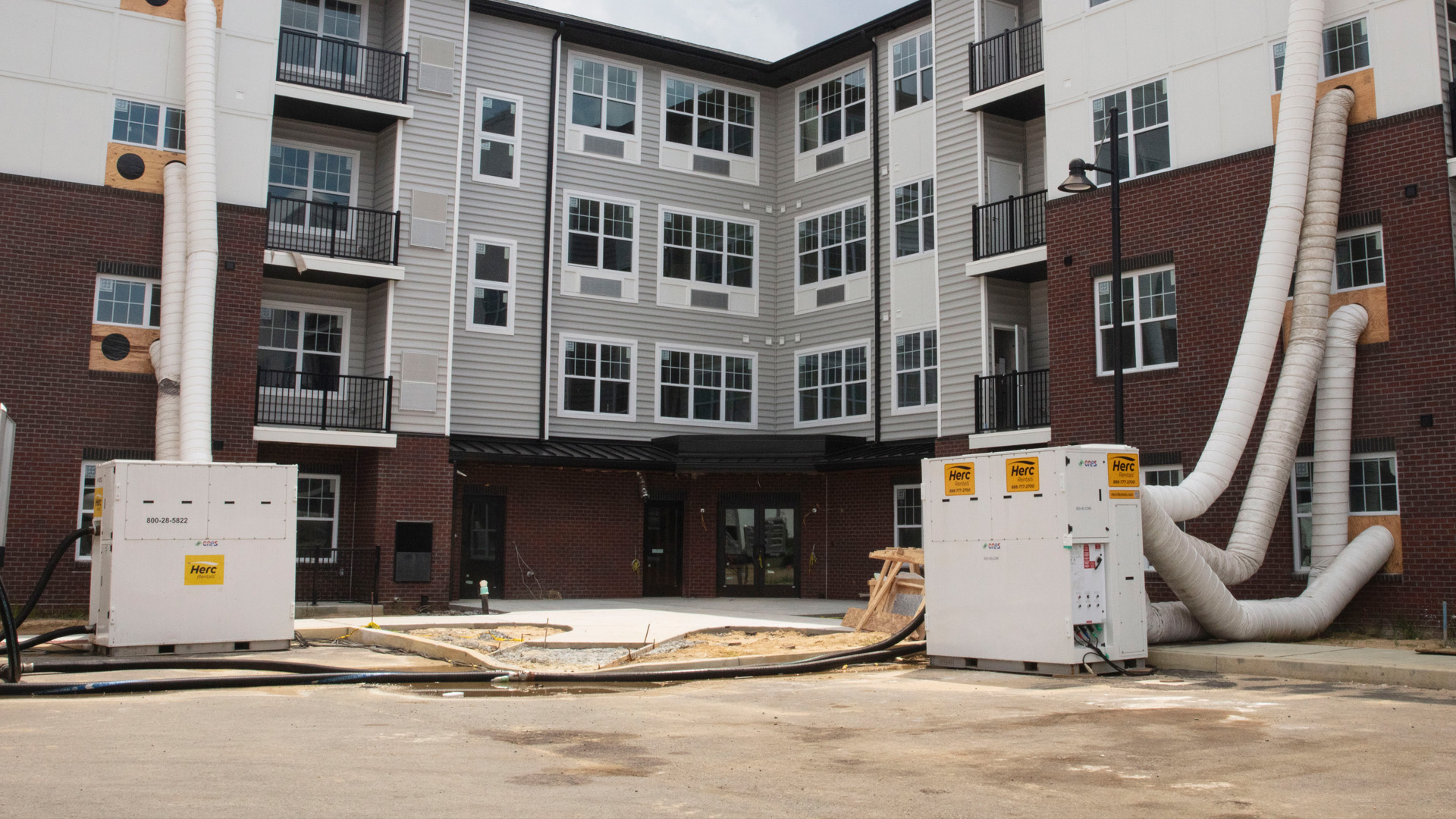
- Desiccant Dehumidifiers: Desiccant dehumidifiers remove moisture even in low-temperature or high-volume environments.
- Climate Control Equipment: The right climate control equipment helps you maintain consistent indoor temperatures and low humidity, which limits moisture buildup.
2. Clean Spaces Regularly
Clean all spaces regularly, especially those areas prone to dampness. Eliminate dust, debris and organic material that could feed mold. Proper cleaning also prevents standing water from spills, tracked-in mud and slush, or humid air.
Equipment You May Need:
- Floor Scrubbers: For larger buildings with hard-surfaced floors, consider renting a floor scrubber. These machines make it easy to deep clean heavily trafficked spaces.
3. Mitigate Airborne Pollutants
Mold spores are like seeds that grow into new patches of mold. These spores float easily, and often invisibly, through the air. You can use specialized equipment to keep the air clean and stop spores from accumulating.
Air scrubbers and air purifiers are especially helpful during construction when building materials may be more exposed to the outside than normal.
Equipment You May Need:
- Air Scrubbers: Air scrubbers send out negative ions that attach to spores, dust and particulates, making them heavier and easier to clean up or filter.
- Air Handlers: Air handlers offer ongoing filtration to protect indoor air quality in sensitive spaces.
Read more about how you can stop mold from growing in the first place:
- What’s the Difference Between an Air Purifier and an Air Scrubber?
- How Do Desiccant Dehumidifiers Work?
- Can an Air Conditioner Be Used as a Dehumidifier?
- How to Operate a Floor Scrubber

Mold Remediation and Restoration: 3 Ways to Remove Mold and Prevent New Growth
Mold is extremely common and can start growing on any damp surface within 24 to 48 hours. If you’ve experienced a flood or leak, you have to tackle mold removal first, before you can prevent new growth. Once mold is detected, address it immediately to prevent possible health issues and to keep it from spreading.
1. Dry the Area Completely
Before any cleaning or removal begins, dry the space thoroughly. If there’s been a flood or sewer backup, follow proper safety protocols first. Turn off the electricity and wait for the water to recede (or pump it out) before entering the space. Wear the proper personal protective equipment, such as masks and gloves, to avoid contact with mold spores and harmful bacteria.
Equipment You May Need:
- Wet Vacuum: Quickly remove pooled water with wet vacuums.
- Fans: Speed up drying by circulating air with powerful fans.
- Pumps: Pumps help remove large volumes of water after floods or burst pipes.
Learn more about removing water from facilities and worksites.
- How to Use a Trash Pump
- Dewatering Construction Sites: How to Remove Water from a Jobsite
- Snowmelt Flooding Won’t Be an Issue If You Take Precaution and Have the Right Pump on Hand
2. Remove and Repair Affected Materials
Once mold takes hold, it often grows inside building materials, in places you can’t see. Drywall, ceiling tiles and carpeting are especially vulnerable and may need to be removed and replaced. Look for signs of dampness, such as staining, warped surfaces, peeling paint, or obvious mold and mildew.
Learn more about remediating moldy, wet spaces with these resources:
- How to Remove Wet and Damaged Drywall
- Mold Cleanup Steps from the U.S. Environmental Protection Agency
Equipment You May Need:
- Material Handlers: Pallet jacks, conveyors, and lifts streamline the removal of bulky, contaminated or soaked materials from commercial spaces.
- Scrubbers, Vacuums and Dust Control: Cleaning as you go can remove mold and help limit the spread of spores as you move through the building.
- Trade Tools: Saws, plumbing equipment and the like allow you to remove wet building materials and fix leaks.
3. Clean the Air
After the space is dry and old mold has been removed, spores may still linger in the air. Air scrubbers are essential for stopping regrowth.
Equipment You May Need:
- Air Scrubbers: Air scrubbers clean large volumes of air using HEPA filtration to trap spores and particles.

Rent Quality Mold Removal Equipment from Herc Rentals
Whether you’re working to prevent mold or recovering from an unexpected flood, Herc Rentals has the climate control equipment and restoration solutions you need. Our experienced service providers can help you access equipment from desiccant dehumidifiers to HEPA air scrubbers, floor scrubbers and water removal equipment.
Explore our full range of remedy and restoration equipment rental solutions, or contact Herc Rentals today by calling 1-800-432-6215 to get started.