Last Updated on October 22, 2025
When people think of the fire damage restoration process, they often think of smoky smells and charred ceilings. While those issues will need to be addressed, you must also consider all the water and water damage produced when putting out the fire.
If you’re a contractor or a property owner, you know you’ll need to clear the air and make sure the structure is safe before letting individuals gain occupancy again. Unfortunately, you could be dealing with a soaking wet mess that brings its own challenges first.
In this article, you’ll learn about the impact of water damage on the fire restoration process and ways to make water removal easier.
Water Damage Remediation: An Important Part of the Fire Restoration Process
Fire suppression sprinklers dump hundreds of gallons of water in mere moments. And from a firefighter’s hose, it’s thousands of gallons.
If you’re restoring a home or commercial building after a fire, know that you’re also restoring it from a flood. In fact, fire damage and water damage accounted for over 49% of homeowner insurance losses in 2022, according to the Insurance Information Institute. These claims also included losses due to mold.
After extinguishing the flames, water will seep into any crack or porous surface it can find. If not treated quickly, mold will grow and moisture will weaken the structure. Contractors will need to remove the water they can see plus any moisture that may be hidden behind drywall and under flooring.
Part of the challenge is that sites damaged by fire and water can be hazardous to work in. From slippery surfaces to standing water full of bacteria, crews will need to use the right water removal equipment and safety gear to be effective.
While this combination of fire and water damage presents unique challenges, it doesn’t have to affect your results. In the next section, you’ll learn the five key steps to safely remove water from a burned structure.

5 Water Remediation Steps to Take After a Fire Is Put Out
Complete water removal is the goal when it comes to fixing water damage after a fire. Use the tips below to successfully complete this part of any fire damage restoration project.
As you go, don’t forget to follow guidance from EPA, FEMA, OSHA and other agencies. They have resources and guidelines that will help you ensure a safe work site and outstanding results.
- Helpful Resources to Learn More:
- Environmental Protection Agency (EPA): Resources About Emergencies and Indoor Air Quality
- Federal Emergency Management Agency (FEMA) & U.S. Fire Administration: After the Fire Guide
- OSHA Standards: Disposal of Waste Materials
1. Assess the Damage and Turn Off the Power, If Needed
First, if there’s standing water or soaked electrical components, turn off the electricity to the area before going inside. This will help keep you and other workers safe from electrical shock.
When doing a damage assessment, don’t hesitate to call in other professionals who specialize in an area of expertise you may not. They can help you fully understand the extent and long-term impact of the fire and water damage. For example, a structural engineer can tell you if there is structural damage while other inspectors can test for mold and asbestos.
When examining the area, consider the following:
- How long ago was the fire put out? Mold can start to grow within 48 hours, and water can seep into other areas the longer it is on site.
- Where was the fire, exactly? Were any pipes damaged? Examine nearby areas for structural or hidden damage. Warped and damaged pipes can leak hazardous waste or create future water damage.
- Is there standing water? If so, how deep is it and is there debris? You may need a specialized pump to remove it safely.
- Is the weather humid or dry? It’s harder to dry out the area if the air is full of moisture. You may need dehumidifiers and air scrubbers to keep the air dry and clean.
- What regulations need to be followed? Agencies like OSHA, FEMA and the EPA may have standards for disaster and mold clean-up.
2. Remove Standing Water and Damaged Objects
If sprinkler systems or firehoses were used indoors, there will be plenty of standing water and waterlogged objects to remove.
This can be a time- and labor-intensive step if you don’t have the right equipment. Renting quality water-removal equipment can help speed up the process while helping you minimize the risk of mold, odors and contamination.
Remove the standing water first, as soon as possible.
- If there’s debris in the water, use a trash pump to dispose of liquids and solids at the same time. Trash pumps can also help with slurry-like water filled with ash and soot.
- For standing water without debris, use dewatering pumps, wet vacuums or squeegees to get the water out quickly.
Remove as many soaked objects and materials as possible.
- Waterlogged items may include furniture, drywall, flooring and other building materials.
- Even if the objects will be restored, remove them from the site and dry them elsewhere. Clearing the area allows you to focus on restoring the building.
- Read more: How to remove wet and damaged drywall

3. Dry and Dehumidify
Once standing water and soaked objects are removed, continue drying the area until all moisture is removed.
Keep in mind that, depending on how humid the air is, this process may take hours to days.
- Look for signs of moisture on walls, floors and ceilings. Staining and warping can mean there’s moisture in or behind the materials. Remove these materials, if possible.
- If the humidity of the outside air is less than 50%, open the windows to increase ventilation.
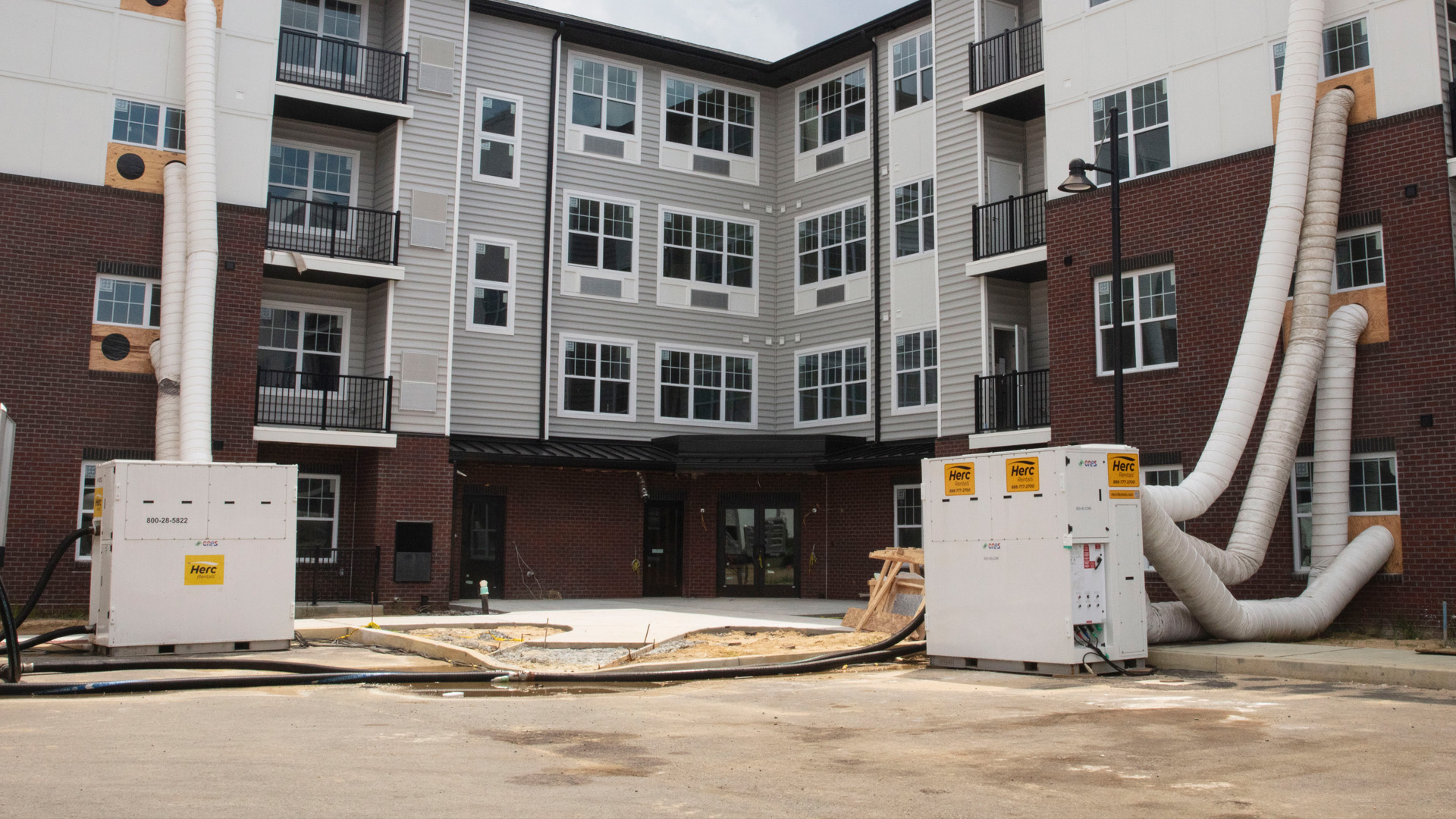
- Use desiccant dehumidifiers, air scrubbers and blowers to further dry out the area. This type of equipment may also have filters to help remove mold and allergens from the air.

4. Clean and Disinfect
Once all materials are completely dry, the next step is to make sure the air and surfaces are safe for those in the building.
- Clean and disinfect all surfaces. Even if a surface looks clean, it likely has a fine layer of soot or fire suppression chemicals on it. Plus, if it got wet or was near hazardous wastewater, it may be a breeding ground for harmful bacteria and mold.
- Be sure to follow all safety laws or enlist the help specialists, such as mold remediation contractors to ensure a clean, safe project site. For more cleaning tips, visit the American Red Cross: Cleaning Up After a Fire.
5. Repair the Structure to Prevent Future Water Damage
Now it’s time to restore the structure and make additional repairs. At this stage, the goal is to remove all evidence of the fire while preventing future water damage. The fire may have damaged roofing, pipes and other parts of the structure, which could lead to future leaks and water damage if not addressed.
When restoring a building after a fire, be sure to do the following:
- Repair burst pipes or fire suppression systems to prevent additional water damage.
- Replace warped or damaged wood, windows, doors, walls, floors and roofing to prevent water damage from leaks.
- Upgrade electrical systems or other safety systems to help prevent, detect or put out future fires.
- Implement preventative maintenance routines to help prevent another disaster.

Get Back to Normal After a Fire with Water Removal Equipment from Herc Rentals
In the waterlogged aftermath of a fire, the last thing you need is to wait for the right equipment while mold grows.
When you have a fire damage removal project, Herc Rentals is ready to help. Our expert team can help take the stress out of selecting water removal and fire restoration equipment. From desiccant dehumidifiers to trash pumps and wet vacuums, our high-quality equipment helps you remove moisture and wet debris quickly.
Count on Herc Rentals for all your rental equipment needs and prompt equipment delivery. We’ll help you keep your project running smoothly.
Explore our wide selection of water removal and vacuum equipment or call 1-800-432-6215 to discuss options with an expert today.