
Last Updated on October 30, 2025
When temperatures drop, construction sites face challenges that can slow down productivity and create unsafe working conditions. Workers need protection from frostbite, hypothermia and accidents caused by stiff or numb hands. Cold weather can also severely impact production efficiency, machine operation and the long-term health of a building’s infrastructure.
Whether you’re working on a new commercial build, a renovation or responding to unexpected freezing conditions, the right portable heater can make all the difference. In this article, we’ll show you how to select the best temporary heater rental to keep your project running smoothly.
How Temporary Heaters Impact Worksite Safety
Heaters are more than just a convenience; they are a safety necessity in winter. According to OSHA, employers are required to protect workers from cold stress hazards. Temporary heaters not only help maintain safe temperatures but also reduce the risk of equipment damage and project delays caused by freezing conditions.
A warm, well-regulated environment will help keep your project running on schedule in even the worst weather. Ultimately, you need temporary heating that supports both productivity and compliance with workplace safety standards.
But how do you choose one? There are many temporary heaters available, from electric space heaters to direct fired heaters and hydronic surface heaters. As you’re about to learn, each type of heater is designed to meet different site demands, so long as they are used safely.
Before Firing Up a Heater, Take These Safety Precautions
While temporary heaters are effective at maintaining comfort and protecting workers, they also come with safety risks if not used correctly. Fire, carbon monoxide (CO) poisoning and poor ventilation are among the leading hazards linked to temporary heating equipment.
- Learn More from the National Fire Protection Association: Heating Safety
Follow all safety guidelines, including OSHA guidelines for temporary heating devices. When using a portable heater, it’s important to minimize the risk of fire and carbon monoxide poising.
Safety Precautions Include:
- Maintain a 3-Foot (or More) Safety Zone: Keep heaters at least three feet away from combustible materials and ensure proper clearance around airflow.
- Ensure Good Ventilation: For fuel-burning models, keep the heaters outside or in well-ventilated areas to avoid carbon monoxide buildup. Carbon monoxide has no smell and can be deadly in enclosed or poorly ventilated spaces.
- Provide Ample Training: Train workers on the proper operation of the heater and how to recognize the signs of CO exposure.
- Follow Safe Operation Protocols: Use only approved fuel sources, regularly inspect hoses and connections, and never leave heaters unattended.
By taking these basic precautions, you can maximize the benefits of any temporary heater without adding unnecessary risks to your job site.
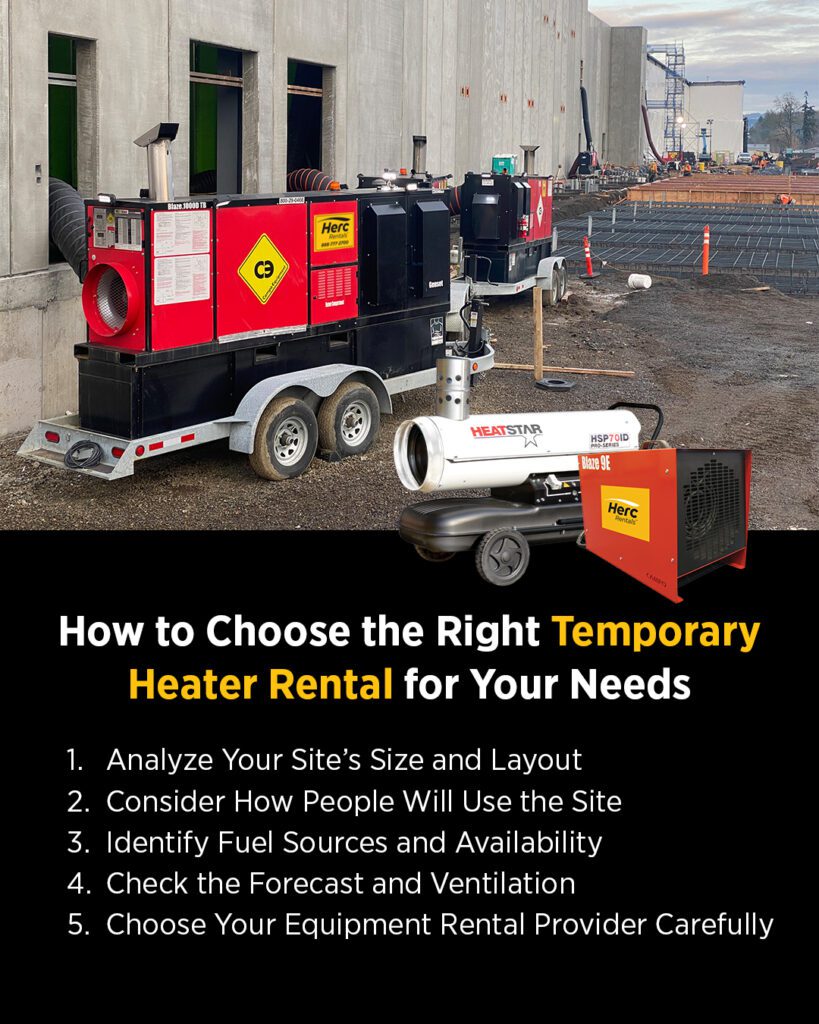
How to Choose the Right Temporary Heater Rental for Your Needs
Choosing the right heater rentals is all about efficiency, safety and keeping your crews productive. The right model and rental partner can help you prevent delays, lower costs and ensure safe operations in cold conditions.
1. Analyze Your Site’s Size and Layout
The first step to choosing a heater rental is to carefully evaluate the size of your job site and how it’s being used. Understanding your site layout ensures you rent a heater that provides adequate warmth without compromising safety.
Large, open spaces like outdoor winter events typically require high-output heaters with wide coverage. Meanwhile, smaller or partially enclosed areas may benefit more from radiant heaters placed near high-traffic zones.
Also consider the site’s ventilation options. Some heaters require significant airflow to operate safely, and safety regulations will specify minimum clearances. For example, if ventilation is limited, you’ll need a heater that doesn’t produce emissions, like an electric heater.
2. Consider How People Will Use the Site
Next, think about the nature of the work being performed onsite. For example, a small room filled with electronics and workers will naturally be warmer than an outdoor construction site with minimal foot traffic.
In people-heavy environments, you may need heaters that run quietly or models with cool-touch exteriors to prevent accidental burns. Choosing the right heater for your specific work activity ensures both safety and comfort.
3. Identify Fuel Sources and Availability
It’s also important to consider how the heater works. Not all heaters run on the same power. Electric heaters require an active power supply or a generator, while propane or diesel units rely on fuel that you’ll need to keep onsite. Before selecting a heater, confirm that you have access to the right fuel source and factor in the cost and availability of fuel for ongoing operation.
4. Check the Forecast and Ventilation
Always account for weather conditions and airflow. Fuel-burning heaters must have adequate ventilation to prevent carbon monoxide hazards. If you’re using heaters outdoors, make sure the units are durable enough to withstand snow, wind and freezing temperatures.
Before choosing a heater to rent, research the weather forecasts for the entirety of your project. This can help you decide how long you’ll need the heater rental and what model will be the most useful.
5. Choose Your Equipment Rental Provider Carefully
Lastly, if you’re renting a portable heater, then remember that the heater itself is only part of the equation. Choosing the right rental provider is just as important as the model you select. Poorly maintained heaters can lead to delays, damage or injuries. While a trusted provider can help you maximize safety, efficiency and uptime. Look for providers who offer the latest technology and have a strong track record of reliability.
A dependable equipment rental partner will have a fleet of efficient, well-maintained equipment, transparent pricing, and valuable support services, such as equipment delivery, setup and safety training.
- Learn More: 7 FAQs About Renting Temporary Heating Equipment
Types of Heating Equipment
Now that you know what your project site needs, it’s time to talk to your rental provider about the options available. Before you contact them, make sure you know what types of heaters are on the market. Different jobsites require different heating solutions, and knowing which heaters might work best will help speed up the rental process.
Review the most common heaters below and choose the type that best meets your project site, fuel availability and safety requirements.
Electric Heater
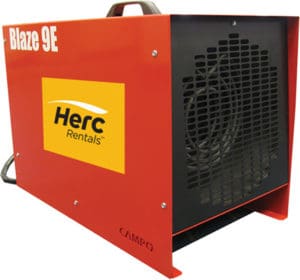
In winter, it’s always wise to expect the unexpected. A week of mild weather could be followed by frigid temperatures dipping to the single digits. When weather gets that cold, protecting interior pipes, machinery and people from the bitter cold becomes more challenging.
Portable electric heaters deliver safe, odorless heat for spaces ranging from 50 square feet up to 15,000 square feet and are ideal for emergency situations like the loss of heat in a building and to thaw frozen pipes.
- Rental Tip: When renting an electric heater, make sure you know what type of electrical plug and outlet it requires.
Rental Tip: When renting an electric heater you will need to determine what type of electrical plug is required on your jobsite.
Indirect Fired Heaters:
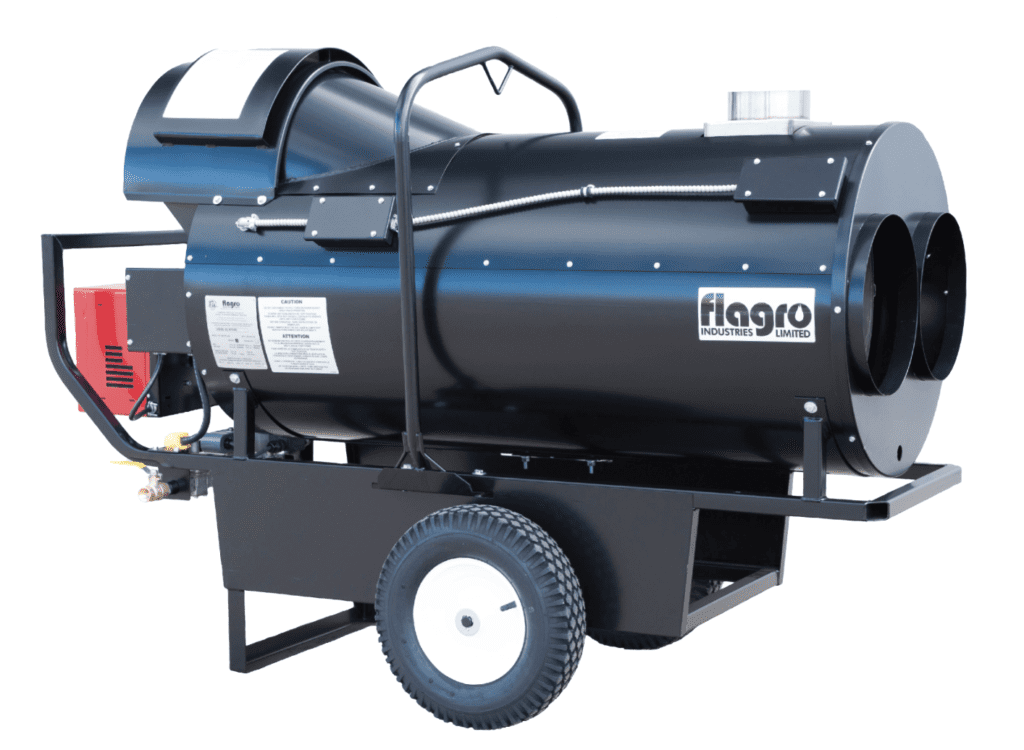
Great for drying and emergency temporary heating, indirect fired heaters operate like a mobile furnace. These heaters must be positioned outdoors. They feature a “chimney” where unwanted fumes are expelled and use ducting attachments to push warm air indoors over large areas.
Indirect fired heaters are ideal for warming offices, manufacturing facilities and schools because their combustion byproducts are captured and safely redirected.
Self-Contained Heater
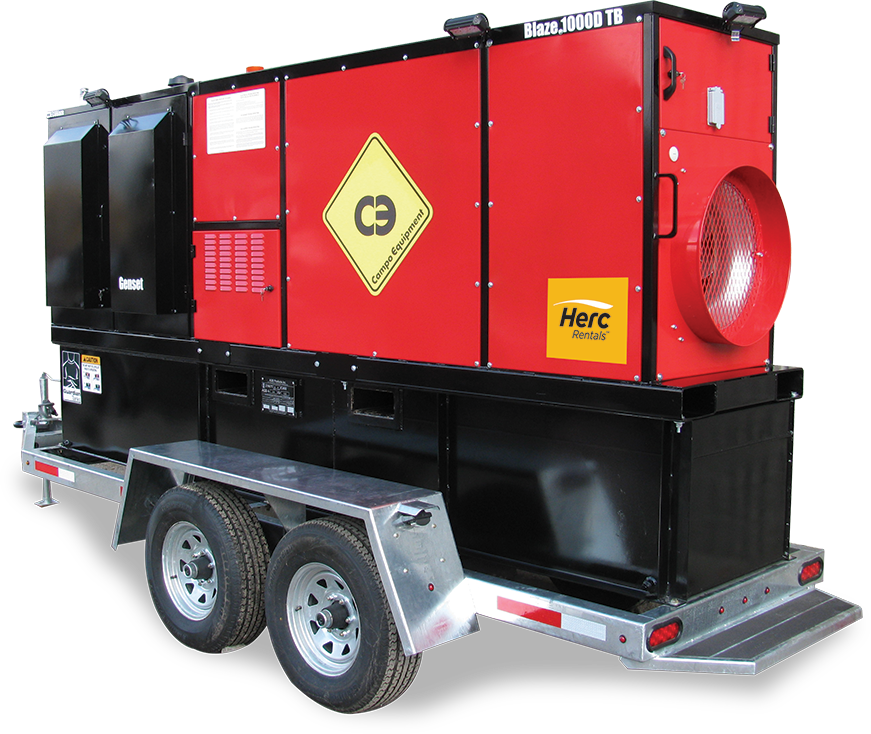
Self-contained heaters are often used inside a building and designed to warm an entire space, including walls and ceilings. They are easy to start up with built-in generators and have run times up to 42 hours.
Hydronic Surface Heater
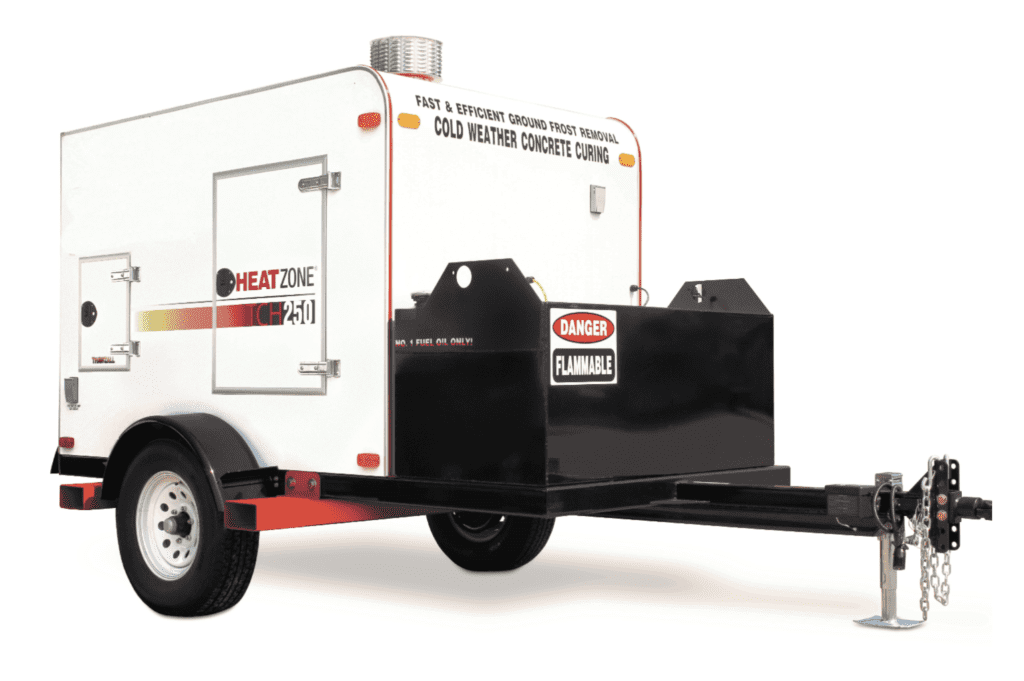
In construction, one of the biggest challenges in winter is ensuring proper conditions for placing concrete. Pouring concrete in or on frozen ground is a recipe for disaster because once the ground thaws in the spring, the concrete will settle and likely crack. Hydronic surface heaters are radiant-type heaters that use water in a closed-loop system to directly warm the ground. They feature long run times and are ideal for ground thawing and cold weather concrete pouring.
Flameless Heater:
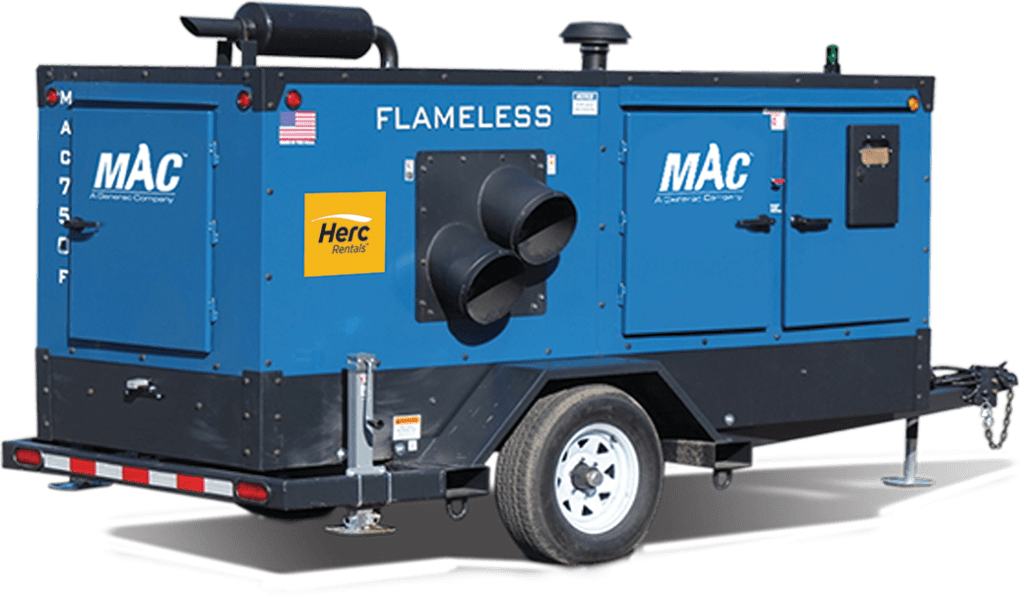
Industry and production lines don’t stop when the weather turns bad. Flameless heaters are designed and built for sustained, reliable heat in industrial operating conditions and environments. Because there are no open flames or sparks, flameless heaters and their long ducting capabilities make them ideal for potentially volatile applications like oil and gas exploration, mining, construction and restoration.
Direct Fired Heater:
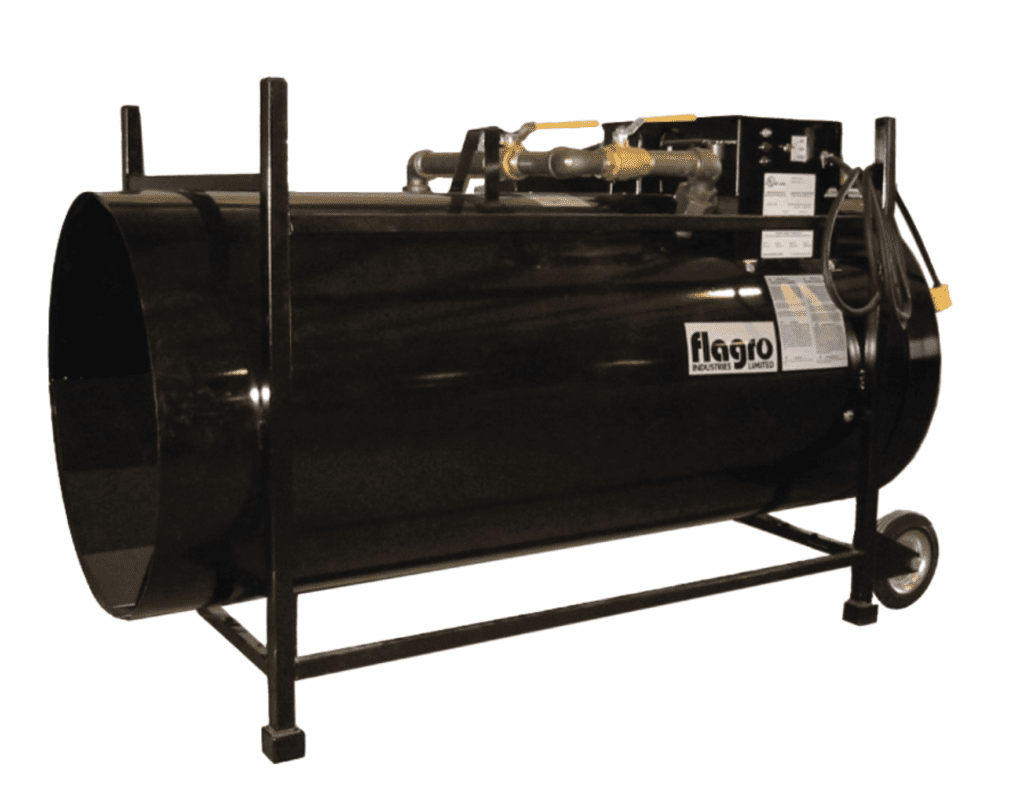
If you’re in need of heating a large open space and want every nickel to count, direct fired heaters may be your solution. With nearly 100% of its fuel used to convert heat, direct-fired heaters operate much more efficiently than their counterparts.
Because direct fired heaters feature an open flame and are powered by natural gas or propane, these heaters are best used in open air locations or buildings with large open spaces like warehouses, indoor and outdoor sports arenas, car dealership service bays, car washes and more.
Radiant and Specialty Heaters:
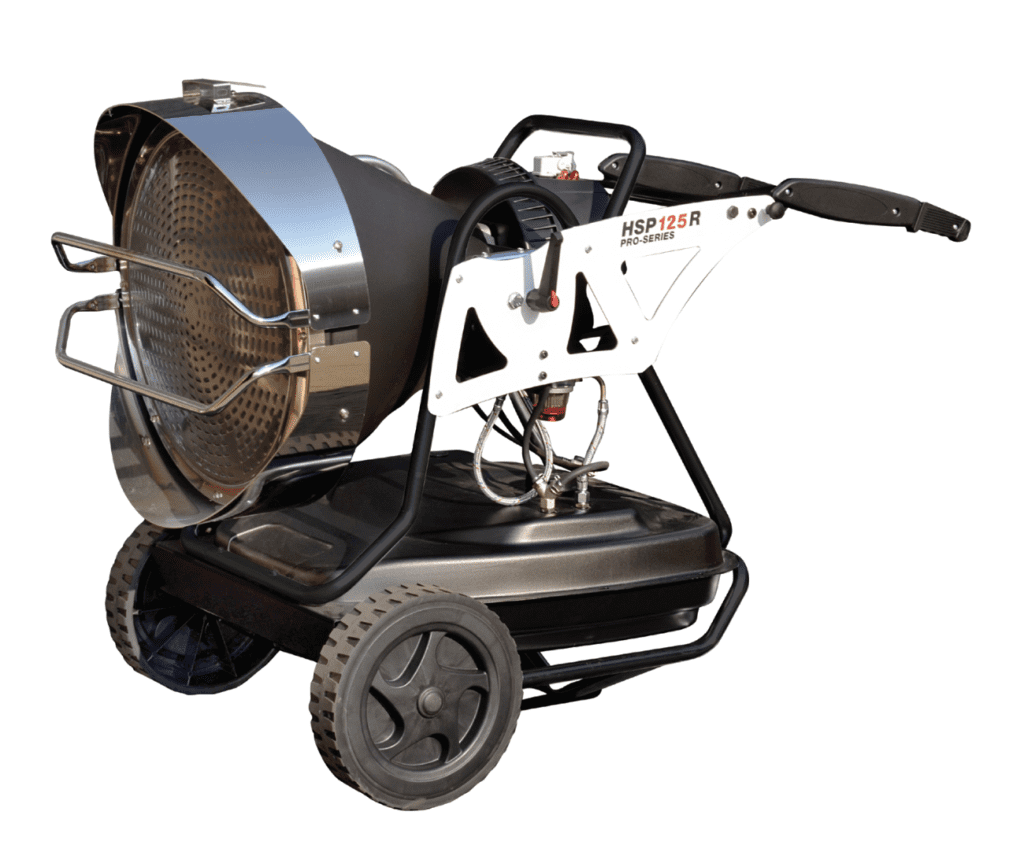
One of the big advantages of radiant heat is that it’s not affected by wind, unlike forced air heaters. Excellent for drying paint and adhesives and concrete preparation, radiant heaters and other specialty heaters are a great way to keep workers in cold factories and outdoor or unheated construction sites warm.
Portable AC Units with Heat
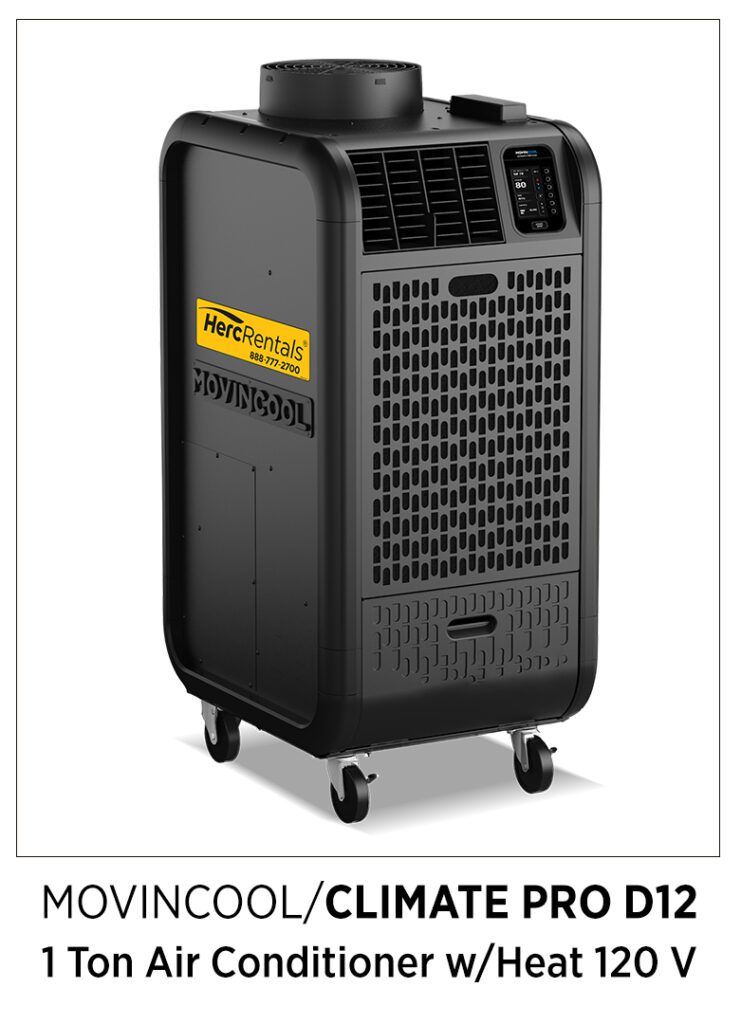
For worksites where temperature control is needed year-round, portable AC units with heating capabilities offer flexibility. They provide cooling in hot weather and warmth in the winter, making them a versatile choice for projects with changing needs.
Gas Heaters
Gas heaters are widely available and versatile, offering strong output for both indoor and outdoor applications. They require a consistent fuel supply and ample ventilation, but they remain a cost-effective heating solution.
Temporary Heaters from Herc Rentals Will Keep You Warm This Winter
Don’t let winter weather freeze you in your tracks. The right temporary heater will keep your project on schedule, protect your workers, and help you stay compliant with cold-weather safety standards. No matter the size or complexity of your worksite, Herc Rentals has the expertise and equipment to help you find the best temporary heating solution for your unique needs.
Explore Herc Rentals selection of climate control solutions, or give us a call at 1-800-432-6215 to discuss options with an expert today.


