Last Updated on September 18, 2026
In commercial and industrial facilities, air handlers work quietly behind the scenes, often going unnoticed despite their critical role in maintaining comfortable, stable conditions. When they are operating properly, indoor conditions remain consistent and comfortable.
When they fail or are undersized, you’ll notice it quickly. Suddenly your facility is filled with hot spots or icy drafts, excessive humidity, overheated equipment and issues like condensation, material warping or musty air.
Air handlers play a critical role in balancing temperature, humidity and air quality across warehouses, manufacturing plants, data centers and event spaces. They are also used during HVAC system repairs, upgrades or emergencies, when temporary climate control is needed.
In these cases, renting air handlers for better heating and cooling can be a flexible, cost-effective solution for quickly restoring the comfort level in your building. Use this guide to help you choose the best air handler unit for your worksite or facility.
What Is an Air Handler?
An air handler unit is the indoor component of an HVAC system that circulates heated or cooled air throughout a building.
It does not heat or cool the air on its own. Instead, it works with an air conditioner, heat pump, or other cooling and heating equipment to move air conditioning through ducts to maintain comfortable indoor temperatures.
Commercial vs. Residential Air Handlers
There are two main categories of air handlers: commercial and residential. You’ll need to consider your facility’s layout and size to choose the right category. For example, if your building has wide open areas with high ceilings, a large ventilation system, and plenty of people and machinery that generate heat, then a commercial air handler is likely the best choice.
- Commercial Air Handlers: A commercial air handler is designed to move large volumes of air through office buildings, warehouses, manufacturing facilities and other large spaces. They’re typically installed in mechanical rooms, on rooftops or on intermediate floors in high-rises. Many commercial units also include humidification, advanced filtration or economizers to improve indoor air quality and energy efficiency.
- Residential Air Handlers: Residential air handlers are compact units designed for homes and small businesses with lower ceilings and many rooms. They are often installed indoors in an attic, basement, crawl space or utility closet. These air handlers may be paired with an air conditioner or a heat pump.
Why Should You Use an Air Handler?
A commercial air handler does more than just move air conditioning through a building. In commercial and industrial facilities, they help to provide a comfortable, productive and safe environment for employees while protecting equipment, inventory and operations. By delivering consistent airflow, maintaining stable temperatures and filtering the air, an air handler supports both worker comfort and operational performance.
The benefits of air handlers include:
- Maintain Consistent Temperature and Humidity: Stable conditions keep employees comfortable while protecting temperature- or moisture-sensitive equipment, machinery and inventory.
- Enhance Air Circulation: Even airflow reduces hot and cold spots, eliminates stagnant air and promotes a more comfortable environment throughout the facility.
- Improve Indoor Air Quality: Air filters capture dust, pollen and other airborne particles, creating a cleaner, healthier workplace and reducing respiratory irritants.
- Increase Energy Efficiency: Proper airflow reduces strain on heating and cooling equipment, lowering energy consumption, minimizing wear on HVAC components and extending equipment life.
While OSHA does not have specific indoor temperature requirements for most workplaces, employers are responsible for providing a work environment free from recognized hazards. Excessive heat, poor ventilation and poor indoor air quality can contribute to heat stress, reduced cognitive function and other safety risks.
A properly sized air handler helps keep the facility safer, healthier and more comfortable while protecting valuable equipment, materials and inventory from damage caused by heat, humidity or poor air circulation.
How Does an Air Handler Work?
An air handler regulates air circulation based on the temperature set on a thermostat. The unit connects to the building’s duct work with a return plenum that gathers air from the facility and a supply duct that delivers conditioned air back into the space.
In systems paired with an air conditioner or heat pump, refrigerant lines carry refrigerant to and from the evaporator coil to change the air temperature.
How an Air Handler Works:
- Air is drawn into the air handler. Air enters the return plenum and travels through the return duct work into the air handler.
- The air is filtered. Air passes through filters mounted in filter racks to remove airborne contaminants before they reach internal components or can recirculate through the building.
- The air is heated or cooled. The air moves across heat exchange coils. During cooling, the evaporator coil absorbs heat and moisture from the air as refrigerant flows through it. During heating, the heating coil or electric heat strips warm the air. Not all air handlers include both heating and cooling components. The configuration depends on the HVAC system and application.
- The blower moves the air. A fan pushes the conditioned air through the supply duct into the building. Blowers are available in single-speed, multi-speed and variable-speed models. Variable-speed blowers automatically adjust airflow based on demand, improving the comfort level and energy efficiency.
- Dampers regulate airflow. Adjustable dampers — manual or automatic — within the duct work control the volume and direction of airflow to maintain balanced temperatures throughout the facility.
The process cycles continuously to maintain the setpoint temperature and provide optimal climate control.
What Are the Different Types of Air Handlers?
Air handlers come in different configurations designed for different buildings, installation requirements and cooling methods. Some are part of packaged or split HVAC systems, while others are designed for chilled water applications or installed either vertically or horizontally.
Choosing the right air handler unit depends on factors such as the size of the space, airflow needs, available installation space, energy efficiency goals, and whether the system will provide temporary or permanent climate control.
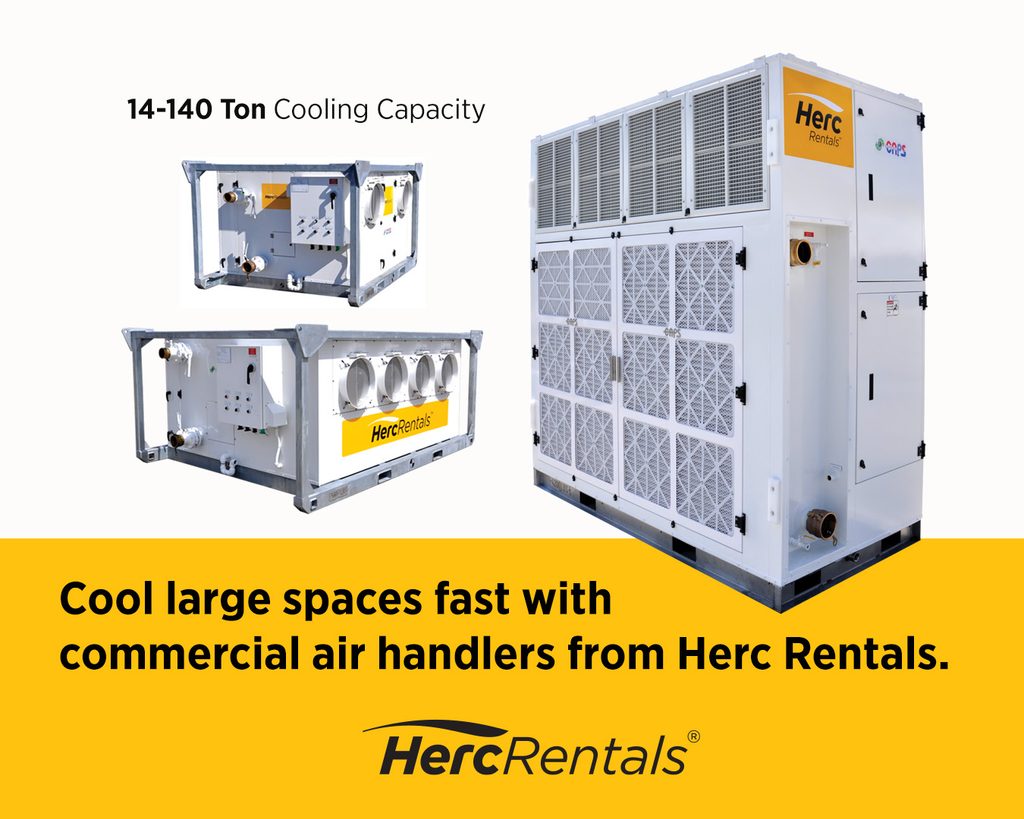
While packaged and split systems are common permanent HVAC installations, commercial rental air handlers are most often chilled water units available in vertical or horizontal configurations for temporary cooling, planned maintenance or emergency response.
1. Packaged Units
Packaged air handling units combine the air handler with heating and cooling equipment in a single cabinet. They are common in light commercial buildings and are often installed as a rooftop unit, although they may also be ground mounted.
Best For:
- Smaller commercial buildings
- Office buildings and retail strips
- Rooftop installations
- Areas with limited mechanical space
- Simple installations
2. Split Systems
In a split system, the indoor air handler works with a separate outdoor condensing unit or heat pump. This is one of the most common HVAC configurations for residential and light commercial buildings, with some systems serving multiple indoor units from a single outdoor unit.
Best For:
- Small offices and retail spaces
- Tenant suites and renovations
- Buildings with limited outdoor space
- Systems using heat pumps
3. Chilled Water Air Handlers
Instead of using refrigerant directly, chilled water air handlers circulate chilled water through a cooling coil supplied by a central chiller.
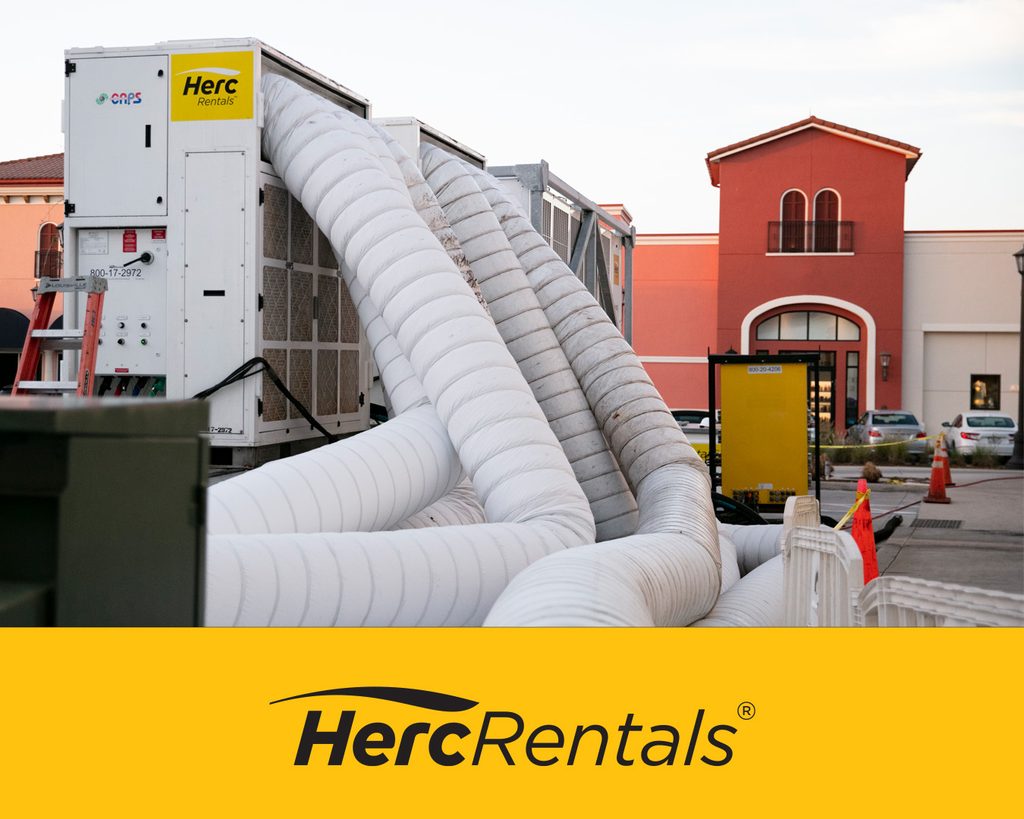
Commercial rental units are built for demanding temporary situations. They feature heavy-duty steel construction, integrated fork pockets, and lifting points for easy transport and installation, making them well suited for planned outages, emergency cooling and supplemental climate control.
Best For:
- Hospitals
- Data centers
- Manufacturing facilities
- Large office buildings
- Temporary cooling with rental chillers
- Planned maintenance and emergency response
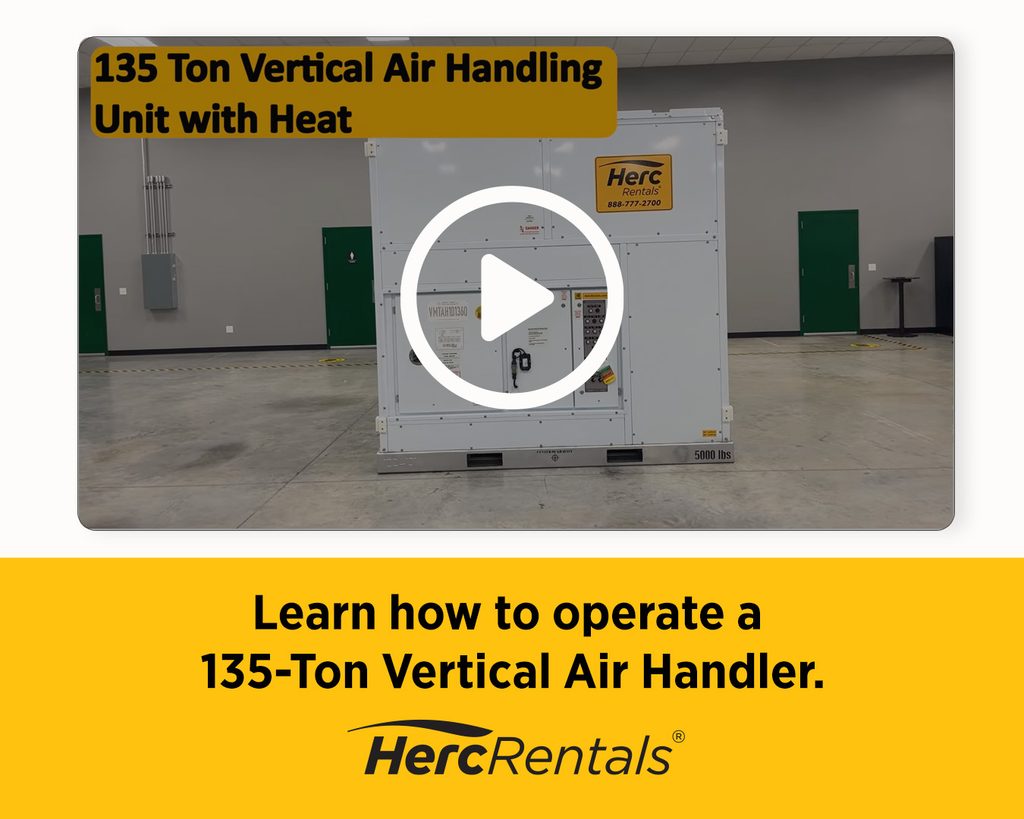
4. Vertical Commercial Air Handlers
In vertical commercial air handlers, the fan, coil and filter sections are stacked so the unit is taller than it is wide. Their compact footprint makes them ideal for mechanical rooms and other locations where floor space is limited but vertical clearance is not.
Rental units are designed for quick installation and can be paired with portable chillers to provide temporary cooling.
Best For:
- Buildings with limited floor space
- Mechanical rooms
- Retrofit projects
- High-rise buildings
- Temporary commercial cooling
5. Horizontal Commercial Air Handlers
In horizontal commercial air handlers, components are arranged side by side, creating a profile that is lower than vertical units. They require more floor space but less overhead clearance, making them ideal for installations above ceilings or in elongated mechanical areas. Like vertical models, they are commonly used with chilled water systems for temporary or supplemental cooling.
Best For:
- Suspended ceiling installations
- Large commercial buildings
- Warehouses
- Mechanical rooms with low ceilings
- Temporary cooling applications
Read more about air handlers and air scrubbers:
- How Climate Control Helps Improve Warehouse Energy Efficiency
- An Air Purifier vs. Air Scrubber vs. Negative Air Machine: What’s the Difference?
- What Is an Air Scrubber?
Rent Air Handlers from Herc Rentals Today
Renting an air handler unit provides a practical, scalable way to manage changing climate control needs without the upfront investment and ongoing maintenance required for owned equipment.
Whether supporting planned maintenance, emergency outages or temporary cooling needs, rental units can be quickly brought on site to restore comfortable climate control in commercial and industrial settings.
Herc Rentals offers a wide range of air handlers and complementary climate control equipment designed to meet your project requirements. To learn more, explore our equipment lineup, or call 1-800-432-6215 to speak with an expert today.