Last Updated on September 17, 2026
Warehouses can become uncomfortable quickly, especially when people, equipment and products share the same space. Many warehouse teams move between indoor and outdoor work areas throughout the day, increasing exposure to heat and the risk of heat-related illness without proper cooling and protection.
In addition, many facilities store products that require specific temperature conditions, and extreme heat can affect their quality, stability and performance.
Because of these factors, selecting warehouse cooling systems requires careful consideration of facility needs, work conditions and operational demands.
Why You Need a Cooling Solution for Your Warehouse
Warehouse cooling systems are essential for protecting people, products and equipment.
Warehouse heat can be more severe and widespread than many people realize. While cooling a large warehouse can be a significant expense, failing to do so can cost even more through damaged inventory, equipment failures, lower productivity and worker injuries.
A report by the Harvard Kennedy School-based Shift Project found that 63% of warehouse workers regularly experience temperatures over 80˚F, and 20% say they always work in those conditions. Excessive indoor heat can impair cognitive function, reducing concentration, decision-making and productivity.
The Occupational Health and Safety Administration (OSHA) recommends heat illness prevention measures dial up as temperatures rise. Workers must have access to water, rest, shade or cooling areas, and worker training to recognize heat-related symptoms. These measures also help employers meet their responsibility to protect workers from recognized heat hazards.
Maintaining proper temperatures also preserves the quality of food, pharmaceuticals, electronics and other heat-sensitive products, while protecting equipment from overheating, extending service life and reducing downtime.
Effective climate control supports compliance, improves productivity and enhances warehouse energy efficiency.
Warehouse Cooling Solutions: Pros and Cons of Each Type
There are several ways to cool a warehouse. The best choice depends on facility size, budget, and whether you need temporary or permanent cooling. Portable solutions often give warehouses the best mix of flexibility, speed and cost, especially when cooling needs are seasonal or limited to specific work zones.
Opening Windows and Loading Dock Doors
Pros
- Low or no cost.
- Improves natural ventilation when outdoor conditions are favorable.
- Easy to implement.
Cons
- Relies on outdoor temperatures and weather.
- Can let in dust, pollen and pests and could create security concerns.
- Often insufficient during hot or humid weather.
Industrial Fans
Pros
- More affordable than installing central HVAC.
- Fans and blowers are easy to rent and deploy.
- Improves air circulation and worker comfort.
- Useful for spot cooling and large open spaces.
Cons
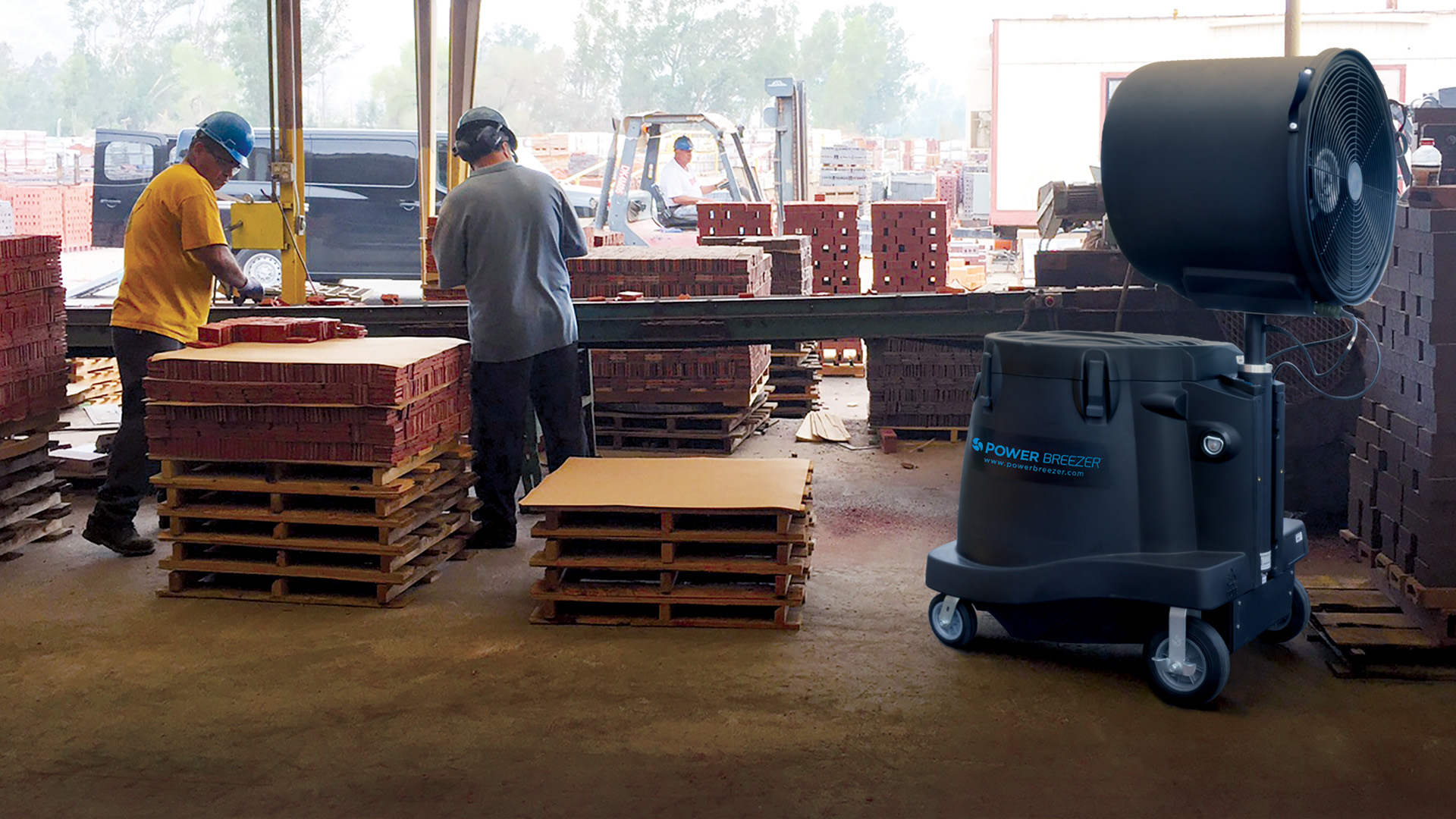
- Do not lower the actual air temperature, unless a mist fan is used.
- Less effective in extreme heat and humidity.
- May simply move hot air if ventilation is poor.
Window Air Conditioners
Pros
- Lower upfront cost than central HVAC.
- Effective for small, enclosed areas.
- Simple to install in compatible windows.
Cons
- Not practical for large warehouse spaces.
- Limited cooling capacity.
- Requires suitable window openings.
Permanent HVAC Systems
Pros
- Consistent cooling throughout the facility
- Improves humidity and air quality.
- Suitable for year-round climate management.
Cons
- High installation and operating costs.
- May require facility modifications.
- Less flexible if cooling needs change.
Portable Cooling Solutions
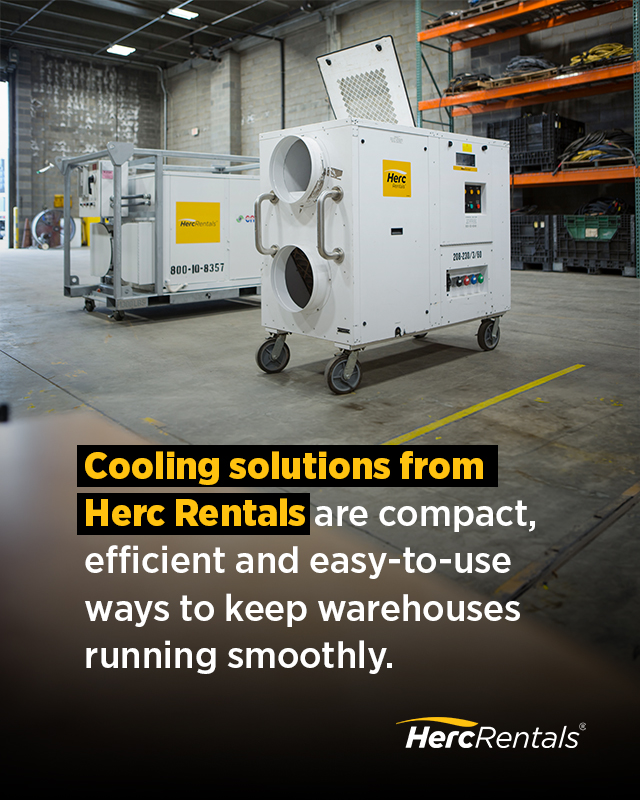
Portable cooling solutions include chillers and temporary AC units.
Pros
- Fast deployment for seasonal, emergency or supplemental cooling.
- Effective for specific work zones or problem areas.
- No long-term capital investment when rented.
- Easy to rent and move as needs shift.
Cons
- May not replace whole-building HVAC.
- Performance depends on choosing the right unit for the space.
For many warehouses, temporary cooling equipment — such as air conditioners, spot coolers, evaporative coolers, dehumidifiers or misting fans — offers the best balance of performance, flexibility and cost.
Tips for Choosing the Right Portable AC Unit for a Warehouse
Choosing portable AC units for a warehouse is all about matching the model to the needs. The ideal choice depends on your facility’s layout, workload, power supply and weather conditions.
Use the following tips for choosing a portable cooling solution for your warehouse to ensure your teams stay safe and productive this summer.
1. Get Input from Your Teams
Talk with the people who work in the warehouse every day, including warehouse staff, supervisors and maintenance teams. They have first-hand insight into where heat builds up, which areas are the most uncomfortable and how unit placement may affect daily operations, equipment use and traffic patterns.
Their input can help you prioritize the areas that need cooling most and avoid solutions that disrupt workflows, block equipment and miss key problem spots.
2. Check the Forecast, Weather Trends and Regulations
Review seasonal weather patterns so you can anticipate cooling demands and plan for peak heat periods. This is especially important as extreme heat events become more frequent and prolonged.
Your cooling plan should also align with workplace safety expectations and heat illness prevention practices. Make sure hydration, rest areas and cooling zones are available to support worker safety and compliance.
3. Consider the Size of the Warehouse
The size of the space is one of the biggest factors in choosing the right portable warehouse air conditioner. Square footage, ceiling height and layout all contribute to cooling needs. Large or high-bay warehouses may need multiple units or zoned cooling rather than a single system.
Understanding the size and volume of the space ensures you select a portable warehouse air conditioner that can effectively maintain safe, comfortable conditions.
4. Check the Warehouse’s Layout and Power Supply
Warehouse configuration plays a major role in cooling effectiveness. Open floor plans, racking systems and heat-generating equipment may require strategic placement or multiple units.
Power availability matters too, since some portable AC systems may require dedicated circuits, additional power sources or supplemental equipment like generators.
5. Plan for Flexibility
Cooling needs can change quickly based on season, workload, staffing or emergency conditions. Renting cooling equipment from a provider with a broad fleet and flexible terms makes it easier to scale up or adjust as conditions change.
Working with a reliable provider also makes it easier to get the right equipment when demand is high and options may be limited. This ensures faster response times and helps minimize downtime when unanticipated heat events arise.
How to Cool a Warehouse without AC
Not every facility requires air conditioning from a whole-building system or portable unit. In some cases, supplemental cooling and heat-safety measures can make a major difference in worker comfort and safety.
- Use ventilation to move air effectively. Combine industrial fans or high-volume low-speed fans with natural ventilation through windows, loading docks and doors when outdoor conditions could improve airflow and reduce heat buildup, especially during cooler hours.
- Create sealed and controlled airflow zones. Use strip doors, dock seals, curtains and other barriers to reduce heat infiltration in high-traffic or heat-prone areas while keeping conditioned air inside — helping to keep cool air in and hot air out.
- Install portable ventilation systems for targeted relief. Use spot ventilation in enclosed or tight areas where heat tends to accumulate and airflow is limited.
- Improve cooling zones for workers. Set up designated rest or cooling zones away from heat sources, using misting fans or similar solutions to reduce heat stress.
- Optimize warehouse layout and workflow. Organize the warehouse to improve airflow and reduce congestion and bottlenecks that trap heat.
- Reduce heat gain from the building. Apply reflective roofing or light-colored coatings and install insulation, fabric walls and curtains to stabilize indoor temperatures.
- Use portable cooling equipment. Deploy a portable AC unit or dehumidifier for targeted temperature and humidity control in specific zones or during peak heat conditions.
- Support worker safety. Provide hydration stations, scheduled breaks and heat illness training. Encourage appropriate attire, including breathable, moisture-wicking fabrics that help workers stay cooler. Allow time for workers to acclimate when temperatures rise.
Keep Your Warehouse Cool and Comfortable with Herc Rentals
Renting a portable warehouse air conditioner gives you the flexibility to respond quickly to changing conditions, seasonal heat or unexpected cooling needs without the upfront cost or long-term maintenance of ownership.
It also makes it easier to match the right equipment to the right space, whether you need temporary cooling, supplemental support or emergency backup.
To find the ideal fit for your operation, explore the lineup of portable AC units and other climate control solutions from Herc Rentals, complete an online support form. Or, call 1-800-432-6215 to speak with an expert today.