Last Updated on September 26, 2025
Standing water that’s filled with dirt, debris and other solid material can be a hassle to any construction site, mining operation or community. It makes sites unsafe for workers and can cause costly delays if it’s not addressed quickly.
Unfortunately, standard water pumps can’t tackle debris-filled fluids. To remove liquids and solids, you need a trash pump. Trash pumps are versatile, portable machines that have the suction power to handle a variety of waste and water management tasks.
Whether you need to dewater a construction site or reroute streams and drainage, this article will give you a basic understanding of how to use a trash pump safely and efficiently.
What Is a Trash Pump? How Does a Trash Pump Work?
A trash pump is a motorized pump that moves debris-filled water from one place to another.
It works by sucking dirty water and debris — like dirt, sand and twigs — in through a suction hose, pumping it through the machine and depositing it to a new location via the discharge hose.
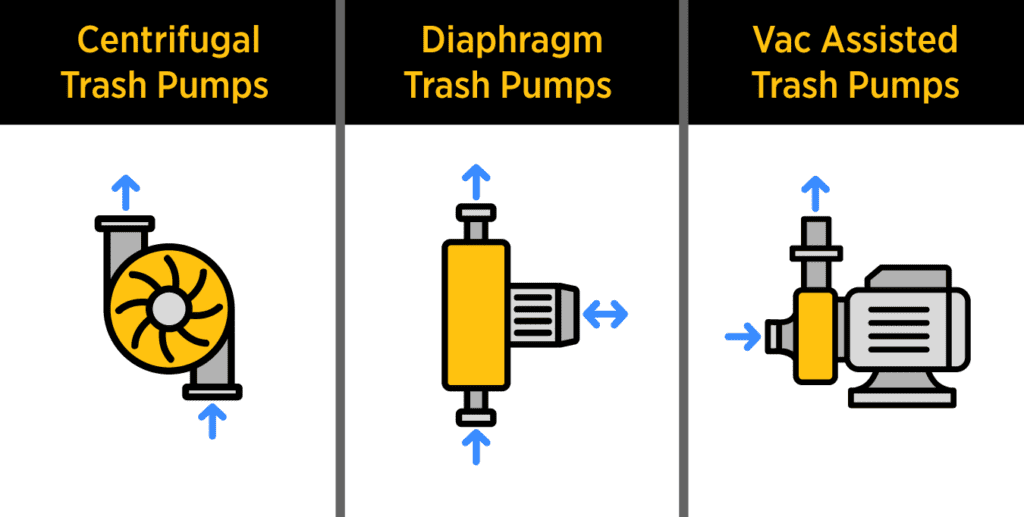
Exactly how a trash pump pulls water in depends on what type of trash pump it is.
- Traditional centrifugal trash pumps have an impeller that creates suction by spinning.
- Diaphragm trash pumps have a membrane (or diaphragm) that creates suction by moving up and down.
- Vac assisted trash pumps feature an impeller plus an integrated vacuum system that enhances fluid movement and maintains consistent flow rates during operation.
When to Use a Trash Pump Rental
For some, buying a trash pump makes sense because they use the same pump on a regular basis over a long period of time.
But if you’re like most, you may quickly find that every project and location is different. On one project, you may need a small trash pump to remove sandy water, while another needs a more powerful pump that can handle solids up to 3 inches in diameter.
Renting a trash pump allows you to select the right trash pump size and type for each project without the large upfront costs and ongoing maintenance hassles of equipment ownership.
With a trash pump rental, you can manage a wide range of fluid transport challenges and dewatering needs, such as:
- Construction: Trash pumps efficiently dewater your construction site around excavations, foundations and trenches, helping you maintain a safe worksite.
- Mining and Industrial: Debris-filled liquids like slurries are common in manufacturing, mining and wastewater treatment sites. Trash pumps keep production moving smoothly.
- Disaster Recovery and Remediation: From basement flooding to larger natural disasters or spills, trash pumps help you clean up faster by removing contaminated water, sediments and slurry.
- Agriculture and Environmental Management: With a trash pump, you can divert streams and improve irrigation or drainage by moving water that’s mixed with soil and debris.
If you need a trash pump for a limited period or need different pumps for different projects, renting is likely to be more cost-effective than buying.
How to Use a Trash Pump for the First Time
Compared to other types of equipment, trash pumps are relatively easy to learn and use. Once you’ve selected the best type of trash pump for your project, follow the steps below to maximize your pump’s effectiveness and keep your site safe.
1. Start With Safety
When you’re dealing with water, you need to take extra precautions to ensure everyone’s safety and prevent environmental damage. No one wants to contaminate nearby drinking water or cause unwanted erosion and slippery conditions.
Before you start your trash pump, make sure you’ve done the following:
- Secure Permits and Know the Law: Some cities may have noise ordinances or laws dictating where and how to discharge water and solids.
- Read the Manual: Each trash pump is different. The manual will tell you the best practices for using the pump safely while avoiding damage or clogs.
- Train Your Team: Using a trash pump doesn’t typically require official training or certification. Some pumps can be left unattended for a short time. However, that doesn’t mean you can set it and forget it. Train operators on how to use the pump safely and train others how to stay safe around the trash pump inlet and outlet.
2. Prepare the Area and Position the Pump
Trash pumps work best on level ground that’s as close to the fluid as possible. They will lose suction and work harder if fluid needs to be pumped up a hill or out of a trench. This can slow down the dewatering process or damage the pump.
Here are some dos and don’ts for ensuring a strong flow:
- DO place the pump on a firm and level surface as close to the fluid as possible. Anchor the pump if it’s next to a pit or hole.
- DON’T place the pump higher than 25 feet above the fluid’s surface. If the water in a trench or pit is deeper than 25 feet, consult your equipment rental provider for recommendations.
- DO keep suction and discharge hoses as straight and short as possible. Bends could cause clogs.
- DON’T run the discharge hose vertically for farther than is recommended according to the manual. If the incline is too steep or long, you may need a check valve installed.

3. Install a Suction Strainer and Connect Plumbing
Install a suction strainer into the suction hose to stop large debris from entering and damaging the pump.
- Position the strainer so that it remains underwater but without sinking into the sediment. You may have to secure the strainer in place to maintain proper positioning while pumping.
Connect the suction and discharge hoses to the trash pump. Next, place them in the water and discharge area, respectively.
- Ensure there are no air leaks, especially in the suction line. Leaks can interrupt or slow down the priming and pumping process.
4. Prime the Pump and Start the Engine
Most trash pumps need to be primed (filled with water) before they start pumping. In many cases, running a trash pump while dry will damage the equipment.
- Follow the manual’s instructions for how to prime the pump correctly. Some pumps are self-priming. Others require you to fill the pump body with water before starting the engine.
- Start the engine and wait for the priming time to finish. The higher your project site is from sea level, the longer the priming time will be. If nothing is coming out of the discharge hose within a few minutes, turn off the pump and check the plumbing.
5. Manage the Flow
To keep your project on schedule, you’ll need to manage the flow of fluid through the trash pump.
You always want to maintain a strong flow into and out of the pump. However, as water and debris enter the pump, the hoses may shift, or the suction strainer could get clogged. The gravity from pumping fluid up an incline can also decrease the flow.
To keep fluid flowing smoothly:
- Regularly clean the suction strainer to prevent clogs.
- Reposition the suction hose as water levels go down to keep the end fully submerged. Allowing air into the line can damage the pump and reduce flow.
- Increase or decrease the engine speed as needed. Increase the speed when pumping a large volume of water or pumping vertically to keep the flow strong. Decrease the speed on shallow jobs or when there is only a small amount of fluid to pump to extend engine life.
- Keep the discharge hose straight and clear. Bends or obstructions in the discharge line can clog the pump.
4 Specialty Trash Pumps to Consider
The steps you just learned apply to all types of trash pumps, including those designed for unique situations. Here are four specialty types of trash pumps to consider for your next project.
- Submersible Pumps for Underwater Use: Submersible trash pumps are a type of traditional trash pump that can be placed fully underwater. They use an impeller to create suction and are great for deep excavations where it’s impractical to run a suction hose all the way above ground.
- Hydraulic Pumps for No Prime Time: Because they’re powered by a hydraulic system, hydraulic trash pumps can run dry and do not need priming. They are best for projects where hydraulic power is already available, such as power from an excavator or tractor.
- Engine-Driven Pumps for Remote Jobs: Diesel- or gas-powered trash pumps are great for remote locations. They create suction either with an impeller or diaphragm and can often handle large solids with ease.
- Electric Pumps for Indoor/Environmentally Conscious Jobs: Electric pumps offer effective pumping with limited or no carbon emissions. They are quieter than other pumps and are often exempt from environmental permits, making them great for indoor use or projects with enhanced regulations.
Secure a High-Quality Trash Pump from Herc Rentals
When it’s time to dewater your project site or manage wastewater, rent a high performing trash pump from Herc Rentals.
Our trash pumps are impeccably maintained and ready to handle your most demanding project. They can handle solids up to 3.4 inches in diameter and transfer thousands of gallons per minute. Plus, when you rent from Herc Rentals, you’ll get access to expert support and convenient delivery options to keep your project running.
Browse our selection of trash pumps or call 888-777-2700 to discuss options with an expert today.