
Last Updated on January 7, 2026
Winter construction brings unique challenges that contractors and construction teams must manage carefully. Cold temperatures, snow and ice can threaten workers’ safety and put materials at risk. That’s why maintaining proper climate control on a jobsite is essential.
It doesn’t just keep crews warm, but also ensures that partially completed work, sensitive materials and building components aren’t damaged by the weather. By following the recommendations below, you’ll be able to choose the best climate control solutions to keep projects moving safely.
What Do Construction Workers Do in Winter?
Projects don’t stop simply because temperatures drop. When bone-chilling weather arrives, crews need to know exactly how they will handle the cold while staying on-schedule. In northern climates especially, you need to keep projects moving year-round to meet deadlines and control costs.
While some outdoor tasks may have to pause during periods of extreme weather, many operations have to continue both indoors and out. For example, foundations still need to be poured, materials still need to be installed and enclosed spaces often require finishing work that must move forward regardless of the forecast.
To maintain productivity and stay compliant with winter safety guidelines, you have to make sure workers and materials are warm enough to perform as expected. Proper planning also helps minimize lost labor hours and damaged or frozen materials.
Winter construction often requires extra steps to make sure the worksite is safe and the property remains structurally sound, such as:
- Enclosing work areas
- Staging equipment strategically
- Using specialty climate control solutions
Taking these extra measures pays off by helping to prevent delays and avoid costly rework.
How Low Temperatures Affect Workers and Construction Schedules
Extreme cold affects operations just like extreme heat does in summer. Overall, winter weather reduces productivity, increases safety risks and slows work schedules.
This is because low temperatures bring a host of challenges that require workers to slow down and adjust their priorities and methods to maintain safety and quality. For example:
- Icy, wet conditions reduce traction on icy surfaces. Workers must move slowly and more carefully around the site.
- Added layers of protective clothing keep workers safe from cold stress but they also restrict workers’ movement and dexterity.
- Low-light conditions and snow reduce visibility, sometimes suddenly. Crews have to adjust tasks as conditions change.
When workers are warm and able to maneuver safely, projects progress more smoothly, especially in winter. That’s why reliable, jobsite heating solutions are an essential component of winter construction planning. But how do you choose the right climate control solutions?
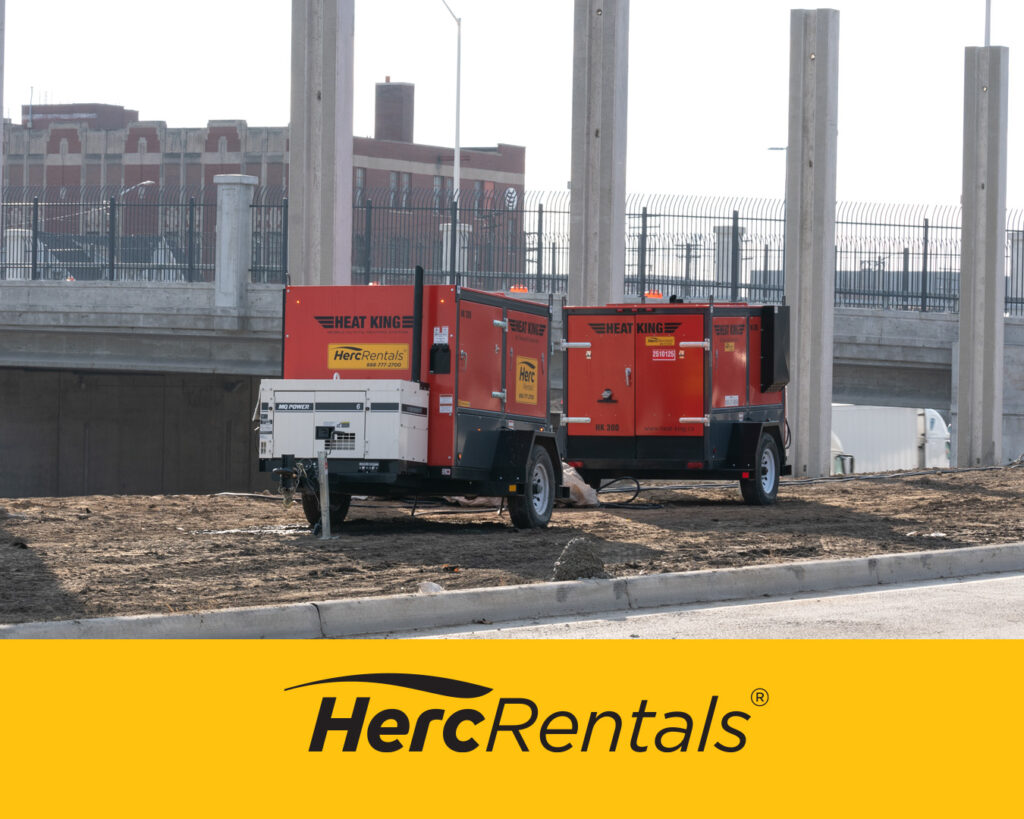
How to Select Climate Control Solutions to Keep Workers Safe and Comfortable During Winter Construction
Climate control is crucial for winter construction sites. Portable heating equipment and portable heaters help maintain a safe working temperature in enclosed or semi-enclosed spaces, improving both comfort and performance. They also reduce the likelihood of cold stress injuries such as frostbite or hypothermia. Choosing the right climate control setup is key to keeping crews productive during the winter months.
1. Determine Where Extra Heat Is Needed
Not all temporary heaters are the same. The best solution depends on the layout of your project site. Before you buy or rent a portable heater, take a close look at the project site and how it will be used.
Is the site indoors or outdoors? How big is the space? Is there enough room to maintain a safety zone around the heater? Knowing how big an area you need to keep warm, and how much of a safety zone a heater needs, will help you choose a heater that’s the right type and size.
- For Indoor Areas: For enclosed or partially enclosed indoor areas, electric heaters or hybrid portable heating equipment is often the safest choice. These heaters produce warmth without generating emissions, which makes them suitable for spaces with limited ventilation. They also tend to be quieter than fuel-powered options and are more comfortable for teams working in tight spaces.
- For Outdoor Areas: Outdoor work zones, staging areas and wide-open structures often require more powerful solutions. A direct-fired heater fueled by propane or diesel can deliver high heat output that warms large workspaces quickly. These units are built to withstand winter weather and can be placed strategically to warm workers, protect equipment or maintain workable temperatures for sensitive materials.
2. Identify Power Sources
What type of power sources are onsite? If the site is remote, you may also need a generator to power the heater. Adding a fuel-powered generator also means you’ll need space to run the generator outside and/or with ample ventilation to minimize carbon monoxide poisoning.
If you’ll be using electricity from within your facility or around the existing jobsite, make sure the heater is compatible with the available circuits.
3. Consider Workers’ Safety and Comfort
When selecting portable heaters for any jobsite, consider how each model will impact your workers’ safety and comfort. The right climate control strategy helps keep workers safe while also protecting the quality of the work performed during the winter construction season.
- Is heat output enough to keep teams warm without overheating nearby materials?
- Is there enough ventilation to maintain good air quality while heaters and generators are running?
- How loud is the heater (and generator)? Will workers need extra hearing protection?
- How will workers need to maneuver around the heater? Will the heater’s placement and safety zone hinder the natural flow of the site?
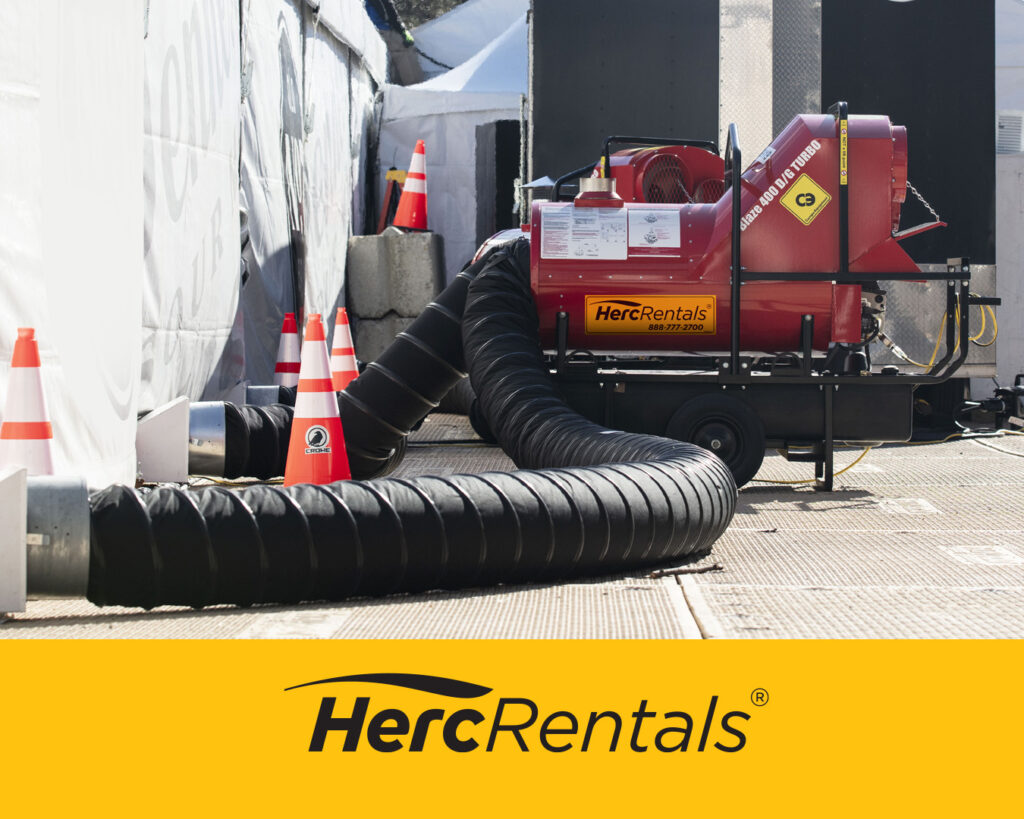
Understanding the Cold’s Impact on Materials
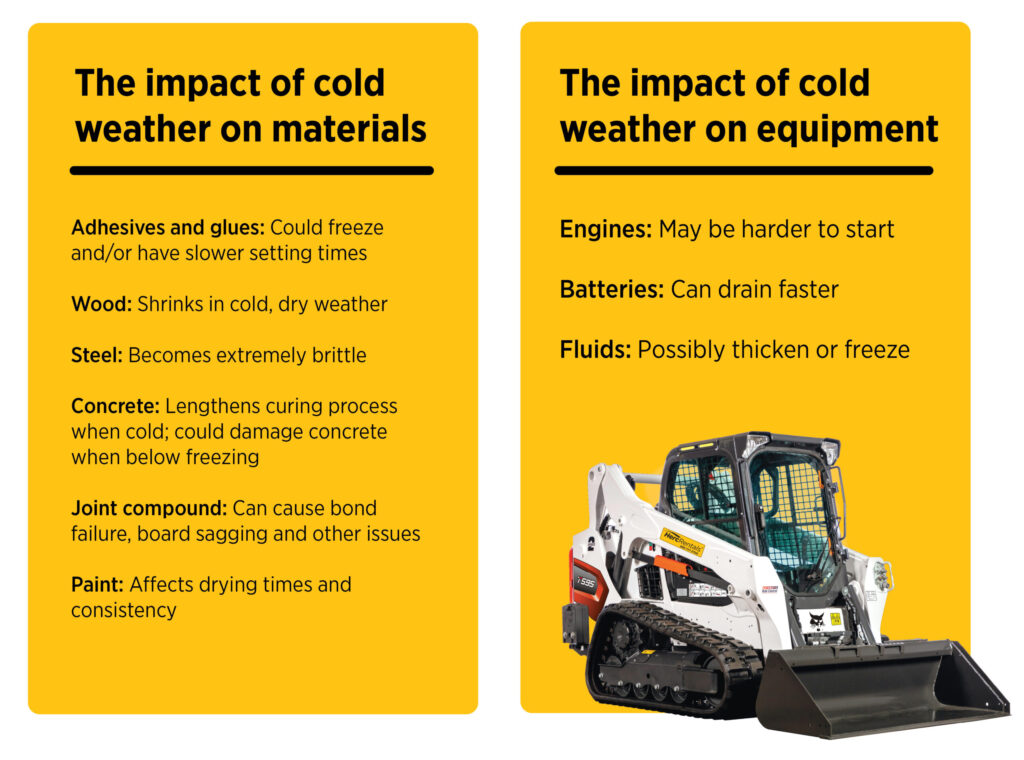
Humans aren’t the only ones who perform differently in cold temperatures. Construction materials and equipment also react differently.
Materials most affected by cold or freezing temperatures include wood, steel, concrete, paints, adhesives, glue and sometimes fuel.
- Adhesives and Glues: Cold temperatures can freeze water-based adhesives during transportation and storage. They also tend to have a slower setting time since water releases more slowly in the adhesive. In cold temperatures, glue films won’t form properly.
- Wood: With cold weather comes dry conditions. In the winter, the project’s wood materials will shrink to an extreme. When a thaw arrives, the wood will start to expand with the increased moisture present in warmer air.
- Steel: When temperatures fall below freezing, all steel changes from being just deformable to being brittle, as increasing cold weakens connections between crystal grains. Instead of bending, the steel could shatter.
- Concrete: The freezing of pore water in curing concrete halts hydration and the curing process. At freezing temperatures, the formation of ice within curing concrete can damage long-term integrity through cracking.
- Joint Compound (mud): Cold weather conditions can contribute to joint compound bond failure, delayed contraction, beading, nail popping, joint shadowing and board sagging.
- Paint: Alkyd and oil paints, based on natural oils and resins, become thicker in cold temperatures, requiring thinners to be added. Cold weather may also affect paint color, drying times and consistency.
Equipment can also be affected by winter conditions. Preventative maintenance is essential to keep tools and machinery operating consistently during winter construction.
- Engines may be harder to start.
- Batteries may drain faster or be too cold to function.
- Fluids may freeze or thicken, hindering performance or damaging hydraulics.
Understanding how winter weather affects each material on your project helps you plan ahead for the best heating solutions.
How to Find and Use Heating Solutions to Safeguard Materials and Prepare Construction Sites
Climate control plays an important role in preventing temperature-related material failures. Storing supplies in temperature-controlled spaces, staging materials strategically, using temporary protection and employing heating equipment all help safeguard product performance.
1. Identify When and Where Extra Heat Is Needed
Portable heaters allow contractors to warm enclosed spaces, thaw frozen ground and regulate temperatures in areas where curing or bonding must occur. The first step in choosing the best heating solution to protect your materials is to know when and where extra heat would be beneficial.
Make a list of all the tasks that may need additional heating and when they will occur. This will help you identify what types of heaters you need and for how long.
Examples of Where You May Need Portable Heating
- Excavation and Foundation Work: If you’re breaking ground in the middle of winter, one of the first steps before foundation work begins is ground thawing. Thawing the ground with a hydronic surface heater or indirect fired heater allows the excavation process to remain on schedule.
- Concrete Work, Painting, Sealing and Flooring: According to the American Concrete Institute, concrete placed at or below 42 degrees Fahrenheit must have heat protection to cure properly. Similarly flooring materials such as vinyl, tile and adhesives must be stored and installed above certain temperature thresholds to avoid warping or detachment. Paints, coatings and sealants also need warm, dry conditions to adhere properly. Propane heaters with tents and portable hydronic heating systems can help materials like concrete cure properly.
- Tempering Spaces, Applying Finishes and Plumbing: Wet trade work, like tiling and spackling, can’t happen unless the area is at least 45 to 55 degrees Fahrenheit. Piping and plumbing systems also benefit from temporary heating that keeps water lines from freezing during installation.
2. Choose the Type of Portable Heater
Different types of heaters may be better than others for protecting materials, depending on the type of work you’re doing. For example, hydronic heaters are designed to thaw frozen ground and cure concrete. Likewise, specialty radiant heaters give off infrared heat in a targeted area, perfect for speeding up drying times. Meanwhile, direct-fired heaters are designed to heat a large area.
- Learn More: How to Choose the Right Heater for Your Project
3. Partner with an Experienced Equipment Rental Provider
Many winter construction projects only need a specialty heater for a few days or a mix of climate control solutions over several weeks. Buying a fleet of heating equipment may not make sense. Instead, renting climate control solutions can be the most cost-effective way to get the right heaters at the right time.
Partnering with an experienced and reliable equipment rental provider can help optimize your operations. They have the expertise to help construction crews control temperature and humidity effectively. Additionally, renting means you don’t need to worry about maintaining and storing the equipment.
Keep Construction Projects on Time and on Budget with Climate Control Solutions from Herc Rentals
Portable heaters and other climate control systems are crucial for keeping workers productive while protecting sensitive materials. With the right climate control strategy, winter construction can continue safely and efficiently.
The next time you’re preparing for winter construction, contact the climate control experts at Herc Rentals. Our extensive fleet of temporary heating solutions can help you protect workers, maintain productivity and prevent costly damage to sensitive materials.
Explore our full line of climate control solutions, or call 1-800-432-6215 today.


