Last Updated on January 7, 2026
Winter brings real challenges for any construction site, but the season should not bring progress to a halt. With the right preparation, crews can stay safe and productive while minimizing costly delays.
In this guide, you’ll learn about a variety of cold weather safety topics, including protecting your teams, winter project-site logistics and the best equipment for keeping projects on schedule while working in the winter.
By understanding the risks, planning ahead and using the proper tools, you can maintain steady momentum even when temperatures drop.
Lay the Foundation: Protecting Crews from Cold Stress
Cold stress is one of the most significant winter worksite challenges, and recognizing the early signs is the first step toward prevention.
According to OSHA cold weather safety guides, cold stress occurs by driving down the skin temperature, and eventually the internal body temperature. Common forms include hypothermia where the body loses heat faster than it can produce it, and frostbite, which causes freezing of skin and underlying tissue. Both of these conditions can escalate quickly on exposed project sites, so crews must be trained to identify symptoms and respond immediately.
Educate your teams on the hazards of winter work and how to protect themselves, the equipment, and the project site. This includes ensuring they have the right winter gear and warm break areas.
Essential Gear for Winter Construction Safety
Proper construction crew winter gear is the most reliable defense against cold stress, and layering is key. Make sure your teams know how to select the personal protective equipment (PPE) for working in cold temperatures.
- Layer, Layer, Layer: Workers should gear up by starting with moisture wicking base layers. Then add insulating mid layers. Finish with wind resistant and waterproof outerwear.
- Traction and Grip: High quality work gloves and insulated boots maintain circulation and reduce the risk of frostbite. They also help improve traction and grip on slippery surfaces.
- Protect the Head and Face: Ears and noses are more prone to frostbite than other parts of the body. Warm headwear protects the ears, neck and head, which lose heat faster than other parts of the body.
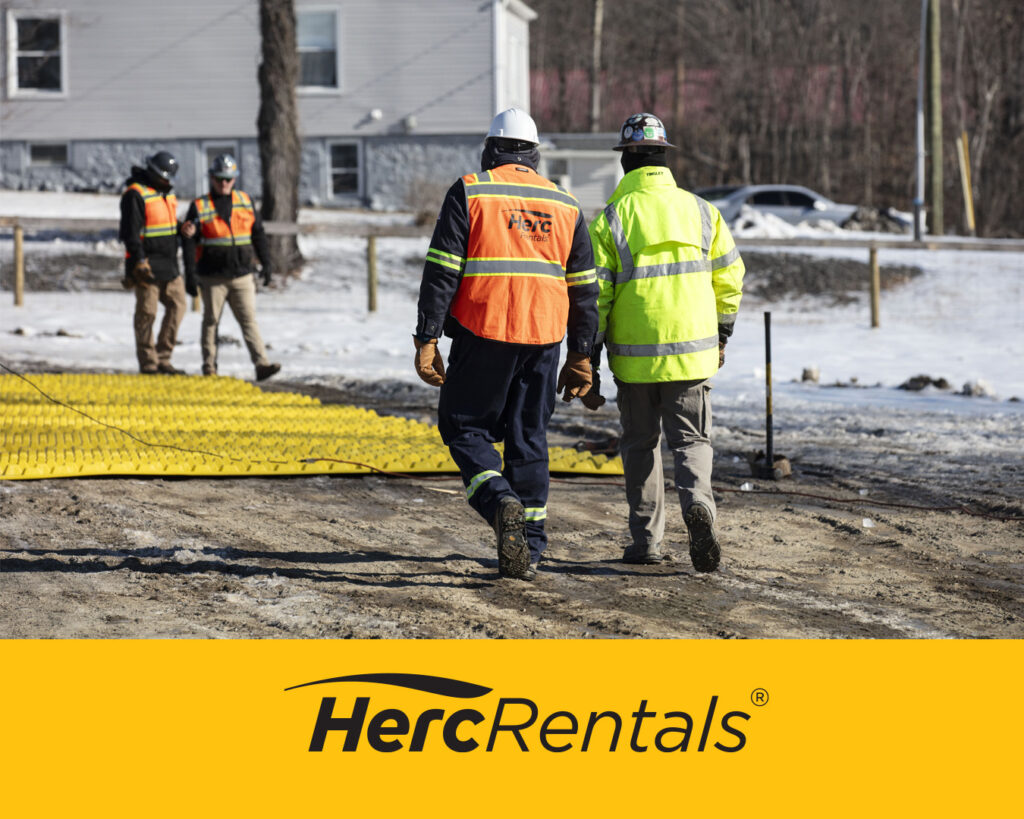
- High Visibility: Visibility also becomes critical when snow, fog or low winter light reduces sightlines, so crews should use high visibility jackets, vests and reflective accessories.
Establishing Warm, Safe Areas and Pathways:
Even the best gear has limits, and crews need access to a warm, dry area to reset during breaks. For example, a heated trailer, storage container or tent allows workers to warm up, hydrate and change wet clothing before returning to the job.
These break areas help control the cumulative strain of cold exposure. They also provide a place for supervisors to monitor workers for early signs of cold stress and ensure no one returns to the site before they have fully recovered.
Taking short, frequent breaks in a heated space keeps crews alert, safe and productive throughout the day.
Additionally, don’t forget about creating safe pathways. Mark ditches and other features so they can easily be seen in low-light or snowy conditions. Then, remove snow and ice from walkways, roads and roofs. This will help protect people and equipment from slipping and accidents. If possible, pile snow at the top of an incline, sloped away from your main work areas, so it won’t flood the site when it melts.
Project Continuity: Overcoming Operational Winter Challenges
Conquering Frozen Ground: Thawing and Excavation Solutions
Frozen ground can stall excavation work, strain machinery, and add days or weeks to a project timeline. The frozen earth creates resistance that dulls blades, increases fuel consumption and slows digging operations.
There are a few methods to address this challenge, ground covers and hydronic surface heaters. Both methods reduce wear on equipment and help crews maintain excavation schedules even in severe cold.
- Ground Protection: Keeping the work area covered with tarps, ground protection mats, or weather-proof blankets can protect it from snow and ice as well as help keep its temperature up.
- Surface Heaters: Hydronic heaters are another effective option. These units circulate heated glycol through hoses laid across the ground, producing reliable and uniform warmth across deeper layers of frozen soil.
Best Practices for Pouring Concrete in Cold Weather
Cold temperatures affect every stage of the concrete curing process. If fresh concrete freezes before it develops strength, the surface can crack or crumble, compromising the entire structure. Crews must maintain a controlled temperature environment from the moment the concrete is poured until it reaches adequate strength.
Concrete curing blankets provide consistent insulation, keeping the mix warm enough to strengthen properly. When conditions are extreme, temporary enclosures and indirect fired heaters create a sheltered climate that protects slabs or vertical pours.
Indirect heating units keep fumes separate from the workspace and maintain warm airflow without adding moisture. With careful planning and the right tools, concrete work can continue throughout winter without sacrificing strength or durability.
Safeguarding Your Assets: Protecting Materials and Equipment
Cold weather takes a toll on both materials and machinery. Central to protecting sensitive materials and equipment is having proper storage on site and winterizing equipment.
Protecting materials is all about storage and climate control.
- Adhesives, paints, sealants and other temperature sensitive products must be stored in warm, enclosed spaces to prevent separation, thickening or total loss.
- When installing or applying sensitive products like adhesives, make sure the area is the proper temperature before work begins.
- Use portable heaters to ensure the materials can be applied properly and will cure or dry quickly.
Equipment needs extra attention, as well.
- Fluids should be checked and replaced with winter grade options.
- Batteries must be tested frequently, since cold temperatures reduce their capacity and lifespan.
- Engine block heaters help machinery start reliably in low temperatures and reduce wear during the warmup period.
- Proper storage and construction site winter maintenance keeps essential equipment ready for use and prevents costly repairs or replacements.
Choosing the Right Temporary Heating for Construction
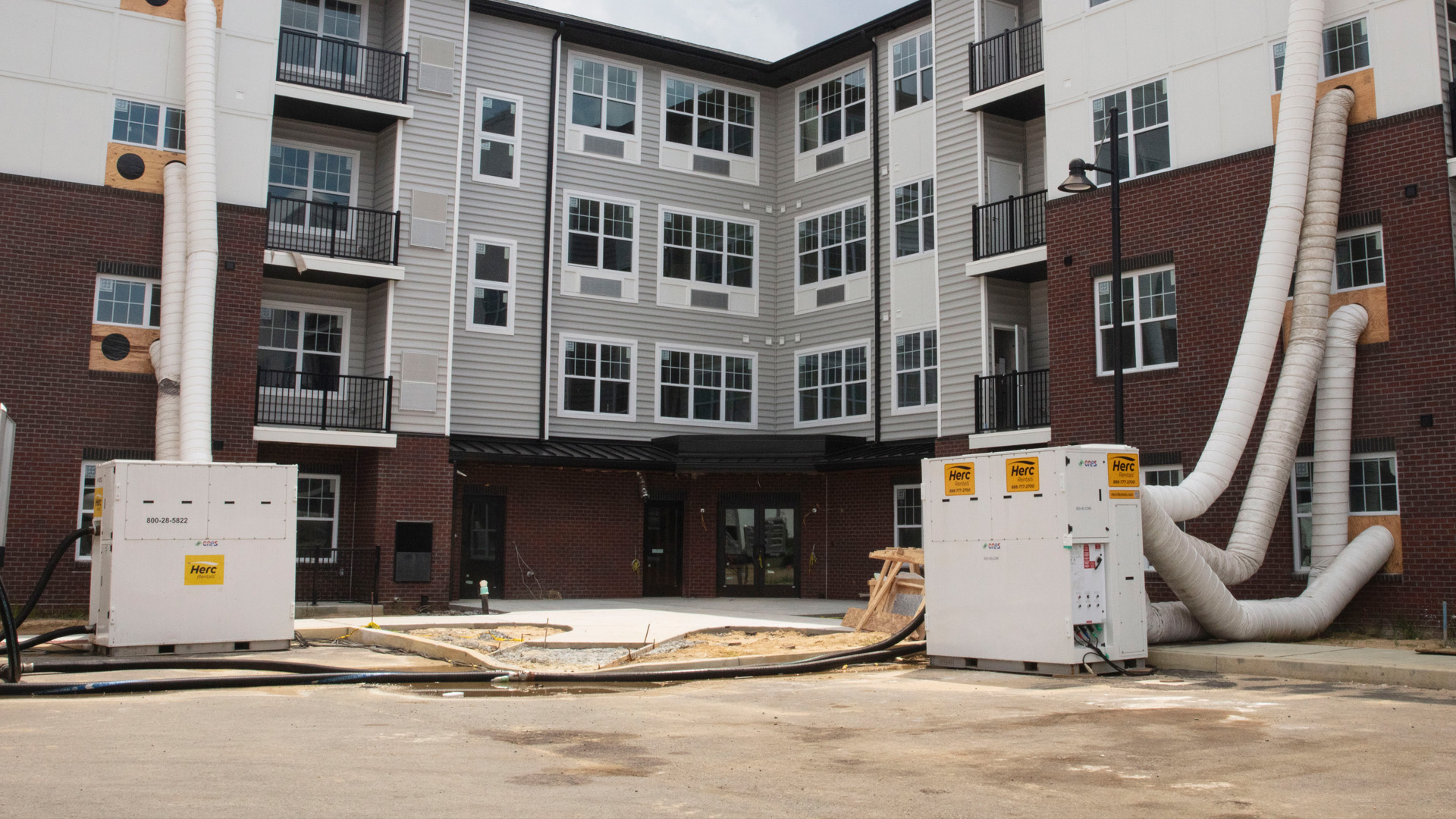
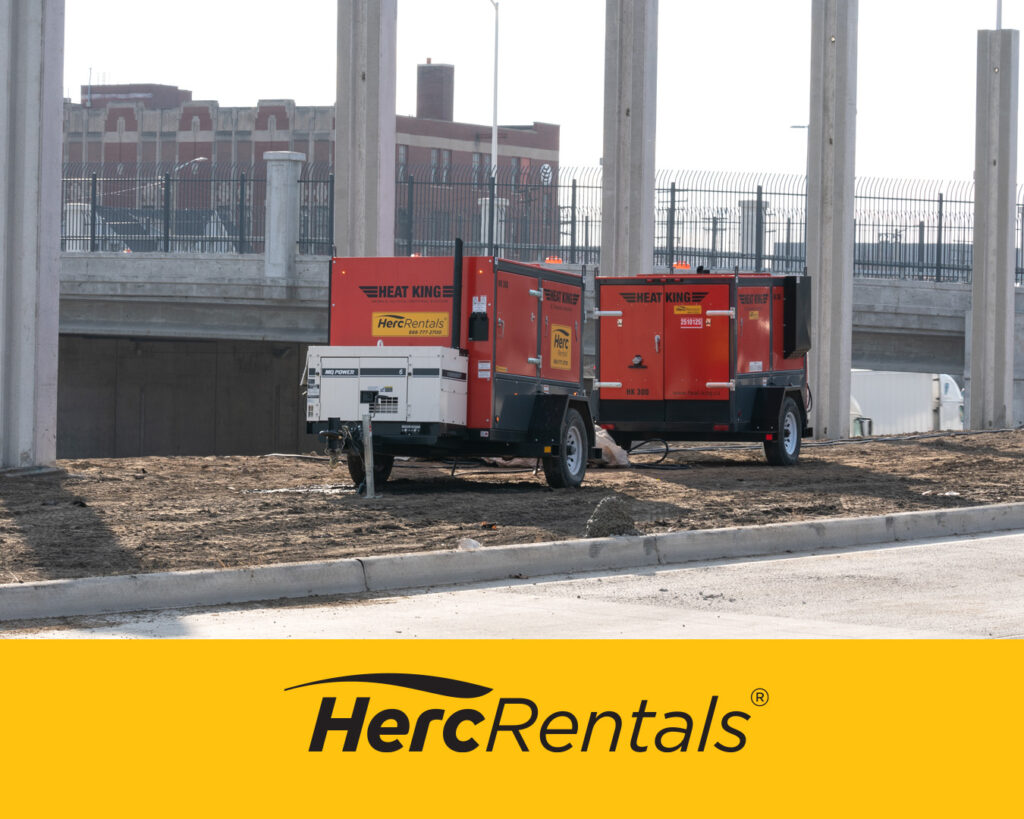
Working in the winter shouldn’t mean spending all day being cold. Selecting the correct heating solution is one of the most important decisions a contractor, equipment fleet manager or other project leads make during winter. The right heater helps protect workers, ensures safe conditions and keeps equipment functioning as intended. The best choice depends on the environment, the task at hand and the amount of ventilation available.
- Read more:
Direct-Fired vs. Indirect-Fired Heaters
Direct fired heaters produce large volumes of warm air and operate with high fuel efficiency. They are ideal for open or well-ventilated areas where fresh air naturally circulates. Since the flame and combustion byproducts remain inside the airflow, they should not be used in enclosed spaces or where air purity is essential.
Indirect fired heaters solve that problem. These units separate the flame and fumes from the heated air by using a heat exchanger. They are the better choice for enclosed structures, interior finishing work, or areas where crews spend long periods of time. They are also preferable when curing concrete, since clean, dry heat helps maintain uniform strength.
Electric and Hydronic Heaters: Clean Heat for Sensitive Jobs
Electric heaters provide quiet, clean and flameless heat, which makes them the safest option for interior work or sites involving flammable materials. They are easy to place, easy to control and do not require fuel storage.
Hydronic surface heaters offer another reliable solution. These systems pump heated fluid through insulated hoses, distributing warmth where it is needed without blowing air or introducing moisture. Hydronic heat is especially valuable for ground thawing, freeze protection and keeping large temporary enclosures warm. For projects that need stable, large-scale heating with low risk, hydronic technology is a dependable choice.
Your Essential Winter Construction Checklist
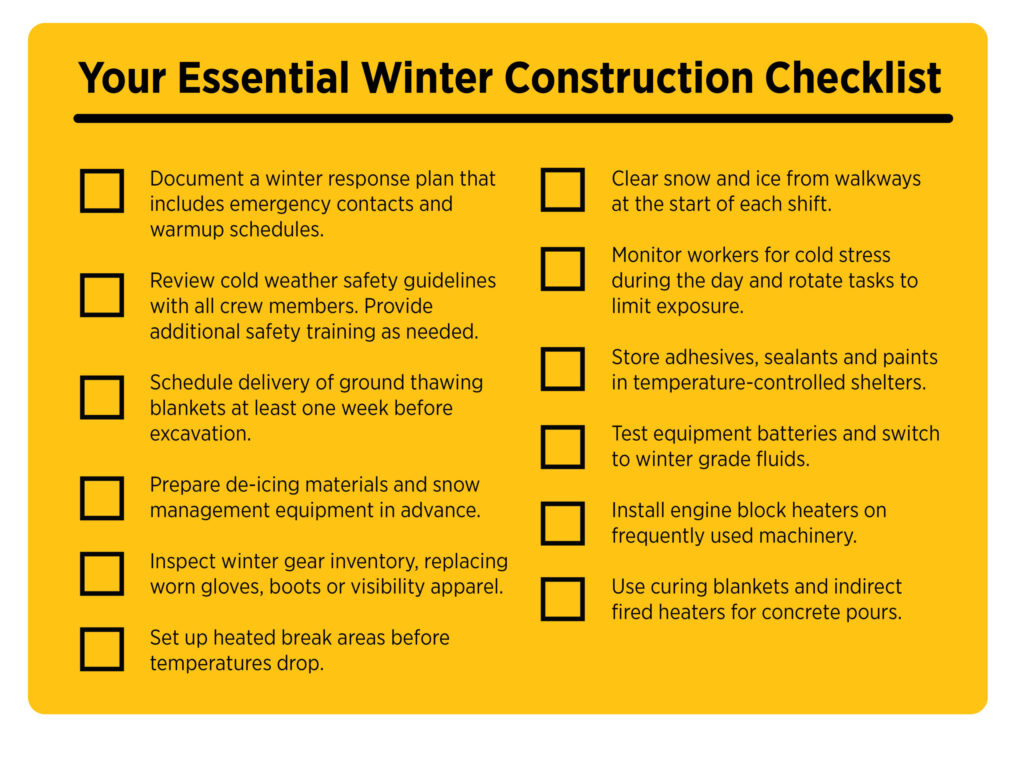
Don’t let winter weather wear your project down. Use this winter preparedness checklist to quickly combat cold temperatures and keep the project moving.
- Document a winter response plan that includes emergency contacts and warmup schedules.
- Review cold weather safety guidelines with all crew members. Provide additional safety training as needed.
- Schedule delivery of ground thawing blankets at least one week before excavation.
- Prepare de-icing materials and snow management equipment in advance.
- Inspect winter gear inventory, replacing worn gloves, boots or visibility apparel.
- Set up heated break areas before temperatures drop.
- Clear snow and ice from walkways at the start of each shift.
- Monitor workers for cold stress during the day and rotate tasks to limit exposure.
- Store adhesives, sealants and paints in temperature-controlled shelters.
- Test equipment batteries and switch to winter grade fluids.
- Install engine block heaters on frequently used machinery.
- Use curing blankets and indirect fired heaters for concrete pours.

Don’t Let Winter Freeze Your Progress
Working in the winter demands more from every construction team, but the season does not have to slow your progress. With solid planning, the right gear and dependable heating equipment, any project site can stay productive through the coldest months of the year. Herc Rentals provides the tools and expertise needed to keep your project on track, including heaters, ground thaw solutions and climate control systems built for tough conditions.
Ready to winter proof your jobsite? Browse our full range of climate control solutions. You can also call 1-800-432-6215 to speak with a Herc Rentals expert for a customized plan that fits your unique needs.