Last Updated on October 11, 2025
Like any aerial lift or scaffolding, scissor lifts come with risks. From tip-overs and falls to collisions with obstacles, avoiding common scissor lift hazards is a must.
When operated safely, scissor lifts have numerous benefits for workers in a variety of jobsites. These machines raise workers vertically so they can easily reach an elevated area. Scissor lifts provide more flexibility than standard scaffolding with a wider work platform than a boom lift. Employees in construction, maintenance, warehousing or agriculture often use a scissor lift to aid in their work.
If workers aren’t trained and adhering to safe operations, the consequences could lead to injuries or worse. For example, in 2003, a worker was installing overhead pipes when their scissor lift tipped over. As the lift fell, the worker also fell from the platform, breaking their ankle. While this worker needed to be hospitalized, luckily their scissor lift accident wasn’t fatal. Others aren’t so fortunate. In 2024, a construction worker died after getting trapped between an overhead beam and the scissor lift and then falling from the lift.
This article is not a substitute for proper training. However, it will help raise your awareness of common scissor lift hazards and control measures, so you can keep your project site safe.
- Refresh Your Skills: 12 Tips for How to Operate a Scissor Lift Safely
The Importance of Spotting Hazards Before It’s Too Late
Recognizing and avoiding safety hazards keeps your team safe and your project on track. Even a minor accident can delay the work and cost your company thousands in insurance claims or damages. All scissor lift operators, and those working near or with them, need to know what to watch out for. When everyone stays vigilant, it reduces the chances of an accident.
Scissor Lift OSHA Regulations
In the United States, the Occupational Safety and Health Administration (OSHA) has standards for ensuring all operators are trained and all scissor lifts are in safe working condition.
- Training Workers: OSHA requires employers to provide training on scissor lift hazards and how to work safely with or near scissor lifts. In addition to Equipment Operation Safety Training, the operator also needs electrical training if the scissor lift will be used near an electrical source.
- Lift Features and Maintenance: There are also several OSHA requirements for the scissor lift itself. For example, guardrails are required to prevent falls. Scissor lifts also need regular inspection and maintenance.

5 Common Scissor Lift Hazards and Their Causes
To prevent damage, injuries, and fatal accidents, it’s important to make sure you understand these common scissor lift hazards. In this section, you’ll learn about each hazard, including why they can happen and how to avoid them.
1. Falls
Slips, trips and falls are the leading cause of death for construction workers. This includes workers falling from the platform of a scissor lift.
- Why They Happen: Falls can occur when guardrails are missing or fail. Workers can also fall off a scissor lift if they reach beyond the platform or aren’t wearing a safety harness.
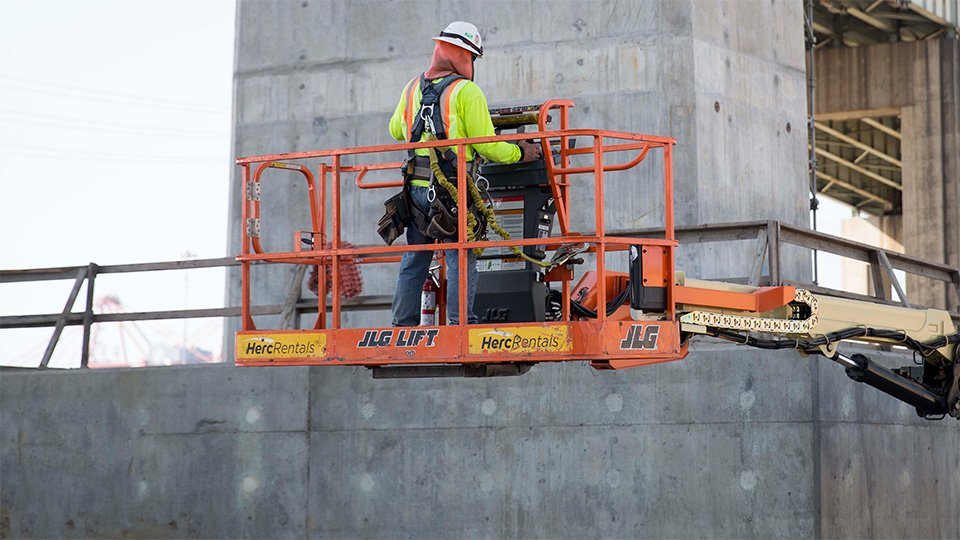
- How to Avoid: Wear a safety harness and attach it to the platform. Make sure the guardrails are not damaged, and ensure the gate of the railing is latched shut. Do not lean or reach out past the safety railing while working.
2. Tip-Overs
A tip-over is when the scissor lift falls onto its side while the platform is extended.
- Why They Happen: Scissor lifts have a high center of gravity. If too much weight is unevenly distributed or too much wind pushes on the lift, the entire machine could tip over.
- How to Avoid: Only use the scissor lift on flat, stable ground away from drop-offs. Do not use the scissor lift in windy conditions. Keep the load evenly distributed on the platform and do not reach past the safety rails.
3. Electrocutions
When working near power lines, there is always the risk of electric shock or electrocution.
- Why They Happen: If a scissor lift comes in contact with energized power lines, the electricity will flow through the lift and into the workers.
- How to Avoid: You can stay safe by ensuring the lift is properly insulated and that nothing touching the lift could act as a conductor. Keep the scissor lift as far away as possible from any electrical lines, at least 10 feet. If working with electrical sources, make sure that all workers have the relevant electrical training.
4. Entrapments, Collisions and Struck-By Accidents
Entrapment is when someone gets stuck within moving parts of the scissor lift or between the scissor lift and another object, like overhead beams. Similar to entrapment, collisions and struck-by accidents include any type of accident where the scissor lift runs into an object or person.
- Why They Happen: These accidents can happen if operators and other team members aren’t aware of nearby objects, or if there is a malfunction with the lift.
- How to Avoid: Be aware of obstacles on the ground, overhead and around all sides of the lift. Operators and spotters must communicate clearly with anyone near the scissor lift so that they do not become trapped. Use the emergency stop button if brakes or other controls fail.
5. Injuries from Loose and Falling Objects
Anyone working below or near the scissor lift is at risk of being injured by loose or falling objects. If a falling object hits the scissor lift, it could cause a tip-over, as well.
- Why They Happen: Tools or other equipment can fall or be dropped from the platform. Additionally, any elements from the structures being working on could come loose.
- How to Avoid: Use lanyards and other protective measures to keep dropped tools from falling. Secure items being worked on, if possible. Set up a safe zone around the scissor lift to keep others away from the area. It’s also critical that workers wear the proper personal protective equipment, like hard hats.

Best Practices for Preventing Common Scissor Lift Hazards and Accidents
From falling to electrocution to having something dropped on you, using a scissor lift on your work site can be a potential cause of serious injury, property damage or death. To minimize the safety risks of all of the hazards above, follow the best practices below. These best practices will help you foster a team culture that takes safety seriously and always uses proper safety equipment.
- Establish and Follow a Regular Maintenance and Inspection Schedule: Preventative maintenance can reduce the chances of something going wrong due to faulty equipment.
- Require All Personnel to Complete Training: Workers need to know how to properly wear and attach their safety harness, how the emergency release and stop buttons work, and how use the scissor lift in the safest way possible.
- Ensure All Scissor Lift Operators Use the Proper PPE and Fall Protection Systems: Safety gear such as harnesses, hard hats and electrical insulation can help avoid injuries and falls.
- Use Safety Posters to Remind Employees of Guidelines: There are a lot of things to remember to use a scissor lift safely, and it is easy for experienced workers to get complacent or into bad habits. Safety posters remind workers of best practices and act as checklists to ensure guidelines are followed.
- Evaluate the Site Before Use: Before using the scissor lift, check weather conditions and traffic (if working outdoors), look for potential obstacles, and take steps to create a clear pathway.
- Operate Only on Flat, Stable Surfaces: Even if you’re using a rough terrain scissor lift, if the lift is on an uneven surface, it is more likely to tip over. Always use the lift on flat, stable surfaces and avoid inclines, soft ground, and drop-offs.
- Communicate Clearly Before, During and After Operation: It’s vitally important that workers using the lift are in communication with anyone nearby. Use a spotter or teammate to help navigate when possible.
- Use High-Quality Equipment: Always use high-quality, well-maintained scissor lifts and safety equipment to minimize hazards caused by malfunctions.

Keep Projects Safe with a Scissor Lift and Training from Herc Rentals
At Herc Rentals, helping you maintain a safe work environment is our priority. You deserve a reliable, high-quality scissor lift and the right training to get the job done.
Our equipment experts will help avoid common scissor lift hazards by helping you find the right scissor lift for your project and providing the Equipment Safe Operation Training you need.
Peace of mind that your scissor lift will be well-maintained and ready to work safely is yours when you partner with a rental provider. Plus, when teams enroll in our courses, they’ll receive high-quality instruction and hands-on practical skills for safe scissor lift operation.
Explore our broad selection of compact electric, electric or rough terrain scissor lifts, or call us at 1-800-432-6215 to discuss rental and training options today.