
Last Updated on August 18, 2026
Keeping floors in good shape, especially in high-traffic facilities like airports and hospitals, takes more than a quick clean now and then. A proactive floor maintenance plan helps your floors last longer, look better and stay safe to walk on. For business owners and facility managers, clean and well-kept floors also create a strong first impression, but the real value goes deeper.
When you take care of your floors the right way, you avoid costly repairs and early replacements. In the long run, good maintenance saves time, money and effort.
What Is the Best Way to Preserve a Floor?
The best way to preserve a floor is to have a clear and proactive floor maintenance plan.
Each floor is different, so there is no one-size-fits-all procedure to preserving a floor. Instead, focus on proactive maintenance that goes beyond sweeping and mopping.
Proactive flooring maintenance includes regular care, using the right tools, and knowing what your floors will need over time. This way, you can help prevent damage before it starts.
Clean and safe flooring is a must-have for every building. Without it, you increase the risk of slips and falls that could become costly liabilities. Preserving your facility’s floors by following a maintenance plan is especially important in industries like healthcare and food service. In these industries, floors need to be kept clean to reduce the spread of bacteria and contaminants.
How to Make a Proactive Floor Maintenance Plan
With the right equipment and a thorough cleaning schedule, you’ll keep your floors clean and preserve them for years to come. Follow the steps below to create an effective maintenance plan for your floors. A little planning goes a long way when it comes to protecting your investment.
1. Understand the Needs of Your Flooring
Not all floors are the same, so they should not be treated the same. A big part of commercial floor maintenance is knowing what each surface needs. For example, tile, concrete, hardwood and vinyl all require different cleaning methods and products.
If your space has multiple flooring types, your plan needs to cover each one. Using the wrong cleaner or tool can cause damage over time. For instance, epoxy floor maintenance often requires gentle cleaners and careful handling to keep the surface smooth and glossy.
To understand the needs of your flooring materials, start by reviewing manufacturer guidelines and researching how to clean industrial flooring and other types of flooring materials. Doing so will give you a better idea of how to clean and protect each surface. When you match your cleaning method to your flooring type, you reduce wear and keep everything looking its best for longer.
2. Track Traffic Patterns
Traffic plays a big role in how quickly floors wear down. Observe how people use your facility throughout the day to answer these questions:
- Which areas have the most traffic? Is it a constant stream of traffic, or does it spike throughout the day or year?
- What type of traffic uses the space? Does equipment – such as carts, forklifts or furniture – get moved through the building regularly? Or is the traffic mostly foot traffic?
- What areas need to remain clean or sanitary for safety purposes?
High foot-traffic areas like hospitals, malls, airports and business centers are often a challenge to keep clean due to the number of people passing through each day. Dirt, dust from construction, mold, bacteria and even viruses force facility managers into a constant battle for cleanliness.
Some areas take more abuse than others, so they need extra attention. Entryways often collect dirt, water and even salt during colder months. Hallways and service areas also see heavy use.
In residential buildings, lobbies and shared spaces usually need more care than private areas. In warehouses, floors deal with marks from equipment and moving materials. By understanding these patterns, you can adjust your cleaning routine.
Focus more time and effort on high-traffic zones. This helps prevent buildup and damage before it spreads. Simple steps like placing mats at entrances can also reduce the amount of dirt that reaches your floors.
3. Source Floor Maintenance Equipment
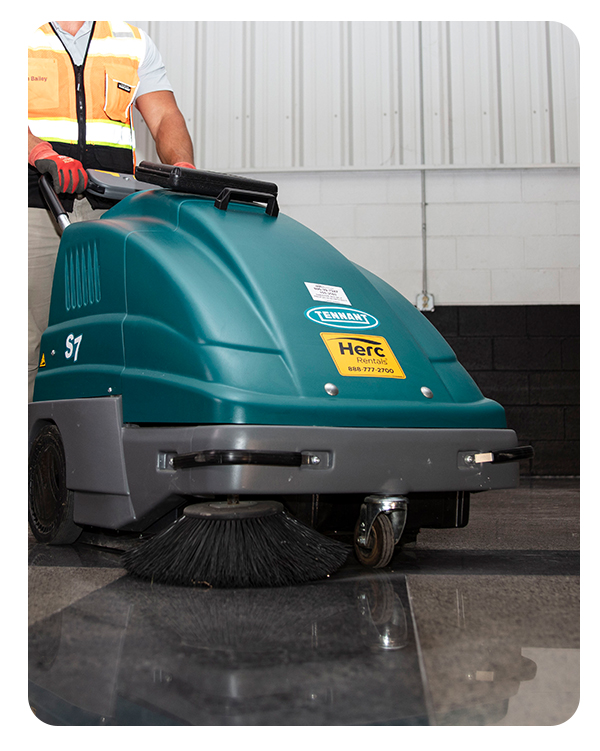
Having the right floor maintenance machine makes a big difference. It helps you clean faster, more effectively and with better results. Equipment like commercial floor scrubbers and sweepers can handle large areas with ease.
When deciding between renting or buying commercial floor cleaning equipment, think about how often you will use the equipment. Renting is a great option for short-term needs or occasional deep cleaning. It provides you with the flexibility to accommodate a major cleaning project or other temporary tasks without making a long-term investment in machines you’ll only use a few times.
Working with a trusted rental provider can also help. They can guide you to the right tools and offer safety training. This ensures your team uses the equipment safely and gets the best results.
Learn More: 5 Things to Know Before Renting a Floor Sweeper
4. Work on a Daily or Weekly Maintenance Checklist
Once you’ve identified what your floor needs, you can start to build out maintenance checklists. Written routines that note daily and weekly work are the backbone of good floor care. Simple tasks done regularly can prevent bigger problems later, and a written plan keeps your whole maintenance team on track.
Things to Include in a Daily/Weekly Maintenance Checklist:
- Sweeping, Dust Mopping and Vacuuming Routines: Start with sweeping, dust mopping or vacuuming to remove loose dirt.
- Spot-Cleaning Best Practices: Spot cleaning is also important. Spills should be cleaned up right away to avoid stains or damage.
- High-Traffic Zone Attention: Pay extra attention to high-traffic areas like entryways, service areas and hallways.
- Which Tools to Use: Make sure your checklist includes a list of the right tools for each task. For example, microfiber mops and floor-safe vacuums work well for many surfaces. A clear checklist helps your team stay consistent and makes sure nothing gets missed.
5. Outline Monthly Floor Maintenance Tasks
Monthly care routines go a step further than daily cleaning. For this checklist, focus on writing down best practices for deeper cleaning methods and using more advanced floor maintenance equipment.
Things to Include in a Monthly Maintenance Checklist:
- Monthly Deep Cleaning Routines: Include when to use commercial cleaning equipment for a monthly deeper clean. For example, machines like a floor scrubber or floor sweeper can clean large spaces more thoroughly than the manual methods used daily. You may also need to use buffers to restore shine and smooth out small surface marks.
- Wet Mopping Protocols: Make sure the checklist includes when and how often to wet mop each hard surface. Wet mopping can be done more thoroughly during this time, but make sure to list which cleaning solutions can be used on each type of floor.
- Inspecting for Signs of Damage: Each month, check for early signs of damage, such as scratches, loose grout or areas that are peeling. Catching these issues early can save money and prevent bigger repairs later. A monthly routine keeps your floors looking fresh and well cared for.
6. Make a Seasonal and Annual Floor Maintenance Guide
Seasonal changes can affect your floors more than you might expect. Temperature and humidity can cause materials to expand, contract or wear down faster. That is why it helps to plan ahead by adding seasonal and annual maintenance guidelines to your plan.
Seasonal and Annual Floor Maintenance Guidelines May Include:
- Seasonal Awareness Tips: Help your staff understand how seasonal weather changes impact your floors. For example, humidity and temperature fluctuations can cause wood floors and other sensitive materials to warp.
- Seasonal Deep Cleaning Schedules by Floor Type: Use your floor maintenance equipment – like a floor scrubber, floor sweeper and buffers – for deeper cleaning at set times during the year. For example, wintertime may require extra cleaning due to salt and moisture, while summer may bring in dust and dirt.
- Annual Refinishing Tasks: Annual tasks may include refinishing hardwood, resealing tile and grout, or polishing concrete floors. These steps help restore your floors and protect them long term.
- When to Call a Professional: Include guidelines that help your staff understand when a floor care project is too big to handle on their own. For more complex work, like major repairs, it may be best to call in professionals.
Be Aware of Common Maintenance Mistakes
Even with a good plan, mistakes can happen. Make sure all of your cleaning and maintenance staff is trained in how to avoid the following floor care mistakes:
- Using the Wrong Chemicals: One common issue in commercial floor maintenance is using the wrong cleaning products. Harsh chemicals can damage surfaces and shorten the life of your flooring.
- Using Commercial Cleaning Equipment Incorrectly: Another problem is using commercial floor cleaning equipment without proper training. This can lead to poor results, costly damage to the flooring material (or cleaning equipment), or even safety risks like trip hazards. Always make sure your team knows how to use each machine correctly. If you rent a floor sweeper or scrubber, ask your equipment provider for safety training. Learn More: How to Operate a Floor Scrubber
- Skipping Regular Maintenance: Skipping regular maintenance is another mistake. Waiting too long between cleanings allows dirt and damage to build up. Staying consistent is key to keeping your floors in great shape.

Get Specialized Cleaning Equipment at Herc Rentals
A strong floor maintenance plan helps protect your investment and keeps your space looking its best. With the right approach, tools and routine, you can extend the life of your flooring and avoid costly repairs.
If you need help getting started, Herc Rentals has experts who can guide you. They can help you choose the right equipment and build a plan that works for your needs. To learn more, browse our fleet of commercial floor care solutions. Or, call 1-800-432-6215 to speak with an equipment expert today.


