
Last Updated on September 17, 2026
Whether you’re recovering from the effects of wildfires, floods or concerns about exposure to pathogens in the wake of a global pandemic, indoor air quality is becoming increasingly important to business owners and homeowners alike.
Thankfully, there are devices you can rent, like air scrubbers. These portable devices draw air in and pass it through a series of purification filters, effectively trapping contaminants and removing pollutants, allergens, volatile organic compounds (VOCs), surface contaminants, pet dander, dust, odors and mold from the air.
Before you rent an air scrubber for your facility or work site, there are some things you need to know in order to make the most out of your investment.
What Is an Air Scrubber? What Does an Air Scrubber Do?
Air scrubbers: Air scrubbers are machines that remove contaminants from the air, such as dust, mold spores, smoke and noxious chemicals. They can be portable or incorporated into a building’s HVAC system.
Portable air scrubbers, also known as negative air machines, are designed to allow one operator to easily move the unit around. They are a necessary part of maintaining air quality in places like hospitals, construction sites, universities and office buildings. Increasingly, they are being used as part of the remediation process to combat the spread of mold, which can lead to surface damage of a building. Not only that, mold can lead to health issues for those who work or live there.
How Air Scrubbers Work: Removing Airborne Contaminants
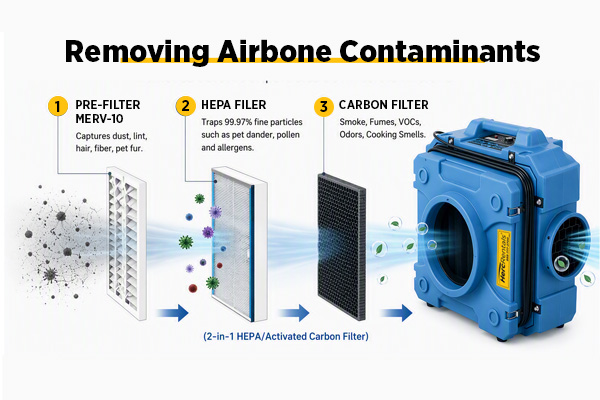
Air scrubbers clean the air by pulling it through several filters before releasing cleaner air back into the space. Many units also include activated carbon filters to help remove odors, smoke and volatile organic compounds (VOCs).
Here’s a simple look at how the process works:
- Air enters the machine. A powerful fan pulls contaminated air into the unit.
- Pre-filters trap larger debris. Dust, dirt and other large particles are removed first to protect the HEPA filter.
- HEPA filtration removes tiny particles. Mold spores, smoke particles, allergens and fine dust are captured.
- Optional carbon filters remove odors and chemicals. These filters help reduce smoke smells and airborne chemicals.
- Clean air is released. The cleaned air is returned to the room or exhausted outside when using negative air mode.
When You Should Use an Air Scrubber
Air scrubbers can improve indoor air quality in many different situations, helping workers stay safe and compliant with OSHA air quality guidance. Whether you are cleaning up after a disaster or trying to control dust on a jobsite, they help remove harmful particles before they spread throughout a building.
- Mold Remediation Projects: Mold releases tiny spores into the air. Those spores can travel to other parts of a building and start new mold growth. Air scrubbers help capture these spores while the affected materials are removed. They are commonly used alongside containment barriers and dehumidifiers during mold remediation.
- Water Damage Restoration: Floods, plumbing leaks, and storm damage can leave behind moisture that leads to mold growth. Air scrubbers help improve air quality while drying equipment removes excess moisture from the building.
- Construction, Renovation, and Demolition: Cutting drywall, sanding wood, grinding concrete, and demolition all create airborne dust. Air scrubbers help keep work areas cleaner by reducing the amount of dust circulating through the building. This can also make cleanup easier once the project is complete.
- Fire and Smoke Cleanup: Smoke particles and soot can remain in the air long after a fire has been put out. Air scrubbers help remove these particles while reducing lingering odors during restoration work.
- Allergy or Asthma-Sensitive Environments: Air scrubbers can improve indoor air quality in schools, hospitals, offices and homes where people may be sensitive to dust, pollen or other airborne allergens.
Air Scrubber Rentals: What to Know Before You Rent
Not every air scrubber is appropriate for every job. Before renting equipment, think about the size of your project, the type of contaminants you need to remove and how long you expect the work to take.
Choosing Between Residential vs. Industrial Units
Residential air scrubbers work well for smaller spaces like homes, apartments and small offices. They are lighter, easier to move and designed for lower airflow needs.
Industrial air scrubbers are made for larger commercial spaces, construction sites, warehouses and restoration projects. These units move much more air and can handle larger cleanup jobs.
Determine Your Cubic Feet per Minute
First, determine the cubic feet of the room you’re targeting. You can do this by multiplying a room’s square feet times the ceiling’s height. The air scrubber flow rate CFM (cubic feet per minute) is then divided by the room’s cubic volume and then multiplied by 60 to convert minutes to hours.
| Air Scrubber Flow Rate Cubic Feet Per Minute (CFM) | |||||||
| Room square footage in feet | x | Ceiling height in feet | x | Desired air changes per hour | / | 60 minutes | = CFM |
- Example: If the room you’re targeting is 25’ x 32’ x 12’ and six air changes per hour are required, you’ll need at least one 1,200 CFM or two 500 CFM air scrubbers to achieve the correct air filtration.
Factors That May Affect Price
Rental costs depend on several factors, including the following. Renting a single, powerful air scrubber with HEPA filters for a short period of time will often have a higher per-day rate than renting in bulk or for long-term use.
- Size of the air scrubber
- Airflow capacity (CFM)
- HEPA filtration
- Carbon filters for odor control
- Length of the rental term
- Number of units needed
While buying an air scrubber may make sense for companies that use the air scrubbers daily for years, renting is often the better choice for short-term projects because it avoids maintenance and storage costs.
Safety Tips and Considerations
Before starting work, evaluate the conditions on the jobsite. If you are dealing with mold, hazardous dust or chemical exposure:
- Wear the proper personal protective equipment (PPE)
- Monitor indoor air quality throughout the project
- Replace filters when recommended
- Follow OSHA guidelines for respiratory protection when needed
How to Use an Air Scrubber for Mold and Other Contaminants
Setting up and operating an air scrubber correctly helps you get the best results. Before renting equipment, make sure the unit matches the size of your project and the contaminants you need to remove. Ask your equipment rental provider for training on how to use an air scrubber properly and effectively.
Before You Start
Whether you are restoring a flooded building or controlling dust during construction, proper preparation for running an air scrubber can make a big difference.
- Check Power Requirements: Make sure your outlets can handle the air scrubber’s electrical needs. Avoid overloaded circuits and use extension cords only when recommended by the manufacturer.
- Inspect Filters: Check that the pre-filter and HEPA filter are installed correctly and are not damaged. Dirty or damaged filters reduce performance.
- Understand Airflow Ratings (CFM): Verify that the unit can handle the size of the room. A machine with too little airflow may not clean the air effectively.
- Consider the Other HVAC Equipment on Site: Air scrubbers are often used alongside dehumidifiers, air movers, or negative air machines. Make sure all equipment works together without blocking airflow.
Setting Up the Unit
Proper set up and placement are two of the biggest factors in how well an air scrubber performs.
- Choose the Best Location: Place the machine where it can draw contaminated air across the work area. Avoid putting it directly against walls or large objects.
- Ensure Unobstructed Airflow: Leave enough space around the intake and exhaust so air can move freely. Blocked airflow reduces efficiency.
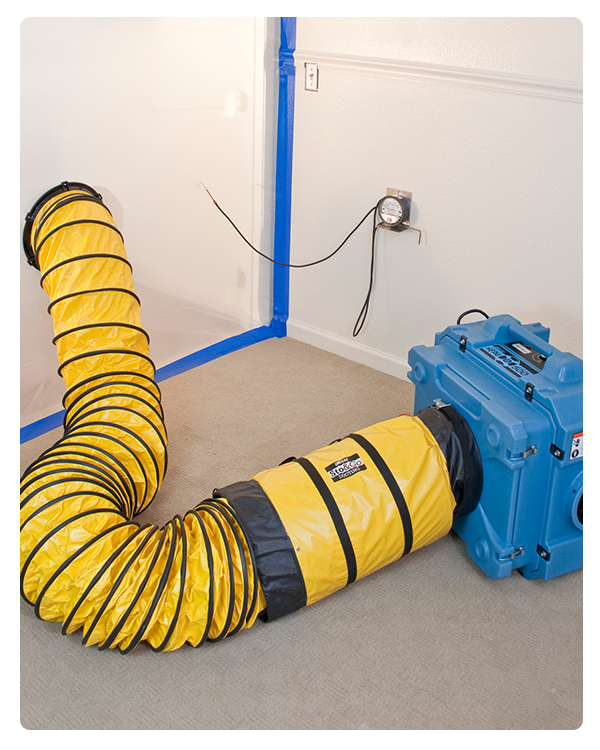
- Select Either Recirculating Mode or Negative Air Mode: In recirculating mode, the machine filters the room’s air and returns it to the same space. In negative air mode, you’ll have to attach ducting to make sure contaminated air is exhausted outside the building. This helps keep pollutants from spreading beyond the work area.
- Consider What You’re Cleaning Up: During mold remediation, use containment barriers to isolate the affected area. Position the air scrubber inside the containment zone to maintain negative air pressure to capture and remove mold spores.
Operating an Air Scrubber Safely
Many restoration jobs may require the air scrubber to run continuously for several days. Follow the project requirements and monitor air quality before shutting the air scrubber off.
As the air scrubber is running, be sure to monitor the following:
- Watch the Filter Indicators: Some models include filter change lights or pressure gauges. Pay attention to these indicators so the machine continues working efficiently.
- Know When to Change or Clean the Filters: Pre-filters usually need replacement more often than HEPA filters because they capture larger debris first. Always replace filters according to the manufacturer’s recommendations.
Shutting Down and Cleaning
When the air scrubber has done its job and air quality improves, follow these steps to shut down the unit properly.
- Power Down Safely: Turn off the unit before unplugging it. Allow any moving parts to stop completely.
- Disinfect the Exterior of the Unit: Wipe down the outside of the machine to remove dust and debris. If it was used during mold or hazardous material cleanup, disinfect the exterior according to manufacturer recommendations.
- Pack the Unit and Filters (if Renting): Remove disposable filters if required by your rental agreement. Coil power cords neatly and inspect the unit for damage before returning it.
Improve Indoor Air Quality with Air Scrubbers from Herc Rentals
Air scrubber rentals play an important role in improving indoor air quality during restoration, construction, and remediation projects. Choosing the right equipment, sizing it correctly and setting it up properly can help you remove dust, mold spores, smoke particles and other airborne contaminants more effectively.
If you’re not sure which air scrubber is right for your project, the experts at Herc Rentals can help. Our team can recommend the right equipment for your space and answer questions about airflow, filtration and climate control solutions.
To learn more, explore our air scrubbers for rent and other climate control equipment. Or, call 1-800-432-6215 to speak with an equipment expert today.


