Last Updated on June 9, 2026
What would happen if your project site or facility suddenly lost power? Or what if you had to work at night in a remote location — how would you power the site? For many facilities and projects across industries, generators are non-negotiable. Teams rely on them to work safely and efficiently. Likewise, clinics and grocery stores need generators to keep sensitive equipment running and protect products when the power goes out.
Luckily, there are two types of portable generators powerful enough to keep operations flowing: skid-mounted generators and towable generators. In this article you’ll compare skid-mounted vs. towable generators so you can make the best choice the next time you need temporary power.
What’s the Difference Between Skid-Mounted and Towable Generators?
Both towable and skid-mounted generators come in multiple sizes, providing reliable temporary power for hours, days or even months. They are both considered portable generators and feature a generator, fuel tank, control panel and engine.
The main difference is their base, which impacts how they’re transported.
Towable Generators
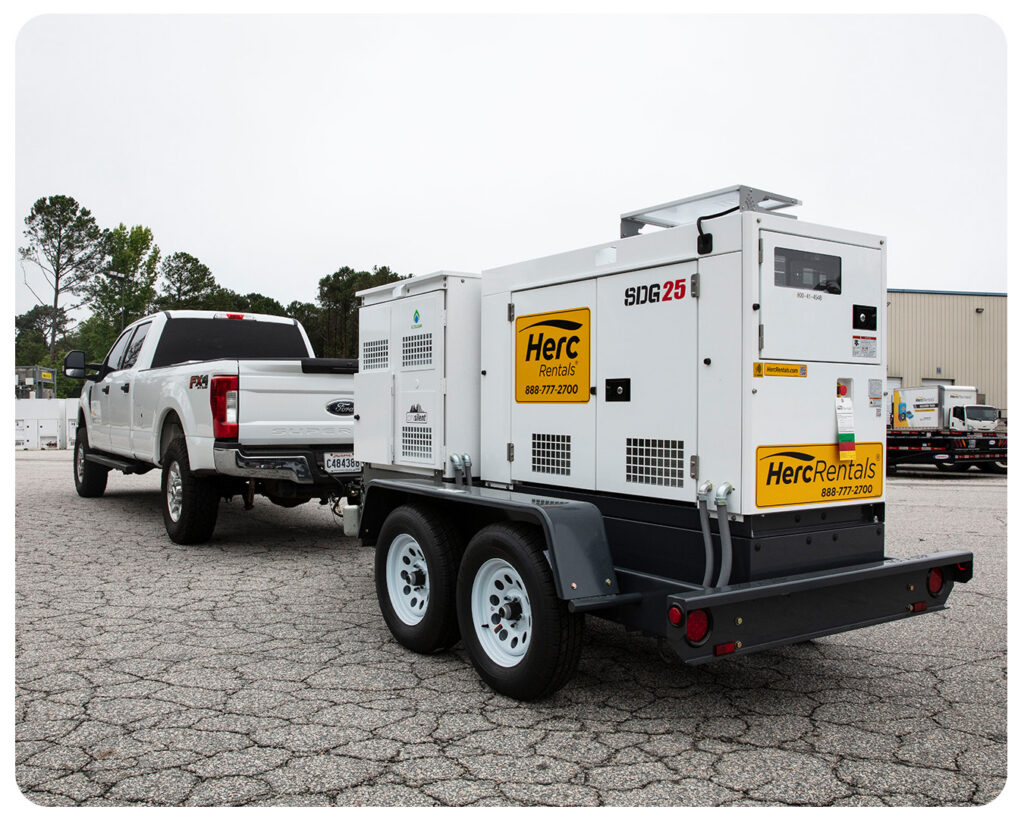
Towable generators, also known as trailer-mounted generators or pull behind generators, are mounted on a wheeled trailer. This trailer is hitched to a truck and can easily be driven on regular roads and from site to site.
Skid-Mounted Generators
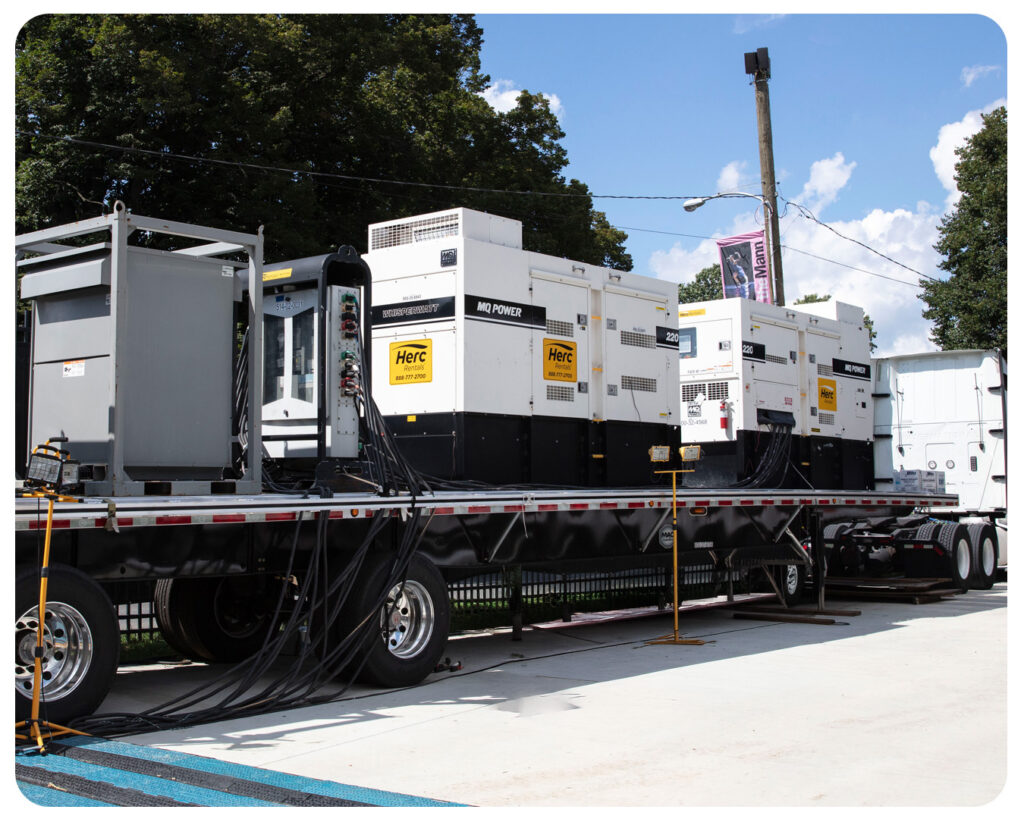
Skid-mounted generators are secured to a durable frame, not a trailer. To move them, they have to be transported on a flatbed truck and then placed onsite using a forklift or crane.
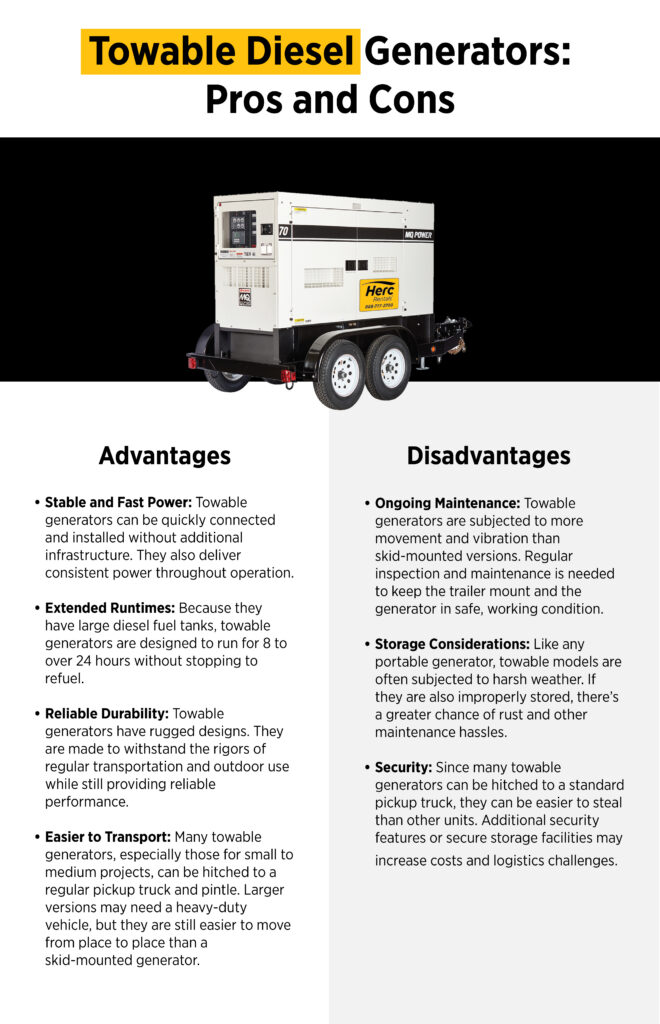
Towable Diesel Generators: Pros and Cons
Towable generators have a very wide range of kilowatt capacities. They range from 20 to 2,000 kilowatts. This means they can provide power to everything from residential renovations to outdoor events and large-scale facilities.
Advantages of Towable Generators
Trailer-mounted, towable generators are all about flexibility and mobility. With the right vehicle and hitch, you can easily transport them to, from and around your sites. They are ideal for powering a variety of equipment on ever-changing projects.
- Stable and Fast Power: Towable generators can be quickly connected and installed without additional infrastructure. They also deliver consistent power throughout operation.
- Extended Runtimes: Because they have large diesel fuel tanks, towable generators are designed to run for 8 to over 24 hours without stopping to refuel.
- Reliable Durability: Towable generators have rugged designs. They are made to withstand the rigors of regular transportation and outdoor use while still providing reliable performance.
- Easier to Transport: Many towable generators, especially those for small to medium projects, can be hitched to a regular pickup truck and pintle. Larger versions may need a heavy-duty vehicle, but they are still easier to move from place to place than a skid-mounted generator.
Learn More: 5 Things to Know When Towing a Generator
Potential Disadvantages of Towable Generators
There are some aspects to towable generators that you need to consider. These potential disadvantages may mean that a towable generator isn’t right for your project.
- Ongoing Maintenance: Towable generators are subjected to more movement and vibration than skid-mounted versions. Regular inspection and maintenance is needed to keep the trailer mount and the generator in safe, working condition.
- Storage Considerations: Like any portable generator, towable models are often subjected to harsh weather. If they are also improperly stored, there’s a greater chance of rust and other maintenance hassles.
- Security: Since many towable generators can be hitched to a standard pickup truck, they can be easier to steal than other units. Additional security features or secure storage facilities may increase costs and logistics challenges.
Skid-Mounted Generators: Pros and Cons
Skid mounted generators are built for industrial applications and more demanding workloads than smaller, towable models. They range from 100 to 400 kilowatts or more. They can power everything from midsize construction projects to an entire facility, such as hospitals and data centers.
Advantages of Skid-Mounted Generators
Skid-mounted generators are ideal for a variety of temporary power needs, especially when it’s impractical to install a permanent standby generator or your site has limited space for equipment.
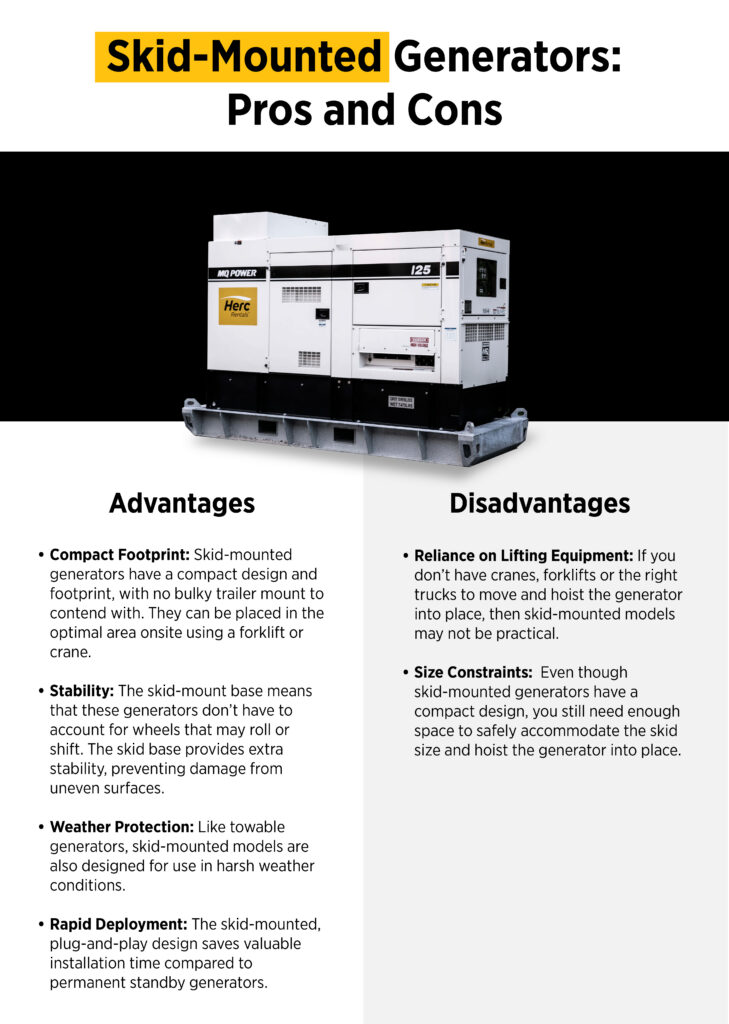
- Compact Footprint: Skid-mounted generators have a compact design and footprint, with no bulky trailer mount to contend with. They can be placed in the optimal area onsite using a forklift or crane.
- Stability: The skid-mount base means that these generators don’t have to account for wheels that may roll or shift. The skid base provides extra stability, preventing damage from uneven surfaces.
- Weather Protection: Like towable generators, skid-mounted models are also designed for use in harsh weather conditions.
- Rapid Deployment: The skid-mounted, plug-and-play design saves valuable installation time compared to permanent standby generators.
Potential Disadvantages of Skid-Mounted Generators
While they are very reliable and versatile, skid-mounted generators may not be the best choice for every situation.
- Reliance on Lifting Equipment: If you don’t have cranes, forklifts or the right trucks to move and hoist the generator into place, then skid-mounted models may not be practical.
- Size Constraints: Even though skid-mounted generators have a compact design, you still need enough space to safely accommodate the skid size and hoist the generator into place.
Skid Mounted vs. Towable Generators: Which Is Best?
Applications for Each Type
Both types of generators can be used across a variety of applications and industries. For example, the portability of towable generators makes them a versatile mobile power source for busy construction sites, oil fields, and remote mining or forestry operations. Meanwhile, the quick setup and compact footprint of skid-mounted generators are great for emergency response efforts, industrial tasks and temporary infrastructure.
How to Choose the Right Generator
When selecting a temporary generator to rent, consider how and where you’ll use the generator.
- Start by calculating your total power needs in kilowatts. Include both the starting and running load requirements.
Learn More: What Size Commercial Generator Do I Need?
- Consider how long you need the generator. This includes how long it will need to run before refueling, and how long it will be placed on site. If you need the generator to power a whole building for multiple days, a large skid-mounted generator may be the way to go. If you need to move the generator to different sites regularly, a towable model might be more effective.
- Analyze the site layout. Identify where the generator needs to be placed. Some sites may not have room for a truck and trailer, but a crane could lift the generator into place.
- Stay compliant with regulations. Some areas or projects may have safety or other regulations that impact what type of generator you can use and when in order to minimize noise or exhaust.
Safety First: Generator Safety Reminders
Both towable and skid-mounted generators use an engine to power a generator to create electricity. Like any power-generation equipment, it’s important to make sure crews are properly trained and all safety regulations are followed. For example, you’ll need to maintain certain distances around the generator to minimize the risk of carbon monoxide exposure and noise or vibration hazards.
- OSHA Fact Sheet: Using Portable Generators Safely
Find Reliable Power Systems at Herc Rentals
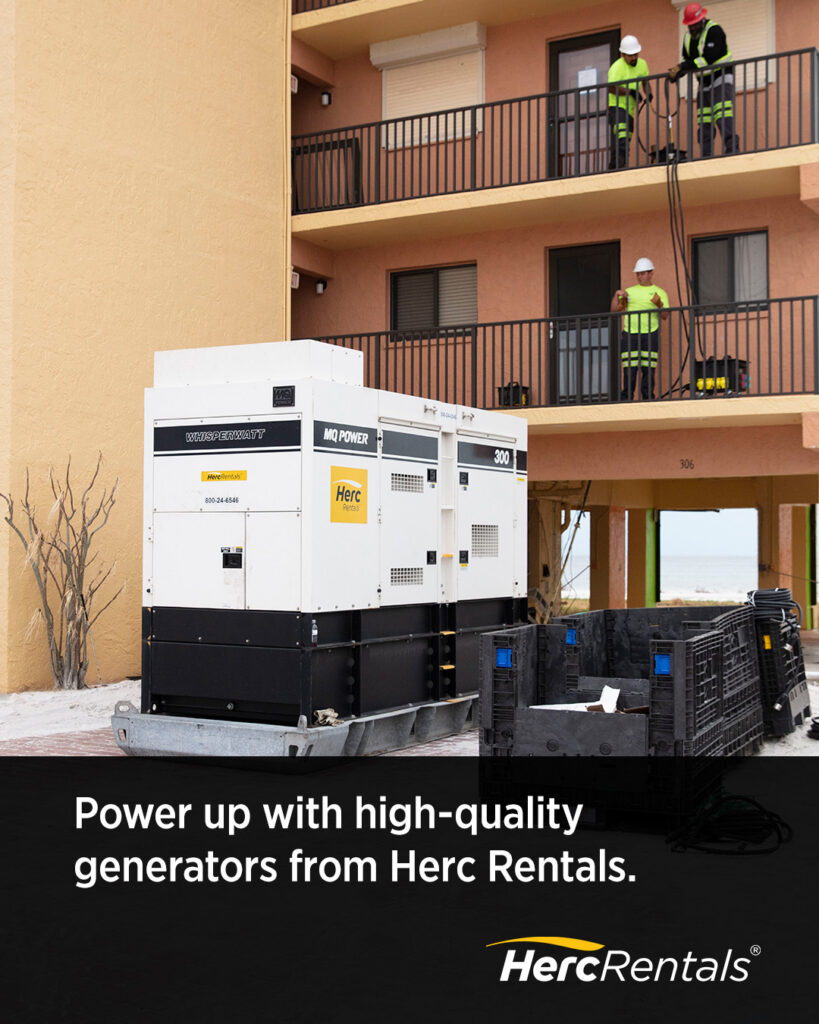
From construction projects to emergency backup power for hospitals and data centers, generators are a must-have power continuity solution. The next time you need temporary power for a worksite power outage or to power a jobsite for a short period, contact the experts at Herc Rentals. We offer reliable generators from leading manufacturers, as well as other power equipment to help with all your power generation needs, such as load bank testing.
We back our rentals with top-notch services, such as flexible rental agreements, safety training and equipment transportation.
Browse our wide selection of power generation equipment, or call 1-800-432-6215 to talk with an expert today.