Last Updated on July 15, 2026
A main benefit of using a compact track loader (CTL) on a construction or landscaping project is its ability to gain traction in wet or muddy conditions. However, if you have a track loader stuck, what kind of machinery or methods can come to the rescue?
When this happens, you’ll need to know how to retrieve it without damaging the machine or risking serious injury. In this guide, you’ll learn several proven methods to get moving again if your track loader is stuck. Safety always comes first, and using the right technique for the situation can make all the difference.
The Role of Weather Conditions in Track Loader Operation
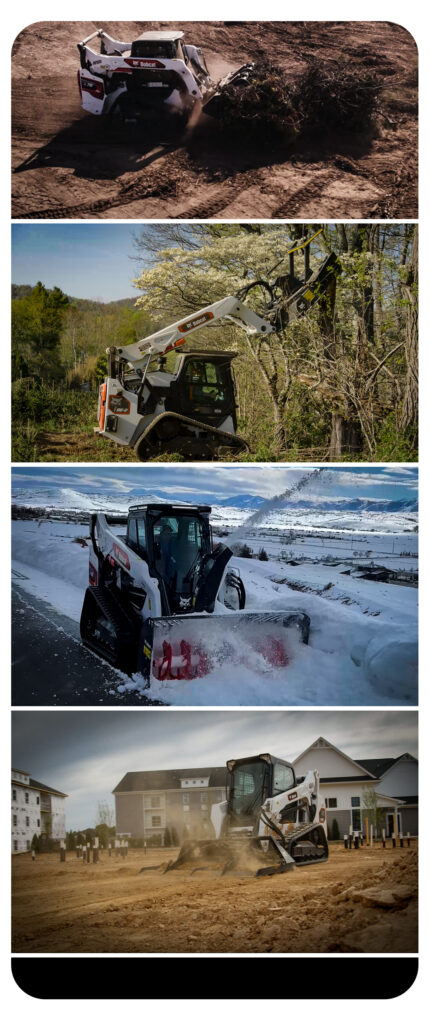
Weather plays a major role in how a track loader performs on the job site. In fact, rain can quickly turn solid ground into deep mud, especially in areas with poor drainage.
Unfortunately, wet soil packs into the tracks and around the sprockets, which reduces traction and makes it harder for the machine to move. Operating during or right after heavy rain obviously increases the risk of getting stuck.
What’s more, snow and ice can also reduce traction. Installing removable cleats on the tracks can improve results in these challenging conditions.
Conducting a thorough site inspection before operating a track loader is crucial. By locating softer ground areas, operators can make sure they’re using the best type of track loader and take precautions to avoid getting stuck altogether.
For example, OSHA 1926.1402(a)(2) recommends using supporting materials and techniques like cribbing, blocking and mats to ensure the ground can hold the equipment safely.
Read more: Skid Steer vs. Track Loaders: Advantages and Disadvantages
Before You Start: Safety First
Unfortunately, it can be tricky to get heavy equipment unstuck from mud. Before you try any of the techniques in the next section, you need to know exactly the kind of situation you’re dealing with.
Assess the Situation
- How Deep Is the Mud? If the tracks are completely submerged, you’ll need to use a more rigorous method than if they’re only slightly submerged.
- What’s the Terrain Like? Know that this may affect the type of towing vehicle and other equipment you can use.
- Are There Any Obstacles? If so, can they be moved? You’ll need enough room for equipment to maneuver and to prevent damage if something slips while trying to get unstuck.
Gather Your Gear
First, make sure the track loader and other equipment are powerful enough to handle the task and are in good repair.
To get a track loader unstuck, you’ll likely need:
- Tow straps
- Chains and/or cables
- Shackles
- Winch and/or pulley
- Towing vehicle
- Appropriate personal protective equipment (PPE)
Take Safety Precautions
- Follow All Safety Regulations and Never Work Alone. Get help to handle the job safely with the equipment you have on hand. Just like getting a truck unstuck alone can be tricky and dangerous, the same is true for recovering a track loader.
- Keep Bystanders at a Safe Distance. The process of getting unstuck can cause mud and debris to fly around. Additionally, equipment may slip.
- Wear Appropriate PPE. This includes eye protection, gloves and non-slip boots.
5 Methods for Getting a Track Loader Unstuck
Even if you operate and maintain your equipment correctly, track loaders can get stuck for a variety of reasons. Fortunately, you don’t always need a winch to pull your CTL out of the mud. Based on your assessment of the situation (see the steps in the previous section), try one or more of the methods below.
1. The Bucket Trick: Using Your Own Power
Use This Method If: You’re stuck in shallow, wet ground with no towing vehicle available.
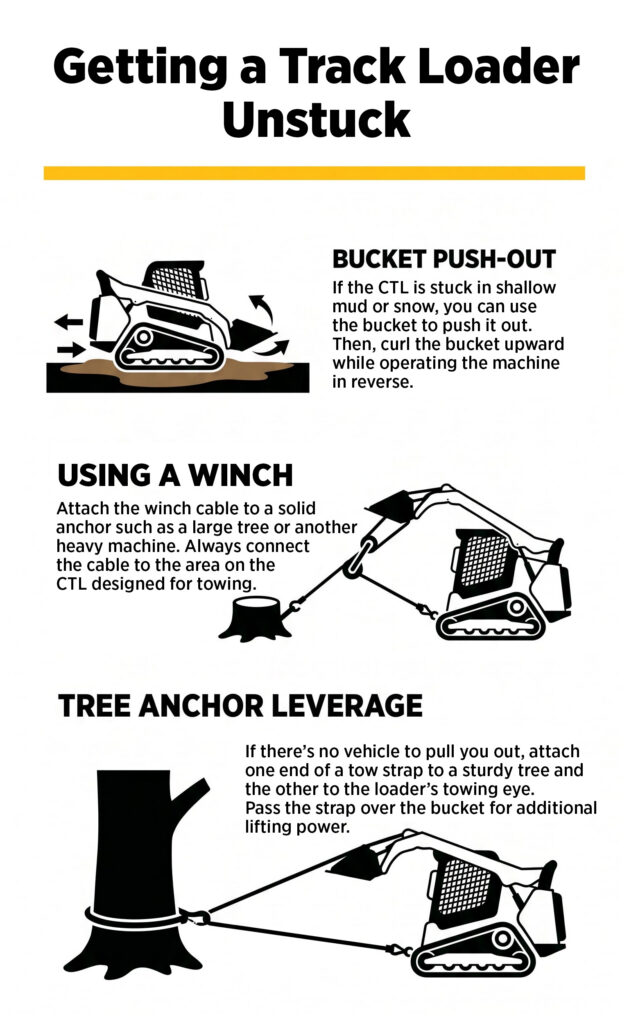
- If the CTL is stuck in shallow mud or snow, you can use the bucket to push it out. Then, curl the bucket upward while operating the machine in reverse.
- Alternatively, use a tow strap and snatch block to use the machine’s boom to raise and lower the bucket, acting as a lifting mechanism.
- If there’s no vehicle to pull you out, attach one end of a tow strap to a sturdy tree and the other to the loader’s towing eye. Pass the strap over the bucket for additional lifting power.
2. The “Rocking” Method: Gaining Momentum
Use This Method If: The track loader is only slightly stuck and firmer ground is nearby.
- Just like when you get a heavy truck stuck in mud, the rocking method can help. Start by gently moving the loader forward and backward. Do not spin the tracks aggressively. Spinning can dig the machine deeper and damage the tracks.
- As you rock back and forth, try to build a little momentum with each movement. Straighten the tracks as much as possible and keep movements smooth.
- If the loader starts to move, continue slowly until you reach firmer ground.
- If it does not improve after several attempts, stop and try another method.
3. Using a Winch: Slow and Steady Wins the Race
Use This Method If: The tracks are deeply stuck in wet ground and there are a winch and solid anchor point available.
- Attach the winch cable to a solid anchor such as a large tree or another heavy machine. Always connect the cable to the area on the CTL designed for towing.
- Secondly, keep the winch line straight and free of twists.
- Begin winching slowly while gently assisting with the tracks. Avoid sudden pulls or jerking motions.
- Stand clear of the cable while it is under tension and keep bystanders away. A steady pull reduces the risk of equipment failure and injury.
4. Calling for Backup: Towing a Track Loader
Use This Method If: You want to get unstuck quickly and a suitable machine and operators are available for towing.
- If you have a pickup truck, another track loader, an excavator or a heavy tractor on site, you might be able to free your track loader by towing it out of the sticky ground.
- Make sure the towing vehicle is durable and powerful enough to help the track loader. If the towing vehicle is too small or otherwise not suitable, towing could damage both machines.
- Attach a cable with the appropriate weight rating to the towing vehicle. The cable should be attached to the equipment’s tow hook or frame at two points.
- Have someone slowly accelerate the towing vehicle as you guide the track loader out of the mud.
- Go slowly until you can free the track loader without damage.
5. When All Else Fails: Calling a Professional
Use This Method If: Other methods fail or you don’t have much experience operating a track loader.
- Safety is paramount when attempting to pull a track loader out of the mud. Calling in professional recovery services or other support can help keep everyone and all equipment safe. It may also help you adhere to safety regulations by keeping inexperienced team members out of harm’s way.
- If you’re ever unsure how to pull out a stuck track loader, call for professional help to avoid putting yourself at risk.
How to Prevent Getting a Track Loader Stuck in the First Place
If you’re like most equipment operators, you’d prefer to avoid getting your track loader stuck in mud to pulling it out of the mud. The way you operate your CTL can affect its traction in muddy conditions. Taking a proactive approach can help you save significant time and hassle.
Tips for Avoiding Getting a Track Loader Stuck:
- Use the right size and type of track loader for the job. A reliable equipment rental provider can help you find the best model for your project.
- Keep the track loader in good condition. Regular maintenance will ensure optimal performance and help keep it from getting stuck. Appropriate track tensioning protects the wheels and sprockets.
- Walk the site before starting work. Identify and avoid soft ground by planning pathways through the site.
- Use three-point turns to reduce the likelihood of cuts in the tracks resulting from frequent counterrotations.
- Avoid excess spinning to improve traction and limit tread wear and damage.
- Keep the machine on flat surfaces as much as possible to prevent leaning.
Frequently Asked Questions
What’s the First Thing I Should Do When I Find the Track Loader Stuck in Mud?
First, you should assess the situation. Is there any danger to you or anyone nearby? Is there a danger of damaging the machine? What is causing the track loader to be stuck? What tools do you have to help you get unstuck? Then follow the steps and tips above to make sure you have the right equipment and try the best methods.
Can I Damage My Track Loader Trying to Get It Unstuck?
Yes, while track loaders are very durable, they can still be damaged if used in the wrong way. Towing cables, chains or winches used need to be attached properly to avoid damage. If you’re unsure of where to attach towing equipment, contact your equipment rental provider for safety training and tips.
Is It Better to Use a Chain or a Strap for Recovery?
Actually, chains and straps can both be used for recovery as long as they are attached properly and rated for the amount of force or weight that will be applied to them. If you’re unsure, play it safe and call a professional recovery service.
How Do I Know If the Ground Is Too Soft to Operate On?
If the ground feels spongy, has standing water or shows deep ruts from other equipment, it may be too soft for the track loader. Walking the site first can help you identify risky areas and hidden soft spots.
Get Back to Work with Quality Track Loaders from Herc Rentals
Freeing a track loader from being stuck in the mud requires the right combination of power and finesse. By understanding ground conditions and using the proper recovery methods, you can reduce downtime and protect your equipment.
At Herc Rentals, we have the experience and expertise to guide you through the process. Our knowledgeable team can provide safety training and helpful advice to make the job easier and get your project running again. Additionally, we have a fleet of high-quality, powerful track loaders and other earthmoving equipment that can help you avoid sticky situations in the first place.
Gear up with reliable earthmoving solutions, or contact us for a quote by calling 1-800-432-6215.