Last Updated on June 12, 2026
For many businesses, a pallet jack is often the difference between backbreaking manual labor and safe, efficient material handling. From warehouse receiving docks to restocking retail shelves or moving materials on construction, agriculture or landscaping sites, pallet jack uses are widespread.
These material-handling vehicles reduce the need for heavy manual labor, helping teams work faster, more safely and with less physical strain.
Pallet jacks are designed for everything from occasional tasks to high-volume operations. There is a pallet jack suited for nearly every situation. With so many options available, it is fair to wonder: “What is a pallet jack? How do I choose the right pallet jack for my company?” We have answers to your material handling questions.
What Is a Pallet Jack?
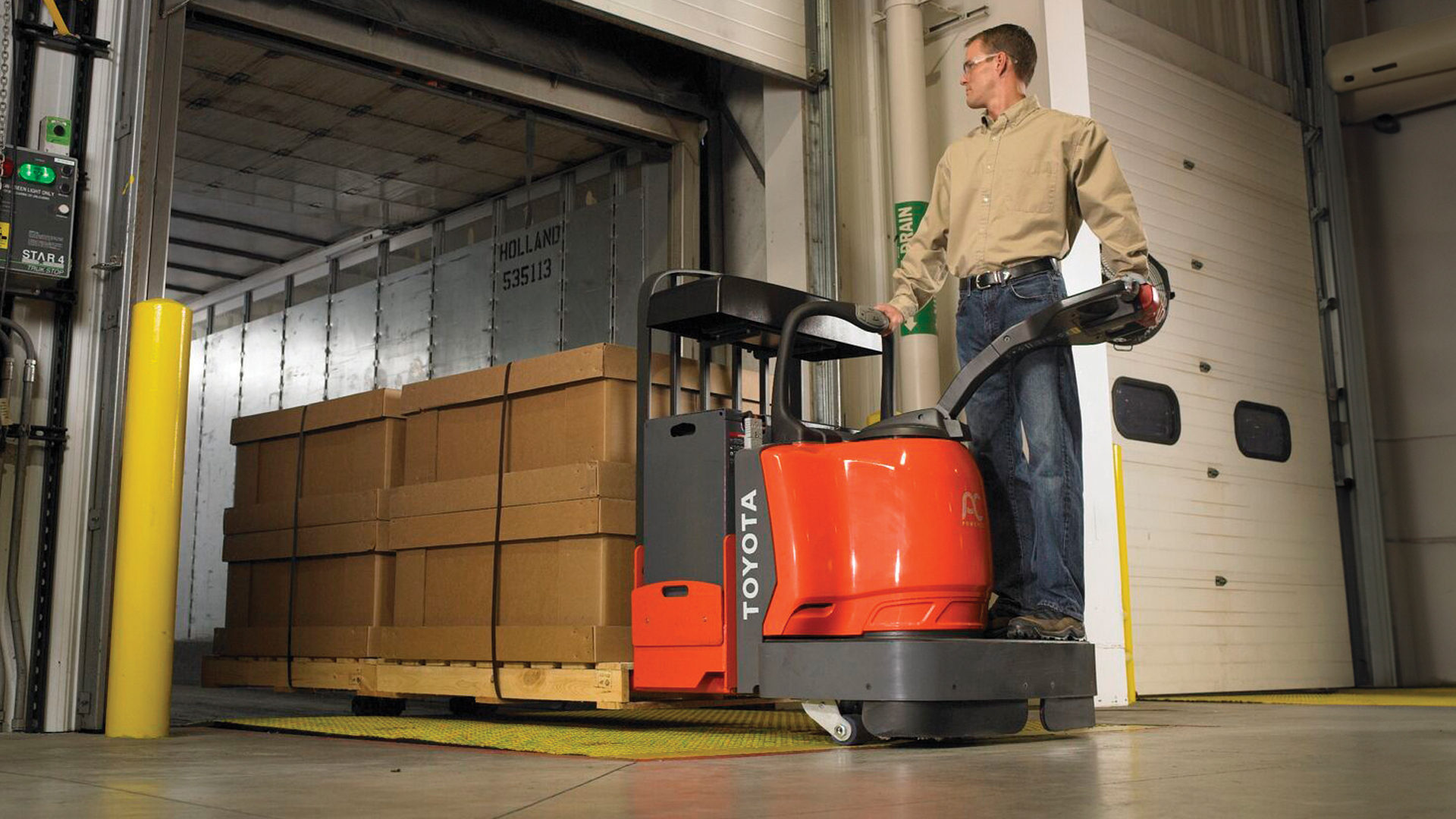
A pallet jack—also known as a pallet truck, pallet pump or pump truck — is a type of forklift designed to lift and move pallets, skids and containers.
Like a traditional forklift, it has front-mounted tines, or forks, that slide underneath a pallet to lift it off the ground and transport it to another location. But pallet jacks are smaller, and the operator moves it by manually pushing the jack or standing on a small platform.
Pallet jacks are ideal for:
- Transporting loads horizontally.
- Moving smaller or lighter loads than you would with a forklift.
- Carrying loads over short distances.
- Maneuvering pallets in tight and congested spaces.
These material handling tools are highly valuable because they allow crews to move materials quickly and safely, increasing overall operational efficiency and productivity.
Learn More: How to Use a Pallet Jack

Types of Pallet Jacks
While all pallet jacks share a basic design, their sizes, power source and capabilities vary. Each suits different loads, distances and environments.
Electric Pallet Jacks
Also called motorized pallet jacks, electric pallet jacks are powered by rechargeable batteries and controlled via a joystick and buttons on the handle. Many common models handle loads in the 3,000- to 6,000-pound range with lift heights around 7 to 9 inches.
Electric pallet jacks are ideal for moving heavier loads over longer distances at higher speeds while reducing operator fatigue and strain. They are often used in busy warehouses, manufacturing plants and distribution centers.
Manual Pallet Jacks
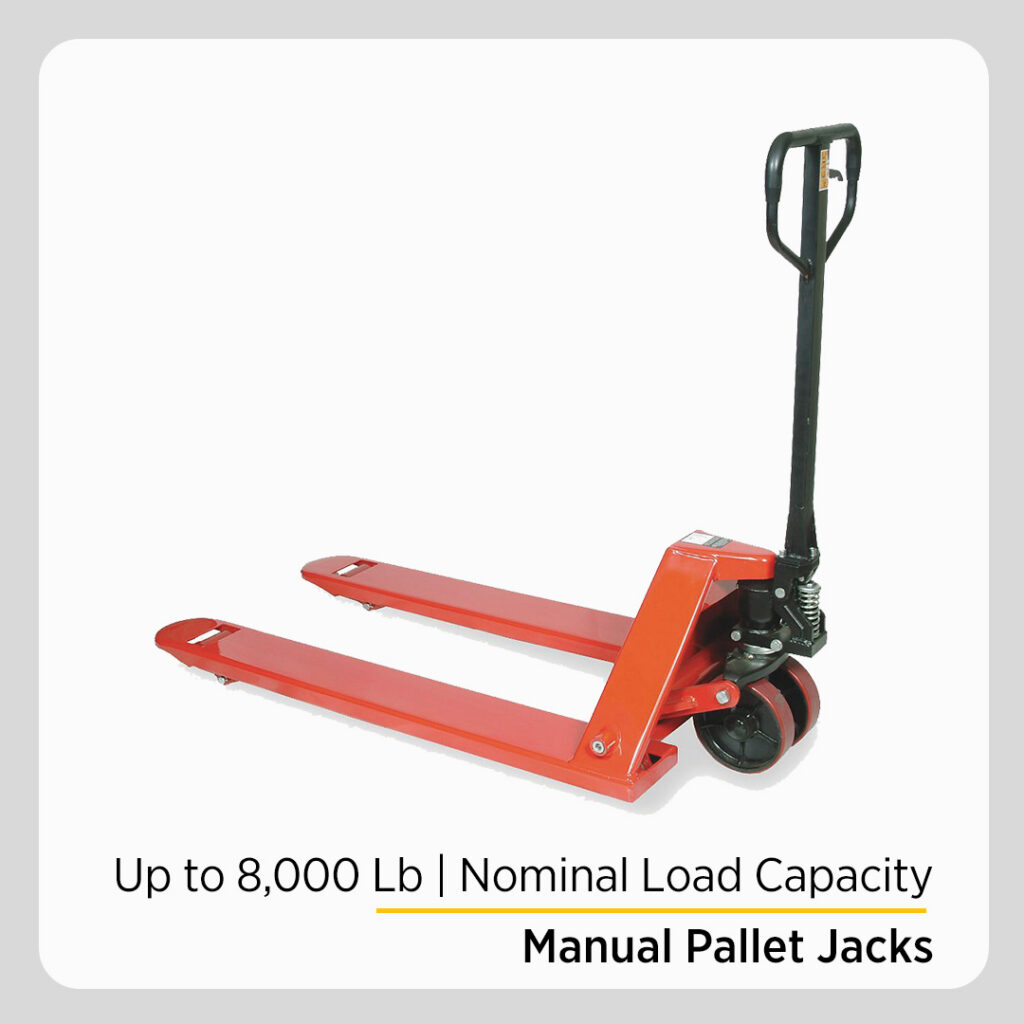
A manual pallet jack is the simplest and most cost-effective option. Operated by pumping the handle to raise the forks, they typically handle loads up to about 4,500 to 5,500 pounds with lift heights in the 3- to 7-inch range.
Because they are human-powered, these jacks are best for lighter loads, short travel distances and intermittent use, especially in small warehouses, retail backrooms and shops.
Scissor Pallet Jacks
Recognizable by their scissor-style lifting mechanism, these pallet jacks raise loads to a higher, ergonomic working height. They are well-suited for assembly lines, packaging stations or maintenance tasks where materials need to be accessed or processed off the floor. They combine short horizontal transport and light lifting in one unit.
All-Terrain Pallet Jacks
Designed for rough or uneven surfaces, all-terrain pallet jacks feature rugged frames, enhanced ground clearance, and air-filled or pneumatic-style tires instead of standard polyurethane wheels. They are ideal for outdoor use, construction sites, yards and loading areas where smooth concrete floors are not available.
Walkie Stackers
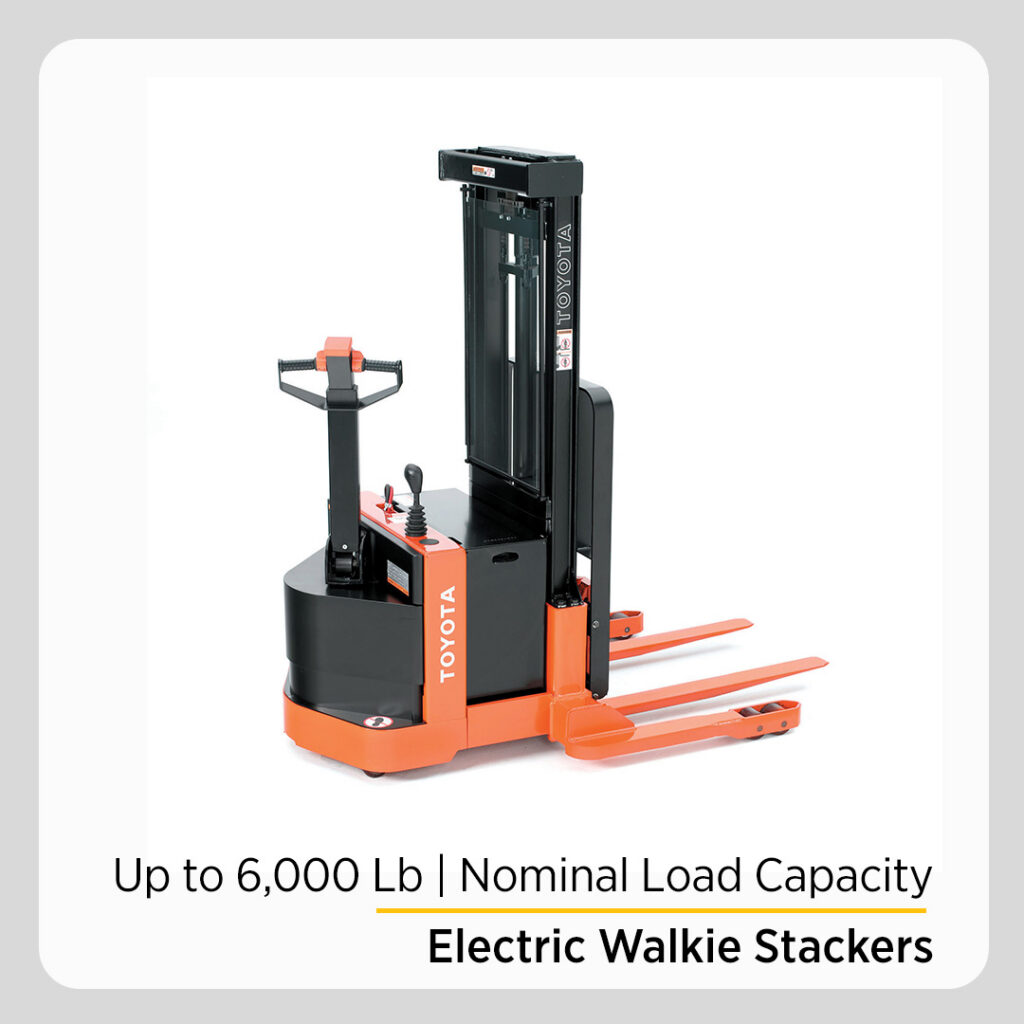
Walkie stackers are electric, walk-behind lift trucks that combine pallet jack-style travel with mast-style vertical lifting.
Walkie stackers can lift loads much higher than standard pallet jacks and are commonly used in facilities with pallet racking, mezzanines or elevated workstations. This type offers a compact alternative to larger, ride-on forklifts.
How to Choose the Right Pallet Jack
Choosing the right pallet jack for your company requires some homework. By working through steps below, you can match the jack’s weight capacity, size and features to your loads, facility and budget. This ensures you get safe, efficient performance rather than an undersized or oversized machine. Follow the steps below to learn how to choose the best pallet jack.
1. Identify Your Max Lift Height
Start by deciding how high you need to raise loads. For simple horizontal transport, a low-lift pallet jack that raises loads just a few inches off the floor is usually sufficient. Applications involving racking or elevated workstations may call for walkie stackers or scissor pallet jacks that lift loads higher.
Choosing the correct lift height helps ensure you can reach your storage locations safely without paying for vertical capacity you do not need.
2. Calculate How Much Weight Capacity You Need
Next, determine the required load capacity, including the total weight of the product, pallet, and any containers or attachments.
Overloading a pallet jack with more weight than it can handle can lead to equipment damage, instability and accidents. Meanwhile, significantly using a pallet jack with way more weight capacity than you need often adds costs and takes up more floor space without providing much benefit.
For example, a manual pallet jack is great for lighter loads and smaller facilities. Ride-on electric pallet jacks support heavier loads that are transported more frequently through larger facilities.
Pro Tip: Make sure that the combined weight of the pallet jack and its load will not exceed floor rating or the weight capacity of the trailers and docks where it will operate.
3. Assess the Facility Layout
Evaluate your entire facility layout, including aisle widths, door openings, turning areas, ramps and loading zones. Measure travel paths to ensure the pallet jack’s overall length and turning radius will work in your tightest spaces. These measurements will help you decide if you need to rent additional pallet jacks of different sizes or not.
Also, consider your facility’s floor conditions and environment. Rough, uneven or outdoor surfaces may require all-terrain models or larger, more durable wheels instead of standard small polyurethane rollers.
4. Consider Fork Dimensions
Fork dimensions refer to fork length, width and overall spread. These should match the pallet sizes used at your facility. It’s crucial that they support the load without creating overhang or clearance issues. Forks that are too short can reduce stability. However, forks that are too long can be hard to maneuver in tight aisles. As a simple rule of thumb, longer pallets require longer forks.
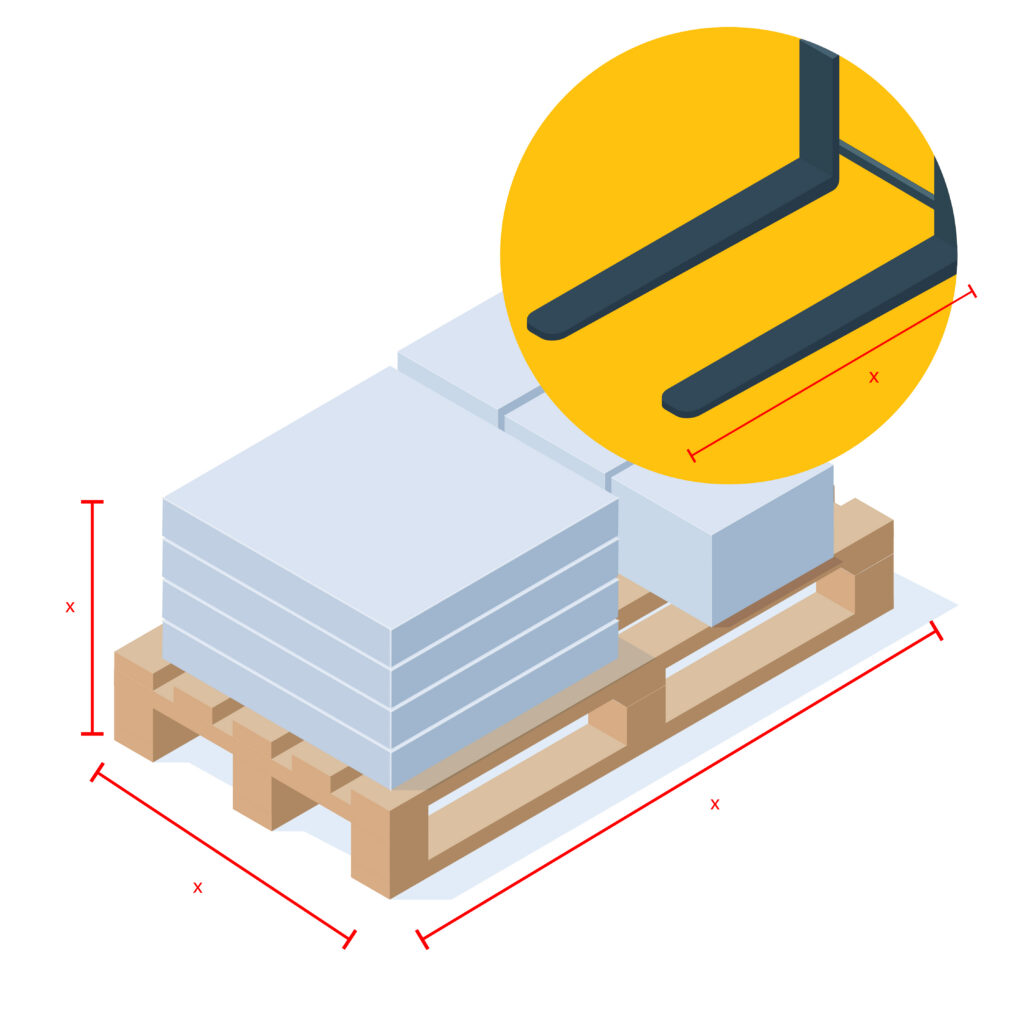
5. Test the Pallet Jack’s Maneuverability
Different pallet jacks handle differently, even if they have similar capacities. Shorter, more compact units tend to offer a tighter turning radius for narrow aisles, while larger or higher-capacity models may need more room to turn.
Check right-angle stacking specs — the minimum aisle width needed to pick a pallet, turn 90 degrees and exit without hitting racks — to guide your selection.
Also, consider your site layout, typical travel paths, operator skill level and workflow to ensure the pallet jack’s steering, braking and turning performance will fit your day-to-day operations.
If possible, perform a demo to see how a pallet jack operates in your facility.
6. Look for Safety Features
Safety should always be a top priority. Electric pallet jacks and walkie stackers fall under the powered industrial trucks standard. This means operators must receive proper training and certification before use. But, even if you’re using a small manual pallet jack, it’s important to choose models with great safety features.
Look for models with features such as:
- Overload protection
- Reliable braking
- Anti-rollback
- Stable wheel configurations
- Multi-function control panels and ergonomic handles that reduce operator strain
7. Consider the Warranty and Rental Terms
Once you narrow down your options, compare warranty coverage, service support, and — if renting — the rental terms.
Renting pallet jacks can be a cost-effective way to access the latest models. Another benefit of renting is that you can match fleet size to seasonal demand, and let a rental partner shoulder repairs and maintenance. This is especially attractive if you do not need equipment every day.
A reliable provider with deep equipment expertise, a broad product lineup and strong customer service can help you test different configurations and keep your operation running smoothly while controlling costs.

Rent Quality Pallet Jacks at Herc Rentals
Having the right pallet jack on site can help improve productivity, reduce physical strain and keep material handling operations running smoothly.
At Herc Rentals, you can choose from different types of pallet jacks from top manufacturers. There is a solution for every job, whether you need light-duty equipment for occasional use or heavy-duty support for daily operations.
Renting pallet jacks from Herc Rentals also gives you the flexibility to scale as needs change, avoid upfront purchase costs, eliminate maintenance and test the best equipment for your facility.
Browse Herc Rentals’ pallet jack and material handling solutions, or call 1-800-432-6215 to speak with an equipment expert today.